
Aria Diana is transforming how we understand love, desire, and connection. As a guide for those exploring non-monogamy, she shows that intimacy isn’t a fixed state but a living, evolving practice. Her personal journey through queer and non-monogamous relationships has taught her that love can take many forms, whether with a long-term partner, a metamour, or a community ritual.
She reframes challenges like jealousy as signals from the nervous system rather than moral failings, teaching clients grounding techniques, self-reflection, and co-regulation to transform insecurity into deeper awareness. Aria also debunks myths about non-monogamy, emphasizing honesty, consent, and intentional care over the assumption of “more sex” or lack of commitment.
For her, good sex is about presence, emotional honesty, and exploration, not performance. She advocates for open conversations about desires, boundaries, and aftercare, transforming intimacy into a practice of liberation, trust, and connection.

Redefining Intimacy
You support individuals exploring non-monogamy, guiding them through desire and connection outside traditional boundaries. In what ways has your personal journey influenced your view of intimacy as a fluid and evolving experience?
Aria Diana: My own journey through non-monogamy has taught me that intimacy isn’t a fixed destination; it’s a living, breathing practice that evolves with us. In my 20s, I believed intimacy was synonymous with exclusivity, that being “close” meant sharing one person, one container, and one script. Over time, I’ve come to see it as something much more expansive: the courage to meet each moment of connection authentically, whether that’s with a long-term partner, a metamour, a community ritual, or a new love.
My queerness has been central to that unfolding. It showed me that intimacy can take many forms and that love, desire, and family don’t need to fit into rigid, heteronormative, or mononormative boxes. For me, intimacy is a river that keeps reshaping its banks: sometimes deep and still, sometimes playful and overflowing, sometimes carving entirely new pathways. When we stop clinging to old scripts, intimacy becomes an adventure of expansion, always moving, always surprising, and always redefining who we are in relation to ourselves and others.

Navigating Jealousy:
Jealousy often comes up in non-monogamous relationships. What are some of the most effective tools or practices you guide clients through to regulate these intense emotions without judgment?
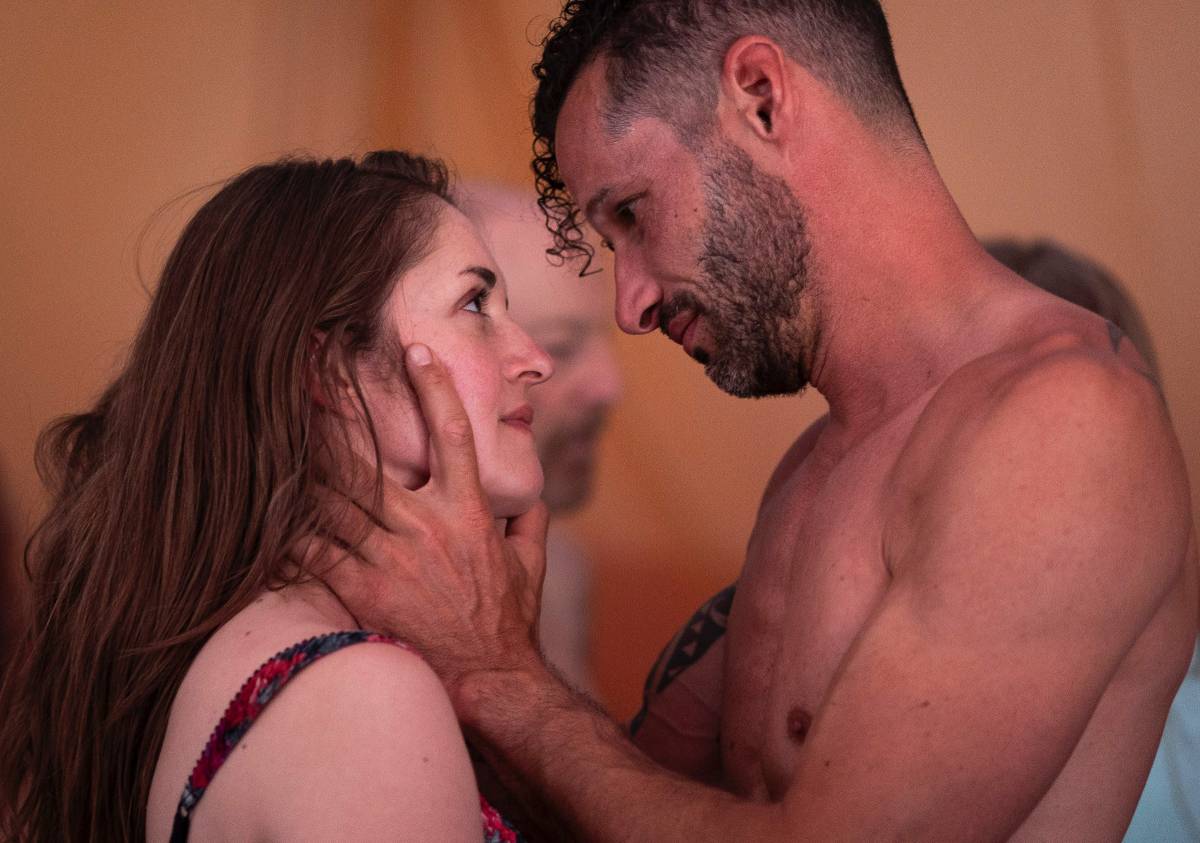
Aria Diana: Jealousy is often a nervous system response, not a moral failing or a fixed state of character. I guide people to slow down and notice what’s happening in their body: the tightness in the
chest, racing thoughts, spirals of comparison, or that sinking pit in the stomach. From there, the first step is regulation before reaction—somatic grounding practices like breathwork, movement, or meditation can bring us back into presence. Once grounded, we can get curious: What need is this jealousy pointing me toward? Often it’s about safety, worthiness, or fear of abandonment.
I frequently bring in Internal Family Systems parts work here, asking, “What does the part of me that’s generating jealousy need to feel held, soothed, or reassured?” That inquiry opens compassion instead of self-judgment. And regulation doesn’t have to be done alone; co-regulation with a partner, friend, or chosen family member through attunement, safe touch, or simply being witnessed can be just as powerful.
For people who want to go deeper into this work, I created an on-demand workshop called How to Stop Interpreting Your Insecurities as Evidence in Non-Monogamy. It guides you through my 4-Part Spiral Practice, a somatic framework for reframing insecurity not as proof that something’s wrong, but as a signal from your nervous system that deserves care. It’s especially supportive for anyone navigating jealousy, comparison, or emotional flooding and wanting to cultivate more security, self-trust, and emotional clarity.
Meeting jealousy with both inner care and relational support transforms it from something destructive into an invitation for deeper self-awareness and intimacy.
Beyond Mononormativity:
For readers curious about non-monogamy but hesitant to explore, what are some common misconceptions you encounter, and how do you encourage safe, conscious exploration of alternative relationship structures?
Aria Diana: The biggest misconception is that non-monogamy is simply “more sex” or, conversely, a “lack of commitment.” In truth, commitment looks different, not lesser; it’s about committing to honesty, to self-reflection, and to the ongoing tending of each relationship rather than relying on default scripts. Non-monogamous people often hold more commitments because each connection deserves clarity, presence, and intentional care. Another myth is that jealousy magically disappears if you’re “doing it right.” In reality, jealousy is part of being human; it’s how we relate to it that shapes our growth.
For those beginning to explore, I encourage curiosity before logistics: start with honest conversations about needs, desires, and boundaries instead of rushing into multiple relationships. Conscious exploration is safest when rooted in consent, nervous system awareness, and a willingness to tell the truth even when it’s messy. The gift of non-monogamy isn’t freedom from responsibility; it’s the freedom to design commitments that are chosen, nourishing, and aligned with who you really are.
The “Good Sex” Debate:
In your opinion, what makes sex truly good? Emotional connection, technique, freedom, or something else entirely?
Aria Diana: For me, good sex is less about performance and more about presence. You can know every technique in the book, but if you’re not attuned to your partner’s body and to your own, it will feel hollow. Truly good sex is when desire has room to breathe: when there’s emotional honesty, curiosity, freedom to explore, and no agenda beyond mutual discovery.
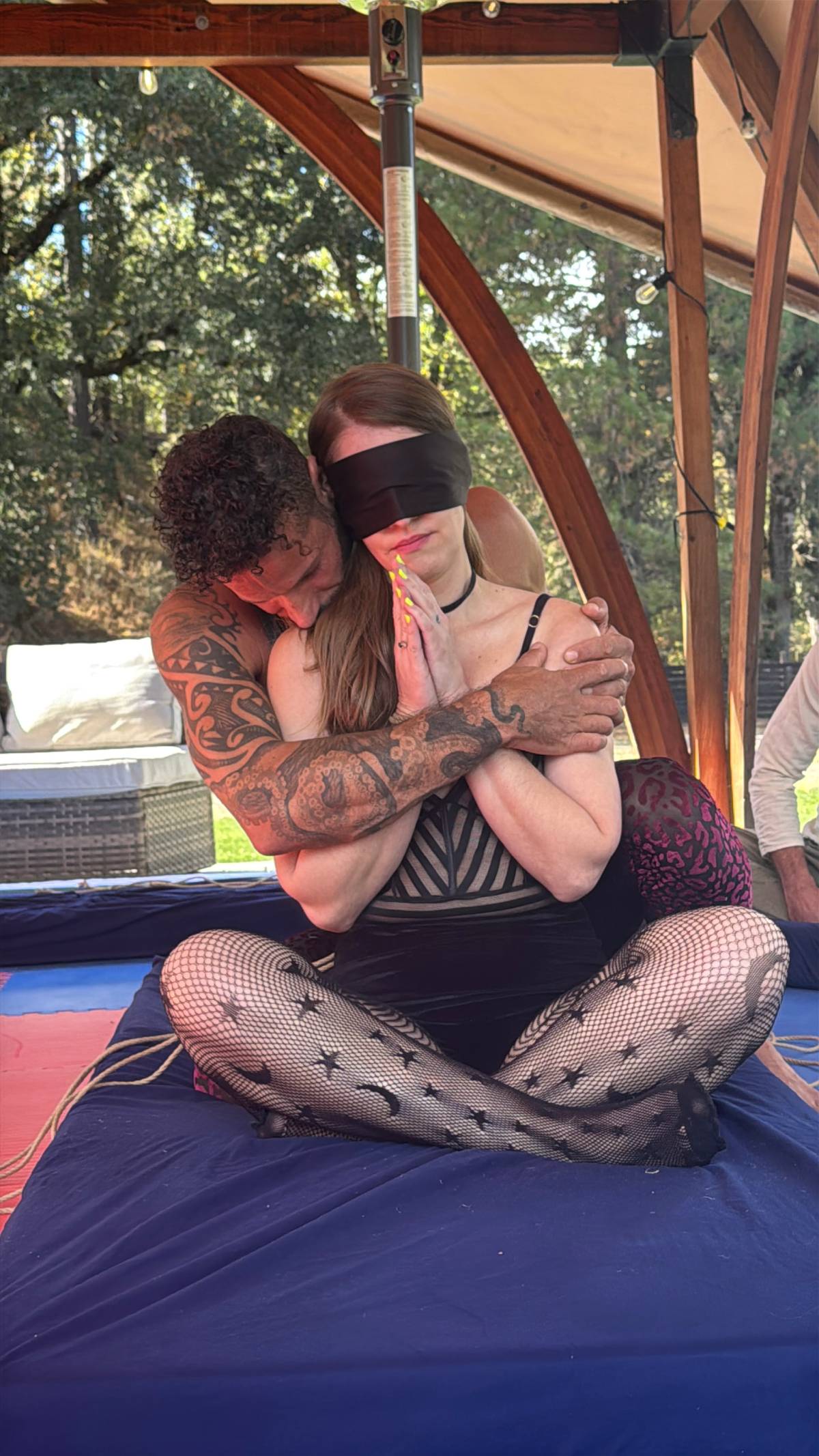
Lately, I’ve been exploring shibari and power exchange with a partner as somatic practices that drop me out of my head and into my body. Rope and surrender invite me into deeper presence, playfulness, and creativity while loosening the grip of orgasm as the sole “end goal.” Those experiences remind me that sex can be art, ritual, and embodiment all at once. The most satisfying encounters aren’t about reaching a peak, they’re about leaving both people feeling more alive, more seen, and more deeply connected than when they began.

Liberation and Love:
You call intimacy a “liberatory force.” What does liberation look like in love, and what internal work do people need to do before they can experience it?
Aria Diana: Liberation in love is when our connections are no longer bound by fear, control, or inherited scripts. It’s when we choose to relate from genuine desire instead of obligation or performance. To arrive there, we have to do the work of unlearning and interrogating the stories patriarchy, capitalism, Christianity, and colonization have handed us about ownership, worth, and what makes a relationship “valid.” Liberation requires tending to the parts of us that grasp for safety through control and, instead, cultivating a sense of safety within ourselves.
It means being willing to feel the discomfort of loosening control so that love can move more freely. When that inner work is done, love stops being about possession or scarcity and becomes about expansion, abundance, and creativity an energy that nourishes rather than confines.

Boundaries in the Bedroom:
What’s one “taboo” conversation couples should be having in bed but usually don’t?
Aria Diana: A taboo conversation I’m seeing more couples bravely step into is the one around non-exclusive desire—naming the fantasies they’ve been afraid to admit, whether that’s a threesome, group play, or exploring queer or kinky dynamics. Many people carry shame around these desires and tell themselves, “that’s not for me”. In truth, desire often holds the key to our deepest vitality and when we repress it, we’re diminishing our life force. At a retreat I produced recently, we brought in shibari and impact play facilitators to create a safe entry point into these so-called “taboo” topics. Participants who thought those spaces weren’t for them got to put their hands on shibari rope, hold a flogger, and play with these tools in a non-erotic space simply as a way to widen their perspective.
What happened was extraordinary: people felt turned on, curious, and even a sense of release just from being invited into the experience without pressure or expectation.
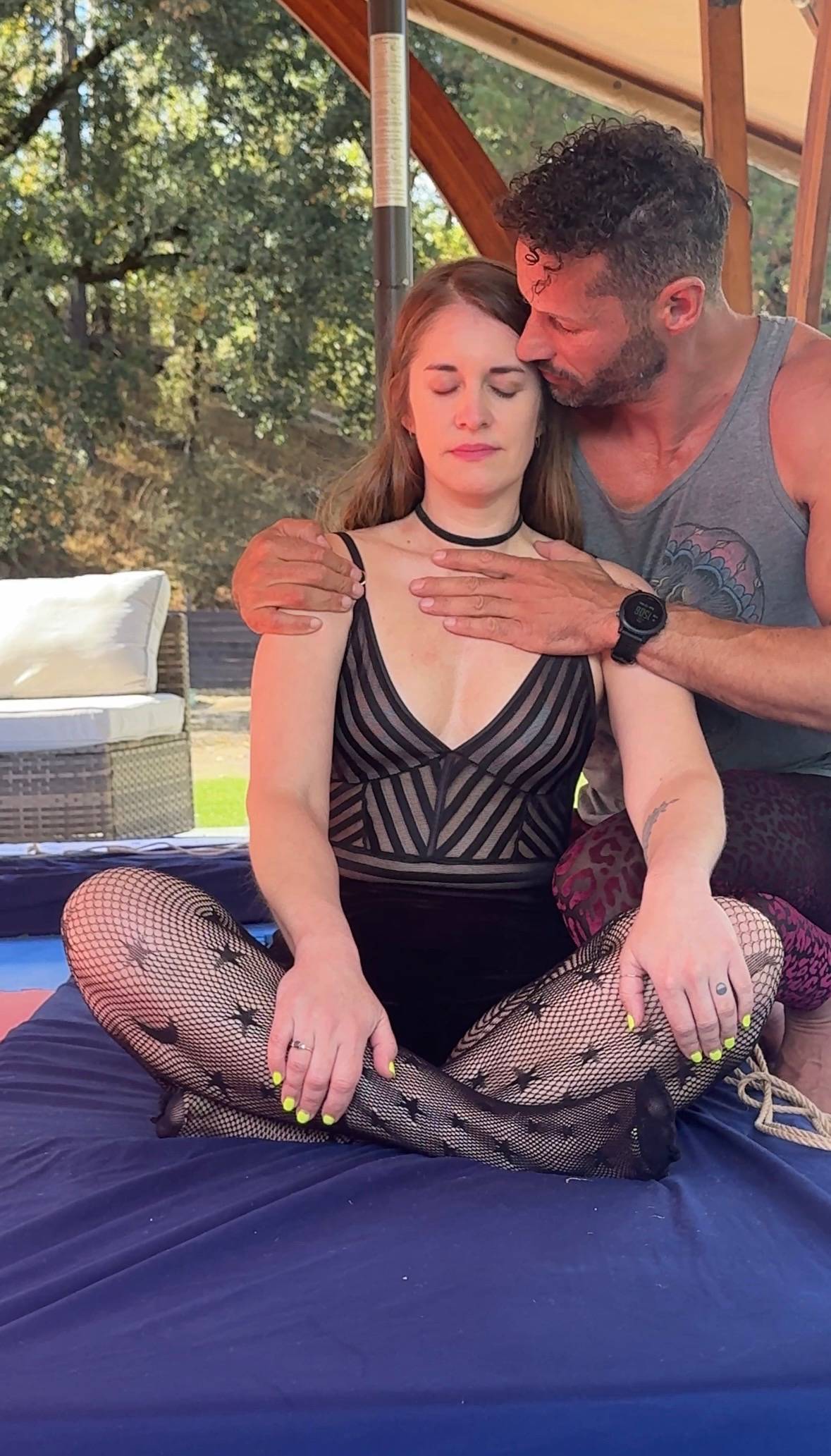
But here’s the piece we often overlook: after we have any new big experience, whether it’s erotic, emotional, or experimental, we need a shared space to land, feel taken care of, and process. We rarely talk about aftercare outside of kink, yet it matters just as much in every context. Do you want to be held? Do you need silence and space? Do you crave words of affirmation? Naming what helps your nervous system return to safety after intimacy or exploration can deepen trust and prevent misunderstandings. It transforms sex and play from a fleeting high into a sustained connection, one that integrates the experience instead of leaving us raw or ungrounded.
Real Turn-On: Emotional Honesty
If you could offer one piece of advice to someone seeking to create more authentic, nourishing connections, whether in love, sex, or friendship, what would it be?
Aria Diana: Lead with emotional honesty, even when it terrifies you. Say the thing you’re afraid will make you “too much” or “not enough.” Honesty is not always comfortable, but it’s the soil where trust and intimacy can take root.
When you risk telling the truth about your needs, your fears, and your longings, you create the possibility for love that is resilient and nourishing rather than fragile and performative. Whether in love, sex, or friendship, honesty is the greatest aphrodisiac because it creates a space where both people can actually be met as they are.
Editor’s Note:
Connection is rarely simple, and intimacy is never a fixed state. True closeness asks us to show up fully, to feel deeply, and to face our own fears and vulnerabilities. It asks for honesty, not just with others, but with ourselves. The moments that challenge us most often hold the greatest opportunity for growth, trust, and understanding.
Love, desire, and human connection are not about following scripts or meeting expectations; they are about presence, awareness, and courage. When we allow ourselves to meet each moment authentically, with curiosity and care, we discover that the boundaries we once feared can transform into gateways for deeper understanding, richer experiences, and more meaningful relationships. In this way, intimacy becomes not just a practice with others, but a path toward knowing ourselves more fully and being seen more truly.
