
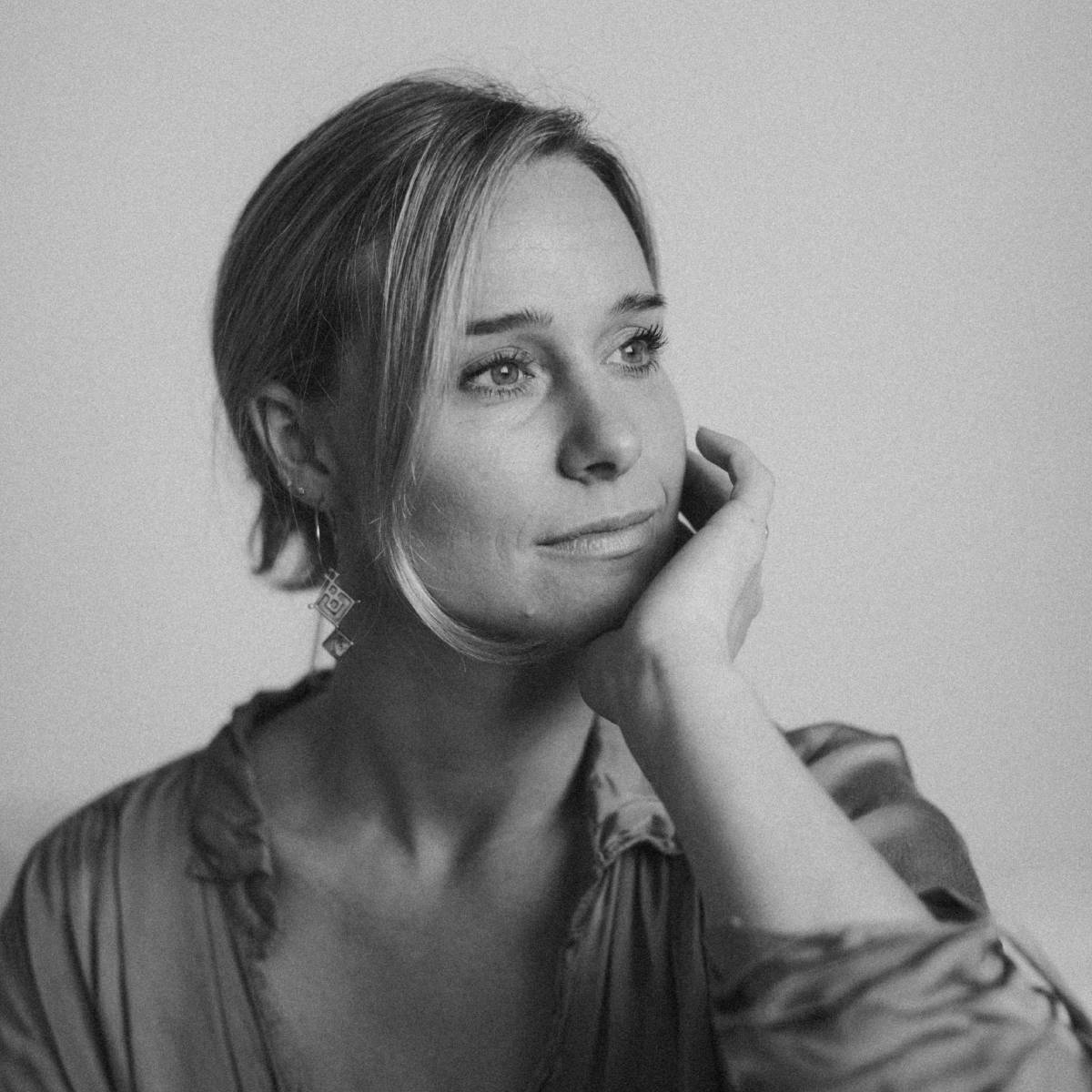
Ayah Ilie is a somatic intimacy coach and trained sexologist whose work sits at the intersection of sexuality, nervous system healing, and relational repair. Rooted in lived experience, her path into this work was shaped by witnessing how trauma lives inside intimacy and how often our romantic relationships are asked to hold more healing than they can. Through her practice, Ayah offers a grounded, professional space where individuals can explore eroticism, boundaries, and emotional fluency without shame, performance, or pressure.
Her approach centers the body as a source of wisdom. Drawing on somatic practices, nervous system regulation, and relational role-play, Ayah supports clients in reconnecting with pleasure, agency, and a strong sense of self. She reframes kink, self-pleasure, and desire as expressions of aliveness rather than something to justify or fix, while gently tending to the wounds and conditioning that shape how we relate. For Ayah, pleasure is not indulgence. It is a vital part of wellness, truth, and integration.
In this conversation, we explore her journey into somatic sexology, the difference between digital intimacy and in-person connection, and why real transformation requires presence, continuity, and safety. We also reflect on releasing shame, expanding pleasure beyond performance, and reclaiming sexual sovereignty in a world shaped by conditioning and noise. What emerges is an invitation to meet intimacy as a practice of self-knowing, courage, and coming home to the body.
Website
Transformative Relationships
Your path into somatic intimacy coaching was influenced by personal experiences with a partner who had a history of sexual trauma. In what ways did that relationship shape your understanding of intimacy, boundaries, and the process of healing?
Ayah Ilie: This relationship inspired me to train as a somatic sexologist. Witnessing firsthand how deeply trauma can affect intimacy made me realize how much we need spaces for healing that exist outside of our romantic relationships. My work now offers a professional space where people can practice relational, erotic, and emotional fluency, something we often attempt within relationships but struggle to unpick amid the complexities of shared dynamics.
This experience also revealed the profound depth of intimacy possible between humans emotionally, spiritually, mentally, and physically. It shaped how I support others to cultivate these layers of connection, both with themselves and with others.
Healing looks different for everyone, yet there are key ingredients that shaped my own process and inform my work. One is developing a somatic understanding of the nervous system, not just intellectually, but through direct felt experience. This allows us to build response flexibility and the ability to self- and co-regulate.
Another is practicing relational repair. Many of us find this difficult in real life, but when we role-play and explore repair in a safe, neutral space, we can soften our defenses and relearn how to come back into connection.
Number two is learning to individuate. This process goes back to our earliest relationships with our caregivers. Most of us unconsciously project onto our partners the unmet needs from childhood, the care, validation, or safety we didn’t fully receive. Our romantic relationships then become a profound opportunity to individuate, to step into our own wholeness. It’s one of the most challenging, yet ultimately freeing, parts of healing.
A key part of individuation is developing a strong sense of self. Boundaries are essential here. Questions like, “What do I want? How can I give that to myself? What am I willing and not willing to give to others? become guiding lights. These lines often blur in relationships because many of us learned early on to fawn, people-please, or become overly self-reliant as a way to stay safe and connected.
Another deep learning that grew from this relationship was my passion for creating healing spaces that invite others to reconnect with their own truth, inner wisdom, and personal power, there’s a time and place for a treatment model approach, but what has really inspired me is the modalities that invite us into our own truth and mirror back our own gifts and medicine to us.

Retreats or Screens: Where Real Transformation
How do retreats and in-person experiences differ from online coaching in terms of fostering deep sexual and relational growth?
Ayah Ilie: In-person work is essential. I believe it’s one of our most basic human needs to be in the presence of one another, to co-regulate, and to grow together. We are, after all, wired for connection.
One ingredient often missing from retreat spaces is continuity, the integration of those profound experiences into everyday life. We don’t need more quick highs that leave us inspired but also feeling like we’ve stepped out of a bubble and crashed back into reality. What we truly need is a community that lasts. When we stay connected over time, we build our capacity for relating, nuance, and repair, the real markers of transformation.
Online work, on the other hand, is a beautiful complement. It can sustain and deepen what’s cultivated in person or serve as a bridge for those who are just beginning to explore this work. I’m continually in awe of how much can be achieved in the virtual space. Yet, no matter how powerful online sessions can be, they can never fully replace the alchemy of being together in real life.
The Courage to Play
People struggle with shame around kink or alternative sexual practices. How do you create a safe, non-judgmental space for clients to explore these parts of themselves?
Ayah Ilie: I love this question. For me, creating a safe, non-judgmental space begins with my own self-acceptance. Radical acceptance is at the heart of my training, and it started with learning to meet myself with compassion not only around sexuality or kink but also in the subtle, everyday ways I used to reject or judge myself.
One of the most common pieces of feedback I receive from clients is that they feel they could bring absolutely anything into our sessions. And if I ever sense that I can’t hold that level of space for someone, I refer them to a practitioner who can because that depth of safety and acceptance is non-negotiable.
A big part of my work is normalizing kink and alternative practices by exploring the conditioning around what we’ve been taught sex “should” or “shouldn’t” be. It’s vital to remember that sexuality is so much more than penetration; it’s an ever-evolving expression of aliveness, creativity, and connection.
I see two sides to kink work. One is about normalizing and celebrating the aspects of our erotic expression that serve our integration, expansion, and harmony. The other is about gently meeting and integrating the parts of our sexuality that grew from deep wounding or pain. Those don’t necessarily need to be, but they do need to be witnessed so that we can reclaim agency and choice rather than being driven by them.
One of my favorite sayings is, “You can only meet others where you have met yourself.” Early in my practice, a client taught me my own capacity to sit with great darkness. And if there’s one thing I know for certain, it’s that these shadows always grow from deep wounds. Trauma takes away our sense of agency until we integrate it and remember our power.

Pleasure as Wellness
In your opinion, what role does pleasure play in emotional and relational health, and why is it often overlooked in conventional wellness discussions?
Ayah Ilie: I believe pleasure is fundamental to emotional and relational health. It’s what connects us to aliveness, to curiosity, and to our capacity for joy and intimacy. But I also think it’s important to find a balance between hedonistic and eudaimonic pleasure, between pleasure for its own sake and pleasure that connects us to meaning and purpose.
The self-pleasure movement, while incredibly empowering in many ways, can sometimes lean too far toward the self without anchoring in the deeper, relational, and soulful dimensions of pleasure. Without that connection to our core self and our “why,” pleasure can become another way of seeking rather than arriving.
Pleasure is often overlooked in wellness spaces because of the collective shame we carry around sexuality and because most wellness trainings simply don’t include it. In many modalities, like yoga or breathwork facilitation, sexuality isn’t discussed at all, so it remains an excluded part of the human experience. Yet working with sexuality is a form of shadow work; it asks us to meet what’s been hidden, repressed, or judged. That level of honesty and embodiment can make people uncomfortable, but it’s also where the deepest healing and integration happen.

Untold Truth About Male
If you could give one piece of advice to men about unlocking pleasure that society never talks about, what would it be?
Ayah Ilie: I wish men knew that pleasure goes far beyond the genitals or orgasm. Most men have been boxed in by this narrow idea of pleasure, and I wish they knew that true pleasure lives in a relaxed, tension-free body, one that can hold joy, presence, and peace. From that place, life itself becomes inherently pleasure-filled.
If I could, I’d project this truth onto a massive screen for every man to see: what an incredible gift it is to witness a man connect to his life force and his creative energy and channel it into everything he does. There’s nothing sexier than a man who is turned on from the inside out, alive with purpose, and not afraid to express it.

Letting Go of Shame
Shame and insecurity often block sexual exploration. What are some practical strategies you teach clients to release these barriers and embrace their sexual selves?
Ayah Ilie: One of the first things I teach clients is how to connect to their wants, to actually name them out loud and then to practice asking for those things within the safety of our sessions. We use this as a foundation for creating relationship agreements. Once they’ve experienced what it feels like to be received without judgment in a neutral space, it becomes much easier to bring that confidence into their personal relationships.
We all need the lived experience of doing something new, not just talking about it. And at first, it’s always a little clunky. So we learn to embrace the clunkiness, to stay with the awkwardness instead of retreating from it. That’s where real growth happens.
Another powerful practice I work with is somatic shame deactivation. Once a foundation of trust has been built, we explore how shame shows up in the body: the sensations, the contractions, and the emotional charge. Then we gently learn to be with those sensations, to move them through the system, and to resource the body back into safety. Over time, this process restores agency, compassion, and the ability to meet oneself and one’s sexuality with curiosity instead of judgment.

Breaking the Digital Spell
In a world saturated with digital intimacy and pornography, what role does self-pleasure play in reclaiming authentic sexual connection?
Ayah Ilie: Self-pleasure is a way back to the body, not to be confused with goal-oriented masturbation. When we move away from quick, hard, performance-based touch, we begin to expand our pleasure ceiling and reconnect to everything that’s actually present within us.
So often we use pleasure to escape, to chase intensity, or to avoid discomfort. But true self-pleasure is an invitation into authentic connection with oneself. It’s about slowing down, listening, and letting every part of you be felt. Sometimes that has nothing to do with genital touch at all.
Reclaiming authentic sexual connection often begins in ways that look nothing like what we imagine. To me, that is the quiet revolution the moment we can say to ourselves, “All of you is welcome. You are enough just as you are.”
It’s a radical act of defiance against consumerism and digital conditioning. It’s saying no to being sold someone else’s version of desire and yes to remembering our own sovereignty, the truth that our pleasure, our aliveness, belongs entirely to us.
Advice for Readers
For readers curious about starting their own journey toward sexual empowerment, what are three transformative practices you’d recommend for cultivating self-awareness, pleasure, and relational integrity?
Ayah Ilie: One practice I recommend is TRE (Tension release exercises) This is a really powerful way to learn to trust the body’s intelligence, to release stored tension, and to connect to our aliveness and innate capacity to heal from within, my clients often greatly benefit from this practice.
Somatic parts work is another amazing practice. It cultivates self-awareness and helps us become an unshaming witness to our own experience. We can notice, for example, “Oh, there’s a part of me that pushes people away or reacts automatically…” and then tend to those younger parts of ourselves instead of letting them run the show. This is one way we can build relational integrity with ourselves, which then naturally translates into our relationships with others.
Finally, some of the most transformative practices I received and now offer to clients are the somatic practices I trained in; these are the ones that gave me space to actually practice new ways of being. They helped me cultivate choice, agency, and self-acceptance. It felt like finally coming home to myself and bringing back parts of me that had been silenced, numbed, or pushed aside. I had done other types of psychotherapy before, including parts work, which was helpful, but I couldn’t fully apply it in my life until I had a somatic, experiential space to practice. This kind of work is where we can learn to shapeshift: to literally take on a new shape, a new way of being in the world.

Editor Note
Ayah Ilie’s work shows us that intimacy, pleasure, and sexual expression are deeply personal, lived experiences rather than prescriptive formulas. Her insights challenge us to approach connection with curiosity over judgment, presence over performance, and self-awareness as the foundation of authentic engagement.
What stands out most is the emphasis on the body as a source of wisdom and how listening, feeling, and integrating our experiences create space for agency, choice, and genuine pleasure. Whether through somatic practices, relational repair, or playful exploration, the lesson is clear: the depth of our connections is limited only by the boundaries we impose and the shame we carry.
“Intimacy becomes liberating when we stop trying to perform it and start allowing it to move through us.”
