
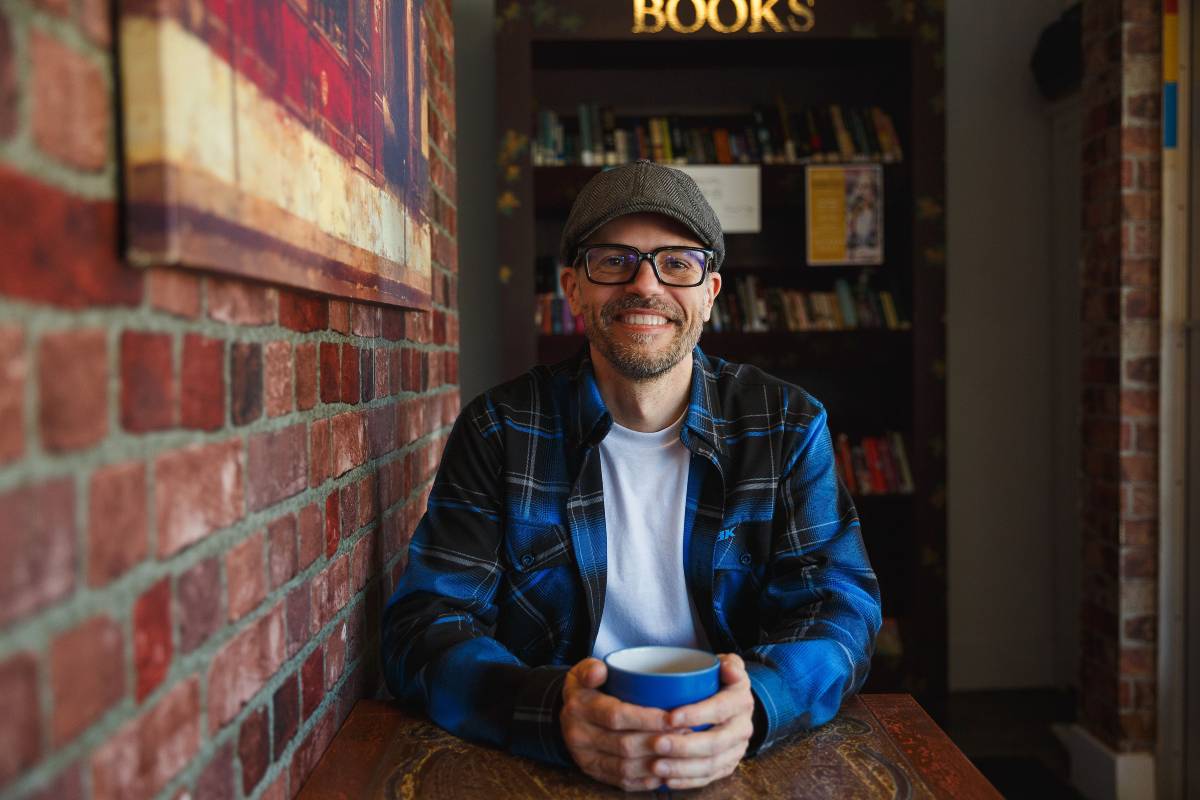
Tyler Mallett is a relationship and intimacy guide whose work lives at the crossroads of desire, emotional honesty, and conscious connection. Tyler doesn’t approach intimacy as something to be fixed, performed, or controlled. Instead, he creates space for people to understand their inner world more clearly. Their longings, fears, boundaries, and unspoken needs. Through his work with individuals and couples, Tyler helps people slow down, speak honestly, and reconnect with parts of themselves that were taught to stay quiet.
After navigating divorce and re-entering the dating world after more than a decade, Tyler’s own life became a classroom in vulnerability. Exploring kink, power dynamics, and ethical non-monogamy was never about rebellion or excess. It was about learning how to listen to desire without shame, how to build emotional safety, and how intimacy deepens when curiosity replaces fear. For Tyler, kink is not just about sensation or structure. It is a practice of communication, trust, and presence that often reveals more about connection than sex alone ever could.
From working with men who struggle to name their emotions to helping partners create spaces of radical honesty, Tyler’s perspective reframes loneliness as an intimacy issue rather than a social one. His work gently challenges inherited ideas of masculinity, monogamy, and strength, inviting people to consider what actually supports real connection in their lives today.
We sat down with Tyler Mallett to talk about desire after divorce, emotional barriers to intimacy, modern dating, and what it means to start over without a map. This conversation is for anyone who has felt disconnected while surrounded by people, curious but cautious about desire, or ready to explore intimacy with more intention, clarity, and self-respect.

Visit Tyler’s Instagram
Visit Tyler’s website
The Whisper That Undid Me
Post-divorce, you plunged into the world of kink and BDSM like a woman starved for her own forbidden hunger. Paint us the scene: What was the electric spark, the glance, the whisper, or the first rope against skin that cracked open your unapologetic sexual rebirth?
Tyler Mallett: It started as a whisper, my own curiosity finally getting loud enough to be heard. After my marriage ended, I felt a hunger I had not let myself fully name before. I was not just craving sex. I was craving permission to explore the spicier edges of desire that had stayed dormant for years.
I had some experience with impact play and light submission, but post-divorce, something shifted. I felt a strong pull toward stepping more fully into the dominant role, and rope play in particular kept calling to me. The first time I watched someone soften and surrender as I tied them, something clicked in my body. I felt a depth of presence and erotic confidence I had not realized I was missing.
Being single for the first time after a long relationship creates a particular kind of freedom. For me, it cracked open parts of myself I had kept carefully contained. I had not dated since 2005, and the landscape had changed dramatically, but I was relieved to find communities where curiosity was welcomed and conscious, consensual exploration was the norm.
That chapter was not about excess or rebellion. It was about listening to desire without negotiating it away and discovering how powerful curiosity can be when it is met with intention.

The Moment We Stopped Hiding
Many couples hesitate to share their deeper fantasies out of fear of judgment. What helped you both create a space of radical honesty and non-judgment as you began exploring kink together?
Tyler Mallett: Two things made it possible for my partner and me to explore kink together: emotional safety and practiced vulnerability. Without safety, vulnerability is just exposure, and most people shut down long before they get honest. When I talk about safety, I am not referring to physical protocols or rules around play. I mean the kind of safety where you trust that your desires will be met with curiosity instead of judgment.
That meant slowing conversations down and removing pressure. We talked about fantasies outside the bedroom, not in the heat of the moment, and we framed them as invitations rather than expectations. We also normalized uncertainty. It was okay to say, “I am curious about this, but I am not sure yet.” That alone reduces a lot of fear.
We made room for reassurance, humor, and repair when things felt awkward. Nobody wants their desire dismissed or minimized, and knowing we could pause, renegotiate, or laugh helped create trust. Radical honesty grows when both people know they will still be met with respect on the other side of it.

The Emotional Barriers to Real Connection
Loneliness is often discussed as a social issue, but you frame it as an intimacy issue. What do you see as the biggest emotional blocks preventing people, especially men, from experiencing real connection?
Tyler Mallett: When I talk about loneliness as an intimacy issue, I am pointing to what happens long before someone feels isolated from others. Many men I work with do not feel free to express what they are actually feeling, and in some cases, they do not even have the words or language for it. From a young age, many of us are taught that crying and sadness equal weakness, vulnerability is risky, and emotional expression should be tightly controlled. At the same time, confidence and strength are something we are simply expected to project.
As a result, men often learn two default responses. Some shut down completely, numbing themselves so they do not cry or reveal uncertainty. Others turn to anger because it feels more acceptable, more masculine, and easier to express than grief, fear, or longing. Both strategies protect against shame, but they also quietly block connection.
Real intimacy requires being emotionally reachable, not just present. When a man cannot share what is happening inside him, even in small ways, relationships begin to feel distant and unsatisfying. Loneliness grows not because there is no one around, but because there is no place where the full self feels welcome.

Love Relearned: Navigating Vulnerability and Desire
Dating after 15 years can feel like entering a completely new world. What were the most surprising lessons you learned about vulnerability and self-expression in modern dating?
Tyler Mallett: Re-entering the dating world in the 2020s felt like stepping into a completely new language of self-expression. Suddenly, there were far more labels and identities than I had ever encountered before. People described themselves as sapiosexual, demisexual, relationship anarchists, and more. At first, it was overwhelming, but it quickly taught me how intentional people had become about naming their inner worlds.
What surprised me most was how clarity itself became an invitation to vulnerability. When people could articulate how they related to desire, attachment, or power, conversations were more open and honest. This was especially true in BDSM and kink communities, where nuance matters deeply. After taking assessments around BDSM interests and archetypes, I saw how much nuance exists within dominant and submissive archetypes and how that level of self-understanding creates safer conditions for honest connection and exploring desire with curiosity rather than fear.
Modern dating taught me that self-expression is not about performance but precision. When spaces exist where curiosity is welcomed and desire is not shamed, people become braver about naming what they want and what they do not. That kind of openness makes vulnerability feel less risky and far more connective.

When Connection Goes Deeper Than Touch
What does real intimacy actually mean to you, beyond sex and physical closeness, and how do you know when it’s truly present between two people?
Tyler Mallett: For me, real intimacy begins long before sex or physical closeness. It is the feeling of being emotionally reachable with another person, where neither of you is performing, managing, or hiding the parts of yourselves that feel inconvenient or vulnerable. Intimacy lives in the moments where honesty feels safer than self-protection.
I know intimacy is present when there is space for the full range of human experience. When desire can be spoken without fear, when uncertainty is allowed, and when both people feel free to say yes, no, or not yet without it threatening the connection. It shows up in how conflict is handled, how repair happens after rupture, and whether both people feel met rather than managed.
Sex can be an expression of intimacy, but it is not the proof of it. I have felt deep intimacy without sex, and clients often describe sex that feels completely disconnected. When intimacy is real, there is a sense of ease and attunement, a feeling that you are not alone in your inner world. You can feel it in the body as much as in the words.

Is Monogamy Natural or Just What We’re Taught?
Do you think monogamy is still the default because it truly works for most people, or because we’re rarely taught viable alternatives?
Tyler Mallett: Monogamy has been pushed on society and has been a significant part of many cultural narratives, despite consistently high divorce rates. While alternative relationship structures such as non-monogamy have received more attention over the past couple of decades, they are not discussed enough in a grounded or nuanced way. I think it is important for people to engage in honest self-reflection about what they want from a relationship, rather than defaulting to what is expected of them.
When I re-entered the dating landscape after my divorce, I felt curious about ethical non-monogamy as a way to better understand myself in relationships. I wanted to see how I would show up in a container that required more communication, emotional responsibility, and self-awareness. Exploring ENM challenged me to sit with jealousy rather than avoid it, to communicate my desires and boundaries more directly, and to notice where insecurity or comparison surfaced. That process was less about having multiple partners and more about learning how honest and regulated I could be in relational complexity.
Ultimately, I was open to being with someone who felt like a strong fit, regardless of whether the relationship was monogamous or polyamorous. What matters most is choosing a relationship structure that fits who you are now, not simply inheriting one because it is familiar or socially approved.

A Guide for the Newly Divorced & Curious
For readers who are newly divorced, newly curious, or quietly craving something more honest in their sex and relationships, what would you tell them about starting over without a map?
Tyler Mallett: Starting over without a map can feel unsettling, especially when desire has been quiet for a long time, or you are only beginning to name parts of yourself that were never given much space before. What I learned through exploring BDSM was not just about kink or power but about communication. The kind that asks you to be honest, specific, and accountable for what you want and what you do not.
Practices like negotiating scenes, naming boundaries, and checking in afterward fundamentally changed how I relate to intimacy. They taught me how to speak desire without apology, how to listen without defensiveness, and how to recognize when something is a clear yes, a clear no, or simply not yet. Those skills translate far beyond kink. They shape how you show up in relationships, how safe others feel with you, and how connected intimacy can become.
Starting over does not mean figuring everything out alone. Sometimes having support helps you slow down, get clearer, and move forward with intention rather than guesswork. When desire is met with curiosity, structure, and care, the path tends to unfold in ways that feel grounded, honest, and deeply alive.
Editor Note
Left behind a quiet but lasting reminder. Intimacy was never just about sex, roles, or labels. It was about presence, honesty, and the courage to stay open when old stories no longer fit. Tyler’s journey showed that desire does not disappear with age, divorce, or change. It waits. And when it is met with curiosity instead of shame, it becomes a guide rather than a threat.
What stayed with us most was the idea that starting over did not require certainty. It only required willingness. To listen more closely, to speak more truthfully, and to allow connection to take a form that finally felt honest.
“When desire is met with curiosity, structure, and care, the path tends to unfold in ways that feel grounded, honest, and deeply alive.”
