
Mili, a psychologist and mother, dives deep into the misunderstood realm of sensitivity in intimate relationships. Often labeled as “too much,” sensitivity can feel like a weakness, but Mili reframes it as a form of erotic intelligence. People with highly sensitive nervous systems experience emotions and physical sensations more intensely, which can blur the lines between personal boundaries and external expectations. Reclaiming sensitivity, she explains, means tuning into your own body and learning to recognize your “yes” and “no” without judgment. It’s about trusting your inner signals as the ultimate guide to desire and connection.
She also addresses a common misconception in long-term relationships: when couples feel the spark is gone, it’s not necessarily lost; it’s often hiding. For those whose nervous systems are accustomed to chaos, stability can feel dull, even though the foundation of safety and consistency is present. Mili highlights how trauma bonding can make desire dependent on highs and lows, masking true intimacy. Recognizing this pattern is the first step toward creating sustainable, passionate relationships without the drama.
Mili also unpacks common relationship misunderstandings about desire differences. Often, women over-function emotionally, carrying much of the relational labor, while men may focus only on the lack of sexual intimacy, unaware of the deeper dynamics at play. Unexamined attachment patterns and past traumas can leave couples in a cycle of mutual protection rather than genuine connection, creating frustration and resentment. By shifting perspective from blame to curiosity, partners can better understand each other’s patterns and cultivate a healthier, more fulfilling dynamic.
In this intimate conversation, Mili takes readers on a transformative journey of sensitivity, desire, and self-discovery. She offers inspiration and practical strategies for embracing erotic intelligence, turning intimacy into a space for personal growth, empowerment, and authentic connection.

Website
Too Sensitive Or Erotically Intelligent?
Mili, having a “sensitive nervous system,” is often misunderstood in intimate relationships, where sensitivity can be labeled as “too much.” How can people begin to reclaim sensitivity as erotic intelligence rather than emotional weakness?
Mili: People with sensitive nervous systems often grow up with their emotional experiences being misunderstood because they deeply sense and feel things that may not register in others’ nervous systems. This can lead to confusion about where their boundaries end and begin.
Reclaiming sensitivity as erotic intelligence, especially in an intimate context, involves being truly aware of what they feel and understanding that they can find their “yes” and “no” simply by tuning into the body. This can be a difficult task because they have been conditioned not to see their body’s signals as dependable messages; therefore, reclaiming it requires learning to listen to the body again.

Spark Didn’t Die; It Went Into Hiding
From your attachment-based lens, what’s actually happening beneath sexual shutdown, low desire, or avoidance, especially in couples who say, “We love each other, but the spark is gone”?
Mili: People with sensitive nervous systems often grow up with their emotional experiences being misunderstood because they deeply sense and feel things that may not register in others’ nervous systems. This can lead to confusion about where their boundaries end and begin. Reclaiming sensitivity as erotic intelligence, especially in an intimate context, involves being truly aware of what they feel and understanding that they can find their “yes” and “no” simply by tuning into the body. This can be a difficult task because they have been conditioned not to see their body’s signals as dependable messages; therefore, reclaiming it requires learning to listen to the body again.
In some cases, the chaos existing in a relationship occurs because the nervous system is only familiar with chaos. This leads to a state where desire is only felt during the intense highs and lows of the relationship, which is an indication of trauma bonding. This is not a healthy desire, as it is not a space where safety is present. When a relationship stabilizes into something sustainable over time, this stability can be wrongly perceived as boredom, especially by a nervous system that has been conditioned to only feel desire within that cycle of highs and lows.

What Happens to a Woman’s Desire?
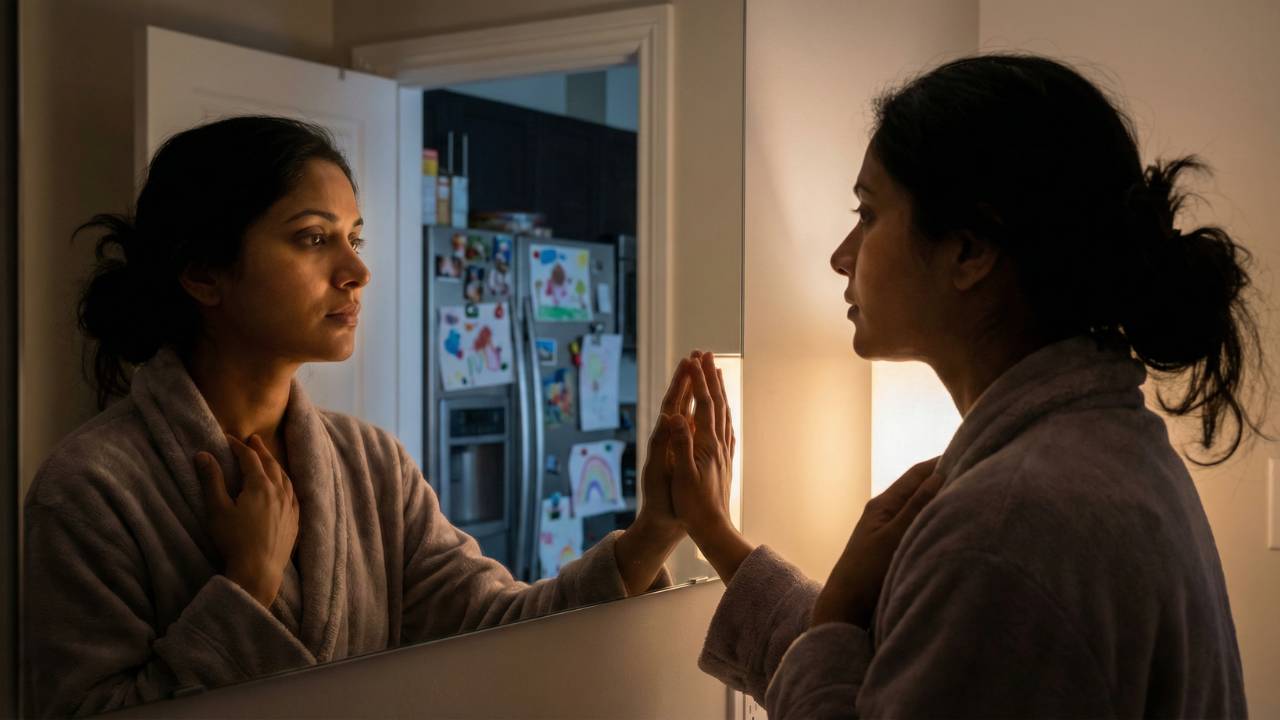
As a psychologist and a mother, how has parenthood reshaped your understanding of erotic energy, autonomy, and identity, particularly for women who feel split between caregiving and desire?
Mili: The systemic and cultural identity of a woman is central to this experience, especially in cultures where her primary role is defined by caregiving. In these contexts, a woman’s desire is rarely in the spotlight or considered an important conversation. Particularly after becoming a mother, a woman’s erotic energy is often suppressed both by herself and a society that does not expect her to embody that energy. However, many women eventually reclaim their sexuality and essential energy following a reckoning triggered by burnout and the realization that they have been living performatively.
This leads them to encounter parts of themselves they never felt safe to acknowledge. This process is often a difficult journey where a woman must navigate dark phases to truly encounter her own connection with herself.
The Real Desire Problem
In your clinical experience, what is the most common misunderstanding couples have about desire differences, and how can shifting the frame transform resentment into curiosity?
Mili: A common pattern in many couples involves women over-functioning by carrying the bulk of the emotional labor. This often forces them into a mothering role that effectively kills their desire. In these dynamics, men are frequently unaware of this shift and simply focus on the lack of sexual intimacy, failing to see that constantly initiating and leading every aspect of the relationship creates a burnout that keeps the woman in survival mode. Many couples enter partnerships without exploring their individual relational, sexual, or childhood traumas. For those with avoidant patterns, an intense fear of closeness causes them to withdraw whenever the relationship becomes deeply intimate, leaving their partner feeling unseen. Consequently, many couples exist in a state of mutual protection rather than connection, appearing well-functioning to the outside world while the internal relationship remains emotionally and sexually dead.

Are We Mistaking Anxiety for Passion?
Is emotional unavailability sometimes more erotic than stability? Why are we often drawn to what dysregulates us?
Mili: Unconscious attachment often leads individuals to attract partners who reactivate their nervous systems as a subconscious attempt at healing. This pattern is frequently seen when a person with an intense fear of abandonment is drawn to someone with a fear of engulfment. If at least one partner remains unconscious of these patterns, it can create a trauma-bonding situation. In this dynamic, the partner seeking connection experiences high levels of cortisol due to the other’s emotional unavailability. The unavailable partner then provides relief by offering “breadcrumbs” of connection, only to withdraw again to regulate their own stress.
This creates a cycle of stress and relief where intimacy followed by distance is misperceived as passion or eroticism. In reality, it is an unhealthy codependency cycle where both individuals struggle to find regulation through chaos rather than stability.

Here’s How to Start Breaking Free
If someone reading this feels stuck in repetitive relational pain, loving deeply but always ending up dysregulated, what is the first brave step toward breaking that cycle?
Mili: Breaking the cycle of repetition starts with the awareness that we are seeking parts of ourselves in others that we have not yet made peace with. This repetition involves expecting different outcomes while pursuing the same types of people. The brave step toward change is doing something entirely different from your habitual response. For an over-functioner who tries to fix everything, the step is to pull back and allow the dynamic to collapse if it is fragile, which reveals if the partner is willing to step up and create reciprocity. For someone who habitually quits or withdraws when things get stressful, the brave step is staying longer, having the postponed conversations, and not taking a partner’s intensity personally. This process involves both people increasing their nervous system capacity and taking full responsibility for their patterns rather than blaming the partner.
Focusing on a partner’s behavior during stress is often a way to avoid looking at oneself. Ultimately, relational stress is created by two people; those who find it too easy to stay must practice leaving when things are unhealthy, while those who find it too easy to quit must practice staying to see if the relationship is truly workable.

Editor Note
Sensitivity is not a weakness; it’s a form of intelligence, one that can guide us toward deeper connection, desire, and self-understanding. In relationships, what feels like lost passion is often a hidden spark waiting to be recognized, and what looks like conflict can be an invitation to examine our own patterns and nervous system responses.
True intimacy demands curiosity over blame, presence over performance, and self-awareness over unconscious repetition. For women navigating desire alongside caregiving, reclaiming erotic energy is an act of courage and self-respect.
Understanding your own nervous system may be the greatest key to understanding love itself.
