
What happens when success looks perfect on paper but feels empty in the body? In this deeply reflective interview, Flora Petri traces her journey from corporate law and diplomacy into the world of erotic intelligence and intimacy coaching. She unpacks the quiet disconnect many high-performing individuals carry, the emotional weight behind polished exteriors, and the absence of true embodiment in achievement-driven lives.
Flora speaks candidly about the hidden realities of men who appear powerful yet feel internally fragmented, revealing how shame, conditioning, and emotional suppression shape their relationships, leadership, and sense of self. She reframes burnout not as a failure but as a signal, one that calls for a return to pleasure, presence, and the body’s intelligence.
Through her work with executives, athletes, and founders, Flora explores intimacy not as indulgence but as a pathway back to aliveness. A space where sensation replaces performance, where honesty dissolves disconnection, and where the nervous system can finally soften after years of control.
The conversation also challenges the divide between sexuality and professionalism, offering a perspective where erotic intelligence becomes a source of creativity, magnetism, and grounded leadership. It questions what power really means when it is stripped of presence and what becomes possible when the two are fully integrated.

Website
Success Wasn’t the Answer
You spent years in corporate law and diplomacy before stepping into the world of erotic intelligence and intimacy coaching. What moment made you realize that success without embodiment wasn’t truly success?
Flora: It wasn’t one moment. It was many, spread over years, arriving slowly, revealing, terrifying, and affirming.
The most potent time was what I call Law 2.0. I returned to Austria, the country where I grew up, where I went to law school, and stepped back into the corporate world after nine years away. By every external measure, it was a triumph. Closing deals. High-stakes work. The life that was supposed to feel like an arrival.
It was Mission Impossible.
And what struck me wasn’t the stress. It was the flatness. I’d had that flatness before in Law 1.0, in diplomacy, and in all the beautiful, successful chapters of my life. I was bored. Not from lack of stimulation, but from lack of felt experience. Every success was a tick in a box on paper. None of it actually landed inside me. My body wasn’t there. I was operating from a place of pure performance, pure nervous system armor, and I didn’t even have language for that yet.
When I finally left diplomacy, that was the beginning of the real exploration. Not the career transformation, but the coming home. Into sensation. Into my body. Into what it actually feels like to be alive.
And then, returning to corporate law with that new embodied knowledge? That’s when I knew, irreversibly, I was not made for that world anymore. Not because it wasn’t impressive. But because “impressive” and “alive” are not the same thing.
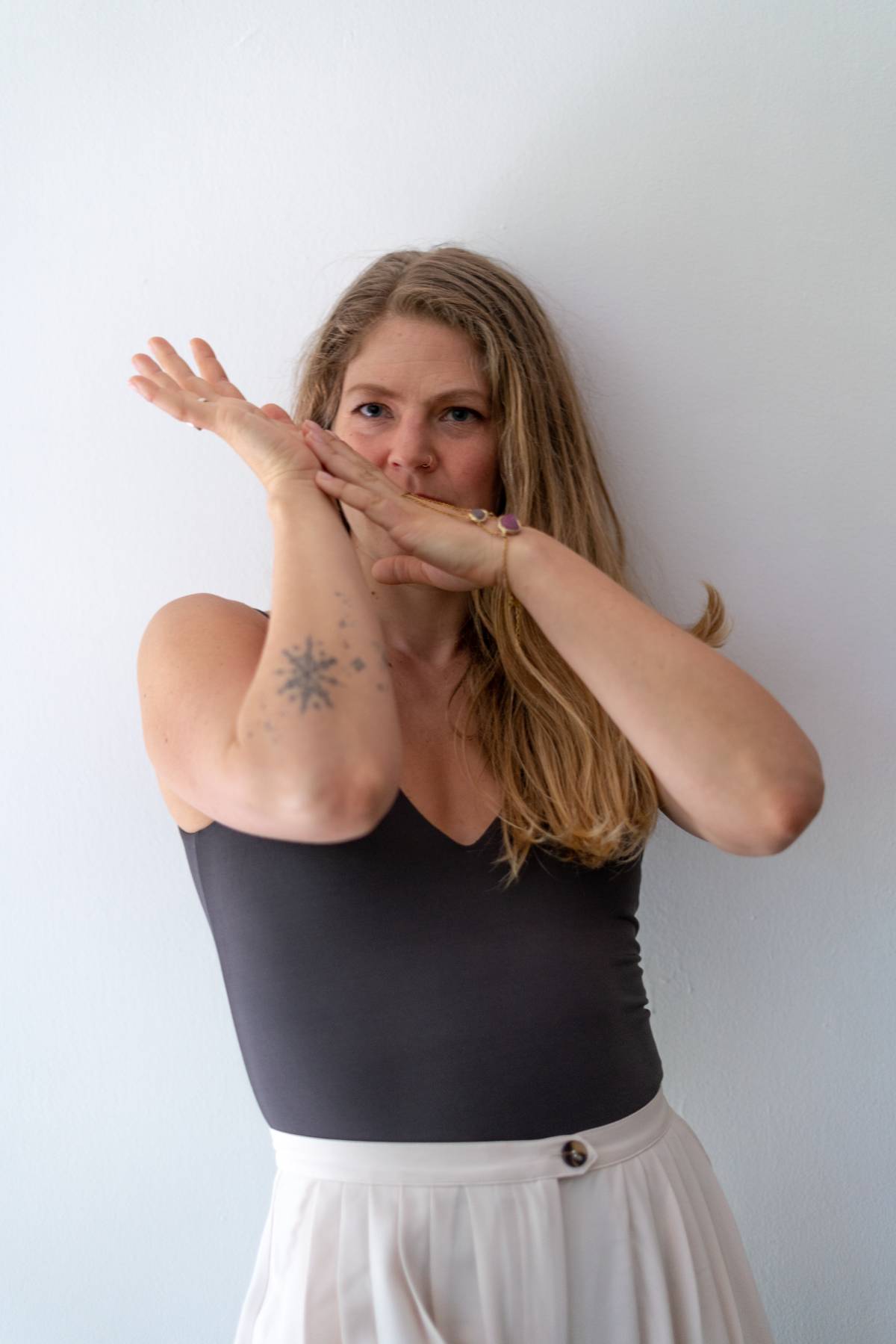
Men No One Talks About
Many high-performing men you work with appear powerful on the outside but feel disconnected inside. What are the most common emotional or relational struggles you see behind that polished exterior?
Flora: They all carry a secret. And it weighs heavily on them.
Every single one. Something they’ve never said out loud to anyone. A part of themselves they’ve been conditioned to believe is unwelcome. Too much, too soft, too strange, too hungry.
The conditioning runs deep and old: “You are a man. Strong men don’t feel. Strong men don’t need. Strong men have themselves under control, always.” And so the armor goes on early and stays on. What I see again and again is profound, bone-deep shame. Shame that has quietly organized an entire life around appearing invincible, while everything on the inside goes unwitnessed.
That shame doesn’t just show up emotionally. It shows up relationally. It creates this myth in men and in the people who love them that you are only welcome in your strength. That your full, complex, feeling interior self would be too much, too inconvenient, too threatening. So parts get hidden. The disconnect grows. And then there’s the secondary shame of noticing the disconnect at all: “I have everything. Why am I struggling?”
What’s missing isn’t willpower or achievement. What’s missing is integration. Men are still given almost no roadmap for how to be powerful and emotionally intelligent, successful, and erotically alive. That remains largely uncharted territory, and my clients are the ones brave enough to chart it.
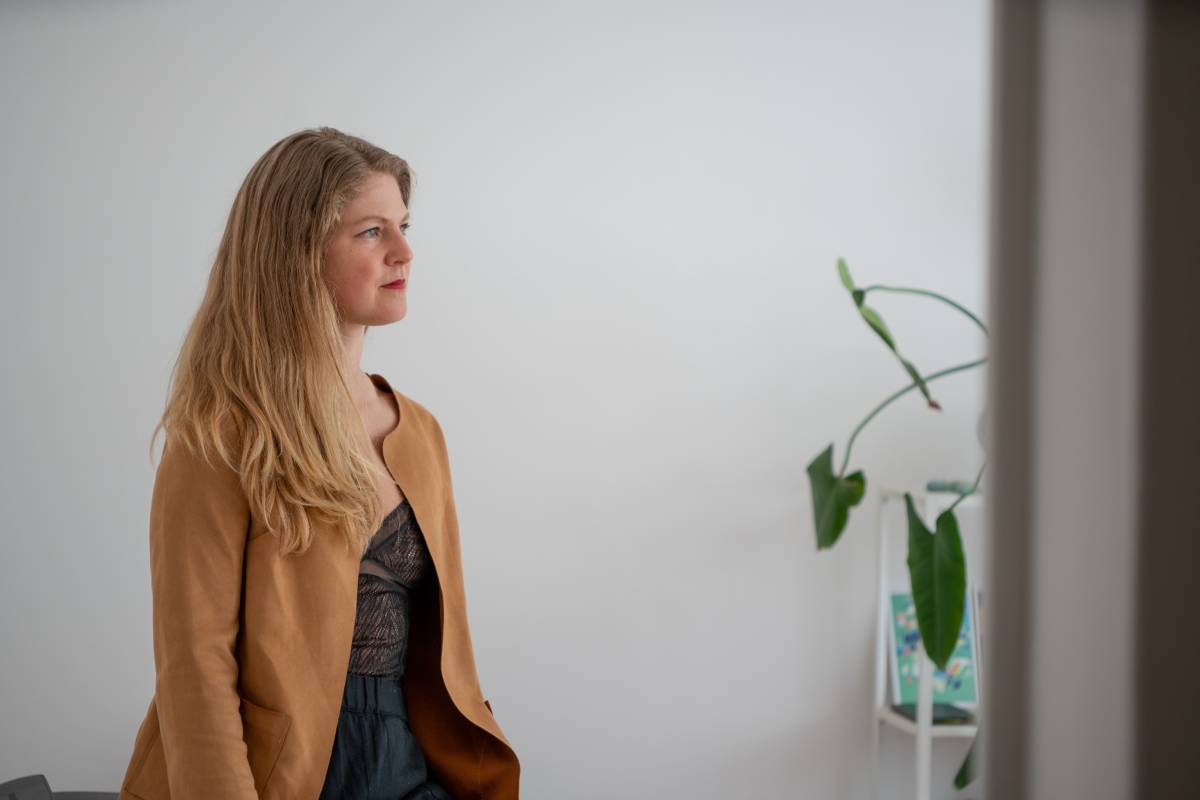
The Intimacy Cure for Burnout
Burnout is almost a badge of honor in many professional environments. From your perspective, what role do pleasure and intimacy play in healing the nervous system after years of performance-driven living?
Flora: A massive one.
Our culture is built on numbing. Caffeine to push through. Alcohol to come down. Porn to get turned on and jerk off. Stress that’s only bearable because we’ve outsourced our nervous system to the next deadline, the next win, the next dopamine hit. We’ve learned to override the body’s intelligence so thoroughly that we’ve forgotten it was ever there.
Pleasure is the portal back.
Not as a reward. Not as a luxury. As medicine.
The nervous system, after years of performance-driven living, is hardwired for urgency. Slowing down doesn’t feel safe. It can actually bring up enormous discomfort, because stillness creates space for everything that was numbed to surface. That’s real. That’s part of the process. And I highly recommend not attempting this process of slowing down alone.
But the practice of noticing, of feeling your breath deepen, of placing your hands on your own body, of pausing long enough to actually look at the sky, is not small. It is profound rewiring. Intimacy with oneself first. With sensation. With truth. With life.
And from that foundation, the capacity to relate, to be present with another person, to give and receive pleasure without performing it, becomes possible again. Shame begins to dissolve. The nervous system learns a different story: “I am safe to feel. I am safe to want things. I am allowed to be here.”
That’s not indulgence. That’s the deepest kind of leadership work there is.

And How to Find It Again
You guide executives, athletes, and founders back to what you call “aliveness.” What does being truly alive feel like in the body, relationships, and daily life?
Flora: Aliveness is an individual experience. My clients answer this differently, and I love that.
But there’s a shared quality, a flavor that runs through all of it. More lightness. More trust. More play. A felt sense that the beauty in ordinary moments is actually registering, not just passing through.
I draw from tantric philosophy here: There is no good or bad, only joy and grief. Pleasure and pain. Play and loss. Liberation comes when we stop making our experiences mutually exclusive and expand our capacity to feel the full spectrum, rather than curating only what’s acceptable.
In the body, aliveness feels like a kind of inner sparkle. A bubbliness. Like sunlight hitting water. Feeling your feet on the earth. Your power. Having fun. Feeling safe. There’s a vibration, a subtle, cellular YES to being here.
In relationships, it shows up as genuine presence. You stop performing your role and start actually meeting people. Your partners, your team, your children. Something in the room shifts when a person is truly in their body.
In daily life, it feels easy. Not easy. Easeful. The difference matters. There are still challenges, still effort, and still hard things. But there’s a trust underneath it all. A sense of being guided rather than driven. Of choosing growth rather than grinding toward it.
And when erotic life force, sexual creative power, is consciously integrated, it ripples into everything. Leadership. Vision. The quality of attention you bring to your work, your relationships, and your body. You don’t compartmentalize anymore. You co-create.
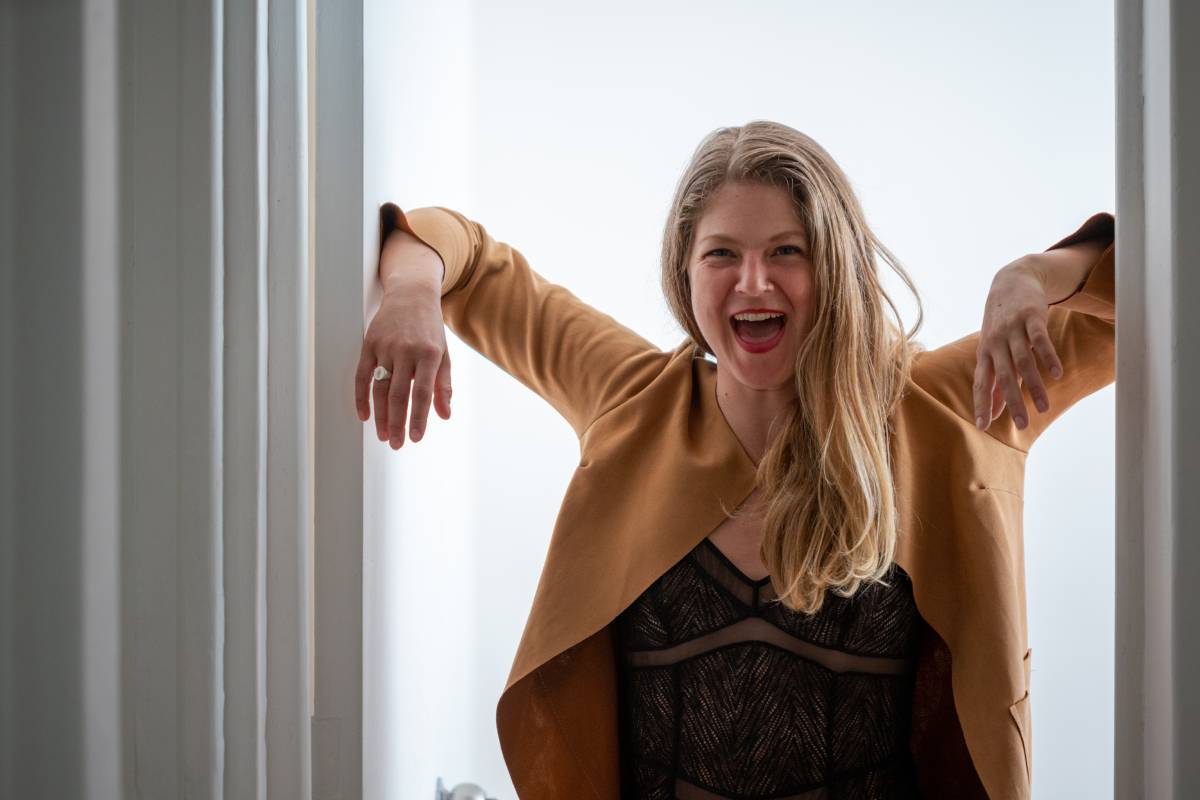
Sexiest Skill a Leader Can Have
Society often separates sexuality from professionalism, yet your work bridges the boardroom and the bedroom. Why do you believe integrating these worlds is essential for modern leadership?
Flora: Because power without presence is just performance. And performance is exhausting. It’s hollow. It’s dead.
In the corporate world, in diplomacy, I watched brilliant, accomplished people operate at a fraction of their actual power. Not because they lacked strategy or intelligence. Because they had severed their life force from their work. Eros, erotic intelligence, and sexual and creative energy are not separate from professional excellence. It is the source of it. It is the force behind every act of creation, every bold decision, every moment of genuine magnetism in a room.
When you suppress that, when you split your desire, your vitality, and your embodied instincts from how you show up professionally, you are not more powerful. You are more armored. There’s a difference.
We are also watching, in real time, what happens when sexuality is suppressed rather than integrated. It doesn’t disappear. It distorts. It surfaces in shadow. In misuse, in disconnection, in the relational wreckage left behind by men who never learned to befriend their own impulses.
The new leadership, the leadership the world is actually hungry for, is integrated. It is whole. It is a man who trusts the wisdom of his body, who moves from presence rather than pressure, whose power you feel not because he demands it but because he has nothing left to hide.
That is erotic intelligence in service of the world. And it is foundational, not optional.

The Intimacy Wake-Up Call
If someone reading this feels successful on paper but empty in their private life, what is the first step toward rediscovering intimacy with themselves and with others?
Flora: Brutal, radical, kind honesty with yourself.
That is the prerequisite. And I don’t say that lightly, because when life looks so good on the outside, admitting something is deeply off on the inside takes real courage. It takes everything, sometimes.
In my experience, honesty rarely arrives gently. It tends to be invoked by crisis. A health collapse that forces a pause, a partner who says you can’t keep living like this, and a career shift that strips away the last identity you were hiding inside. Those aren’t punishments. They’re invitations.
From that honest place, the work becomes possible. There are extraordinary practitioners and support systems. Somatic therapists, embodiment coaches, and trauma-informed guides who can help transmute that disconnection into something alive. Who will meet you in your body, not just your mind. Who will witness the parts you’ve kept secret and reflect back that you are not broken? You are unintegrated. And integration is learnable.
If you want to begin right now, before anything else, breathe. Genuinely, deeply breathe. Slow down your breath. Place your hands on your body. Feel the weight and warmth of your own hands. That’s nothing. That’s the beginning of the most important relationship you’ll ever have.
What you’re calling emptiness starts shifting with one honest breath. Everything else follows.

Editor Note
There’s something deeply human in Flora’s insights, a reminder that beneath all the structure, ambition, and carefully held identities, there is a natural rhythm we often ignore. We are not designed to operate at a constant pitch of performance. Like anything alive, we move in cycles. We expand, contract, rest, and return.
What we are searching for in success is often waiting for us in stillness. Not in the next milestone, but in the moments where we soften enough to actually feel our lives as they are.
