
Tiffany is a somatic therapist specializing in trauma recovery and the founder of Sex Prayers, a brand and community dedicated to exploring intimacy, sensuality, and pleasure. Through workshops, community events, and experiential experiences, they guide people to reconnect with their bodies, navigate shame, and access deeper states of aliveness both alone and in connection with others.
Their approach blends somatic therapy, pleasure education, and community-building, helping clients expand their understanding of intimacy beyond conventional boundaries. For Tiffany, sensuality is not just about sexuality; it’s a tool for safety, empowerment, and authentic connection in every area of life.
We spoke about how reclaiming sensuality can reshape relationships, the vision behind Sex Prayers, and how embracing pleasure and intimacy can create ripple effects throughout communities

sex prayers
Website
Exploring Sensuality
You describe sensuality as a resource for safety, pleasure, and aliveness. Can you share a personal experience where reconnecting with your sensuality had a transformative effect on your life or relationships?
Tiffany: There was a moment when I zoomed out on my life and realized how isolated I’d become. Years of trauma had wired my body for fear; I was constantly braced, always scanning, never fully safe in the world. But underneath that vigilance, I could feel this quiet radiance, a current of loving energy and light that wanted to be lived. Sensuality became the bridge back to her.
I began designing my environment as an act of reclamation. I filled my home with lush houseplants, incense that smelled like prayer, and music that lifted my spirit. I cooked nourishing meals just for myself, surrounded by textures, colors, and sounds that made my body sigh with delight. With every sensory choice, I was teaching my nervous system that it was safe to soften.
Over time, my external world began to mirror the beauty I was cultivating within. I’d wake up excited for the day, even if I never left the house. Life stopped feeling like something to survive and started feeling like something that was seducing me, inviting me into deeper intimacy with myself and the world. That shift changed everything: my courage, my creativity, and the way I relate to love itself.

Art of Sex Prayers: Where Pleasure Meets
Sex Prayers” blends intimacy, spirituality, and community. Can you walk us through the philosophy behind it, and how it helps people explore pleasure, connection, and self-awareness in ways traditional approaches might not?
Tiffany: If there’s one collective wound we’re still healing from, it’s the aftershock of isolation. COVID didn’t just separate us physically; it fractured our trust in one another. In its wake, we’re craving connection that feels real: authentic, embodied, and safe.
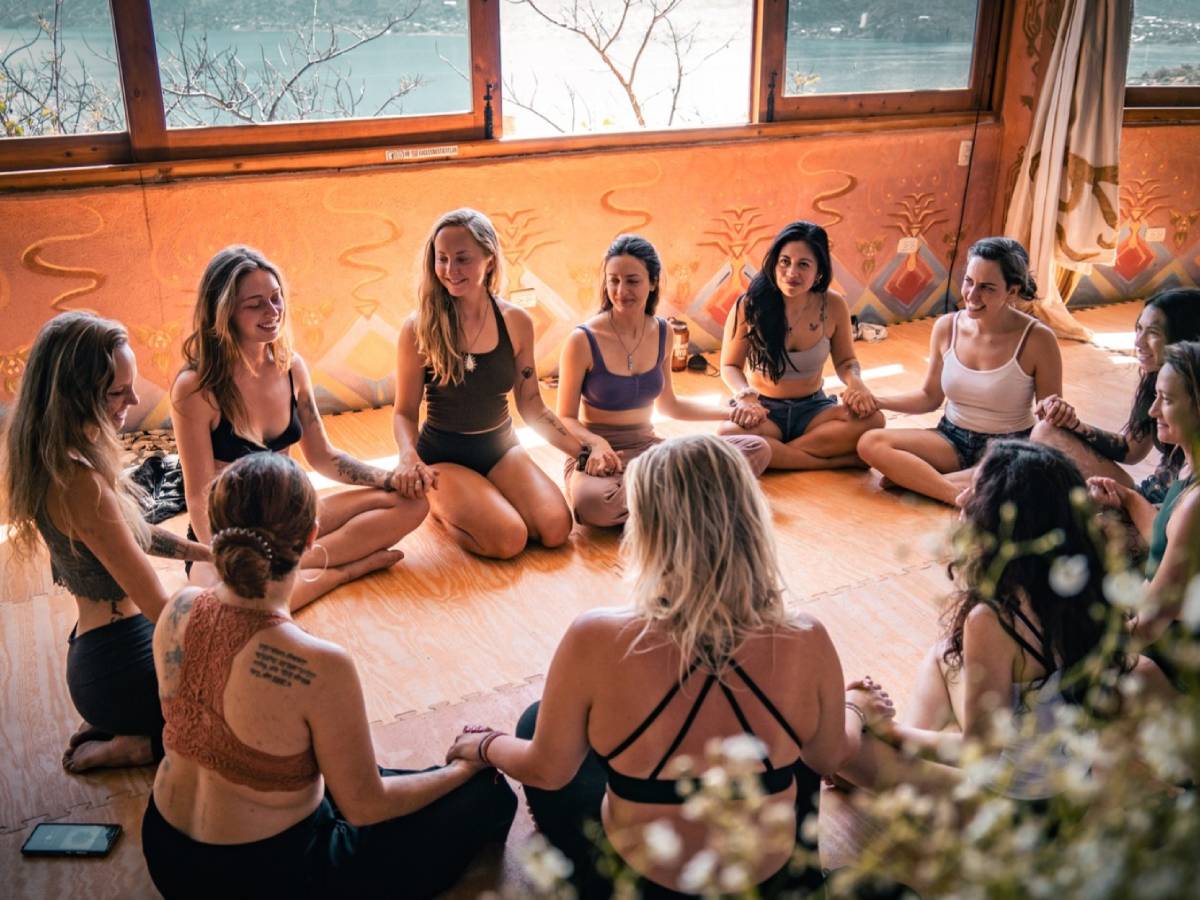
That’s the heartbeat of Sex Prayers, a living, breathing space where intimacy, spirituality, and community meet. At its core, it’s a re-education in what safety actually means, not as an idea, but as a felt experience in the body. Through workshops and community rituals, we teach people how their nervous systems process intimacy, how trauma shapes connection, and how to create safety from the inside out.
It always starts with intimacy with self, learning to listen to your body, to regulate your nervous system, to build safety from within. From there, it becomes this beautiful ripple. People begin practicing those skills with each other eye contact, boundaries, play, truth. And suddenly, strangers start remembering what it feels like to belong.
We weave somatic work with tantric and spiritual philosophy, helping people move from bracing to openness, from performance to presence. For me, that’s what real pleasure is feeling safe enough in your body to let life touch you.

Pleasure as a Practice:
You talk about pleasure as a gateway to feeling more alive and connected. What are some practical ways someone can begin to access that pleasure safely, either alone or with a partner?
Tiffany: For me, pleasure always begins at home, quite literally. Our living spaces are our most intimate environments, and small shifts can completely transform how we feel. Try rearranging your furniture or clearing clutter; notice how freshness enters the room. Light incense or candles with a scent that soothes you. Buy yourself flowers for no reason at all, or keep soft lighting that makes your evenings feel like a ritual. Even slipping into new sheets or fabrics that feel delicious on your skin can remind your body that it’s safe to receive comfort.
I love buying a new perfume or essential oil. The moment I spray it, something in me comes alive like a coded reminder that I am allowed to feel good. That’s the magic of sensuality: it trains the body to trust pleasure again. The same goes for what you eat or listen to. Make a meal that feels like devotion something slow and colorful. Or create a playlist that evokes the energy you want to feel that day: grounded, radiant, sultry, or soft.
When I teach emotional alchemy through archetypes and ecstatic dance, I often start with a song that matches the emotion I want to embody. If I’m craving confidence, I’ll put on something with a steady beat and let my hips lead. If I’m yearning for tenderness, I might sway gently to a slower track, letting my breath guide me. Somewhere in that rhythm, I stop moving and begin to be moved. That’s the bridge between the physical and the divine when the spirit starts dancing through you.
And when it comes to partnership, I always say: start slow. Even flirting can be foreplay. Whisper something that makes your partner blush. Play a song you both love and dance in the kitchen while dinner’s cooking. Explore slow touch tracing a fingertip along the arm, playing with different pressures or textures. You don’t need to rush toward sex; instead, linger in curiosity. Because even after twenty years, your partner is a mystery. Staying curious and playful keeps the relationship pulsing with life.

Facing Shame, Finding Pleasure
How do you personally navigate shame in sexuality, and what advice would you give to someone still struggling with it?
Tiffany: Shame is such an interesting emotion because it rarely shows up dressed as itself. It hides under the skin of other feelings irritation, fear, guilt, even numbness. But when you start to gently untangle what’s underneath, shame is often at the root.
When it comes to working with shame, especially around sexuality, the most important thing is to go slowly. The nervous system has its own tempo, and if you push past that, it will protect you the only way it knows how through shutdown, dissociation, or panic. Healing asks for the pace of breath, not urgency. I like to imagine it like wading into a body of water. You dip your toes in, feel how your body responds, and then decide if you want to go deeper. Maybe you only go up to your waist; maybe you dive all the way in. The point isn’t how far you go, but that you choose that you stay in relationship with your own safety as you explore.
I often remind my clients that healing shame looks like one step forward, two steps back and that’s exactly how it’s supposed to. You expand toward your edges, and then you come home to yourself again. That’s the dance.
One of my favorite practices is what I call following the thread. Draw a timeline of your life and mark every moment where you’ve felt shame or discomfort in your sexuality. Then, look for the patterns what emotions show up again and again? What happens in your body? Maybe there’s a tightening in your chest, a desire to withdraw, a sense of collapse. Those sensations are the doorways in. When you can meet them with curiosity instead of judgment, the body begins to reinterpret the signal not as danger, but as an invitation to heal.
Shame doesn’t disappear forever. But over time, it softens. It becomes something you can hold, something that teaches you tenderness. You learn to recognize it not as proof that you’re broken, but as a sign that a part of you is finally ready to be seen.

Why Pleasure Should Be Part
In your opinion, should schools teach pleasure and intimacy alongside consent and anatomy? Why or why not?
Tiffany: Oh, babe, if we could reform the way we teach sex and intimacy, that would be a dream. When I was in school, “sex ed” was maybe an hour long, a quick slideshow that barely scratched the surface. It was all fear, no nuance. Nobody talked about pleasure, communication, or the emotional landscape of intimacy. The message was: “Don’t get pregnant, don’t get an STI, good luck.”
It wasn’t until college that I took a single class on sexual psychology, and even then, it only opened the first few pages of a much larger story. I remember thinking, Where’s the Bible on this? Where’s the education that helps us understand our bodies, our desires, and our boundaries with reverence rather than shame?
That’s why I believe schools should absolutely teach pleasure and intimacy alongside consent and anatomy. Pleasure literacy isn’t just about sex it’s about self-awareness, emotional intelligence, and the ability to choose from a place of sovereignty. I can’t tell you how many adults come to my events having never been taught what consent really feels like in the body, or how to communicate needs with clarity and care.
If we could give young people that foundation early on to understand that pleasure and safety can coexist, we’d raise a generation capable of deeper, healthier love. And that ripples out. More self-aware humans create more harmonious relationships, families, and communities. It’s not just a personal revolution; it’s a social one.

Unpacking Intimacy:
Re-educating people on what intimacy actually is. How do you approach this re-education, and what misconceptions do you most often encounter?
Tiffany: Whenever my partner David and I host an event, we always begin with a nervous system check-in. We use what we call the traffic light system green for feeling open and regulated, yellow for tender or cautious, red for overwhelmed or shut down. It’s such a simple practice, but it changes everything. It reminds us not to assume that everyone arrives in the same emotional state just because we’re excited to be there. We’ve all lived full days before walking into a room. Taking that collective pulse instantly lowers the armor people feel seen, not judged. And that sense of safety becomes the soil intimacy grows from.
From there, we guide people through stages of re-education. Our first events are conversation-based open dialogues about intimacy, tantra, and relationships that dissolve stigma and expand what intimacy actually means. By the end, people are usually wrapped up in a cuddle puddle, realizing how deeply connection can exist without any sexual agenda at all.
The next layer is flirtation rediscovering play. So much of modern dating has become checklist-driven and transactional. We invite people to drop the seriousness and remember the art of curiosity. From there, we explore consensual, touch-based connection: how to read body language, how to sense when someone is a full “yes,” a “maybe,” or a “no.”
Our approach rests on what we call the pillars of conscious intimacy truth, trust, empathy, and communication all held by a container of play. Because intimacy isn’t just about bodies meeting; it’s about nervous systems learning to speak the same language. When two people co-create that shared dictionary, connection becomes not just safer, but sacred.
Dark Feminine:
How do you define the concept of the “dark feminine,” and what role does embracing this energy play in personal empowerment, sensuality, and healing?
Tiffany: The dark feminine, for me, is the aspect of womanhood that’s been most misunderstood and also the most liberating once you meet her. She’s not the shadow you need to fix; she’s the part of you that holds the truth you were taught to hide. The dark feminine is the storm that clears the air, the grief that cleanses the heart, the hunger that refuses to be tamed.
For so long, we’ve been conditioned to equate femininity with softness, compliance, and light. But real wholeness includes the parts of us that rage, that ache, that desire. When I began to honor my darker emotions, jealousy, anger, erotic hunger, grief, I realized they weren’t the enemy. They were messengers. They showed me where my boundaries had been crossed, where my energy was leaking, and where I was ready to reclaim power.
But like all archetypes, the dark feminine has her shadow when she’s left unchecked. When we first awaken her, she can swing like a pendulum from repression to raw, unfiltered power that sometimes wants to consume rather than connect. That expression isn’t wrong; it’s often necessary. It’s the body recalibrating after years of silence. Yet the deeper work is integration —learning to let her power serve love, not ego; creation, not chaos.
There are stages to that integration. First comes the awakening, when you finally let yourself feel. Then the release. when all that repressed energy rises to the surface. After that, discernment learning to hold your desire with devotion. And finally, embodiment when her power softens into presence.
When you reach that place, your sensuality becomes less about seduction and more about sovereignty. You stop performing and start radiating. That’s the true dark feminine, not dangerous, but deeply alive.

Vision for the Future:
Looking ahead, what is your ultimate vision for changing how people understand intimacy, sensuality, and pleasure, and how do you hope your work ripples into broader communities?
Tiffany: I have this vision of my partner and me standing on stages before thousands of people, not preaching, but sharing stories. Our own lived experiences, our education, our mistakes, our revelations, all of it offered as conversation starters for a different kind of dialogue about intimacy, healing, and what it really means to be alive. I love teaching through a therapeutic lens, but I also believe that life itself is the ultimate teacher. Every moment, every heartbreak, every pleasure is a lesson in how to co-create with spirit the kind of world we want to live in.
If we desire a life rich in beauty, abundance, and pleasure, then we have to learn to trust that life wants that for us, too. For those who carry trauma, that trust can feel far away, but that’s why this work matters so much. It rewires the body for a different story. It helps us remember that safety and love are not fantasies; they’re birthrights.
My dream is to take Sex Prayers global. To host retreats, workshops, and gatherings that bring together people of all cultures, genders, and backgrounds to explore what it means to love fully. To build communities where intimacy becomes a spiritual practice and where self-love is seen as a sacred act of service to the whole.
At the end of the day, that’s what I’m here for: to be a steward of love. To remind people that pleasure is safe, that spirit is generous, and that the universe longs to conspire with us when our intentions come from devotion, not ego. Love is the vibe. Loving our neighbor is the Mecca. And loving ourselves… that’s where the revolution begins.

Editor’s Note:
Tiffany’s insights remind us that pleasure is far more than sensation; it’s a language of the self. When we learn to honor our bodies, to create spaces of safety and delight, we open doors to deeper awareness, emotional resilience, and genuine connection. Healing shame, exploring curiosity, and embracing our full spectrum of desire are not indulgences; they are acts of self-respect and reclamation. What emerges is a life lived with aliveness, presence, and authenticity.
The takeaway is simple yet profound: when we tend to our own sensuality, we cultivate a foundation that transforms how we relate to ourselves and the world around us. Pleasure is not just personal, it is revolutionary.
“When we honor our bodies, emotions, and desires, we don’t just survive life, we awaken to it, inviting deeper aliveness, connection, and joy into every moment.”
