
For years, she lived in a fast-paced rhythm of achievement and performance, pushing her body beyond its limits and mistaking burnout for strength. But motherhood changed everything. The unspoken expectation to be the perfect mother, partner, and woman, often without support, brought her face-to-face with a truth she could no longer ignore: she was living in her body but not truly inside it. Her nervous system wasn’t thriving. It was surviving.
That realization became the turning point.
Through her own unraveling, Stefania began to understand that what many women label as “low libido,” numbness, or disinterest in intimacy is often the body’s intelligent response to years of override to the times they said yes instead of no, endured touch that felt invasive, or silenced their intuition to stay “good.” The body remembers what the mind minimizes. And sometimes, it protects through a shutdown.
Today, her work as a somatic sex coach centers on helping women reconnect with their bodies slowly and safely. She challenges society’s obsession with orgasm as the ultimate measure of sexual success, pointing out how performance pressure and porn-informed narratives disconnect women from sensation rather than deepen it. Instead of chasing outcomes, she guides clients back to presence to breathe, to subtle signals, to the quiet yes and the barely audible no.
In this conversation, Stefania reflects on motherhood, survival patterns, orgasm pressure, intuition, and the deep reclamation of feminine sexuality. Her insights offer a grounded, compassionate invitation back to the body, not through performance or perfection, but through softness, truth, and nervous system repair.
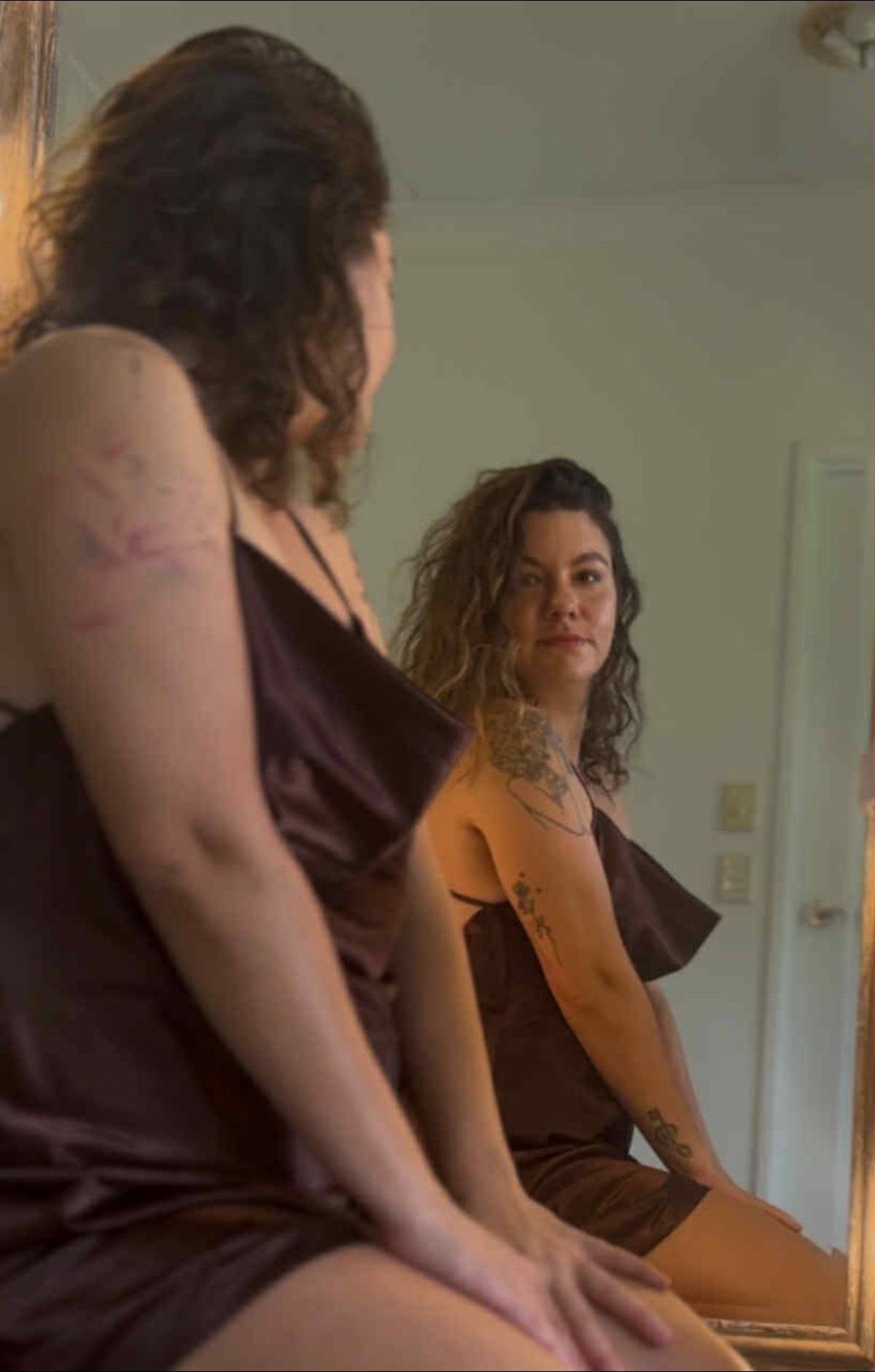
Motherhood Met My Nervous System
Motherhood transformed your connection to your body. Can you share a specific moment or experience that made you realize you were living in your body but not fully inside it? How did this awareness shape your approach to somatic sexuality?
Stefania: Growing up, I used to have a pretty busy/fast-paced life, always working hard and pushing my body to levels of exhaustion, thinking that pushing without listening to my body was strength rather than admitting to being tired, thinking it would have meant “weakness.”
Once I became a mom, the expectation to be good at everything in a society that expects mothers to have to do all without support crumbled me to the point I had to be honest with myself, and so I started to listen to my body that was so quietly screaming for help to understand we are not meant to do and be everything by ourselves. Mothers used to be supported by the whole tribe that was looking after her while she nurtured the baby. That’s when my curiosity and willingness to grow made me closer to the realm of somatic sex coaching and finally opened new doors into a better knowledge of what we need as human beings

Rethinking Low Desire
You say, “Nothing was wrong with me. My nervous system had simply learned to survive.” That reframing is powerful. How does understanding survival patterns change the way women approach intimacy?
Stefania: Talking to women, it is very common to hear them blaming themselves for not feeling or not having a high desire or libido, or not craving intimacy. Or also, thinking something is wrong with them because they can’t feel pleasure during intercourse, or sometimes freeze, or feel like blockages.
The reality behind this can be way more vast and so deeply important to understand.
All the times we felt unsafe, all the times we said yes but we wanted to say no, and every time we’ve been touched in a way that felt invasive. All of those times, we might not vocalize them or probably don’t even realize, but they get stuck in our bodies. And our body remembers more than our mind. So all the body is trying to do is save us, survive. And that gets into numbness.
If only women knew this instead of blaming themselves, once the awareness is there, it creates possibilities to work on it, because we are all worthy of feeling pleasure and desire.

Outer Glow, Inner Fire
As a former hairdresser, you witnessed transformation through image and appearance. What parallels do you see between external transformation and internal sexual awakening? Where does confidence from the outside stop working?
Stefania: I have worked as a hairdresser for 20 years now, and I’ve been spending all those years creating new looks, making women feel confident and good again. But that approach was temporary. I could tell their eyes and faces were glowing again after their appointment, and their leaving the chair like that was making my day, but for how long would that have lasted? What about once they were washing their hair, and everything was going back to before?
What if that glow was actually coming from inside, that glow that comes from the body, and you can just see the energy exploding all around, bringing that person to be ALIVE again? I wanted to work to a deeper level, all the way to their nervous system and capacity to show up in their relationship, not only with others but with themselves, for something more permanent.

More Than the Finish
Do you think society puts too much pressure on orgasm as a measure of sexual satisfaction? How do you help clients shift focus from results to embodied experiences?
Stefania: Society is obsessed with the goal of orgasm. Not surprising since most of what we know about sexuality comes from porn, which can be wrong and far from reality. We do not know how our body works, the differences between bodies, or how they react to stimuli. It’s so orgasm-goal-oriented that it actually created a problem around orgasm, increasing pressure and performance anxiety, making it very hard to feel anything else.
Orgasm is hard to reach without sensations, and if we take shortcuts to get there or rush the process, like everything else, it won’t work. Women take a slow approach to surround themselves and let every little sensation and pleasure flow into their bodies. That’s why, with my clients, most of the time my approach is to reconnect with their body and practice to learn how to be present even before we work on sexual- or intimacy-related practices.

The Quiet Yes, Subtle No
The concept of body intuition, the quiet yes, and the subtle no is central to your work. How can someone start recognizing these signals if they’ve ignored them for years?
Stefania: Yes, the concept of body intuition, the quest, yes, and the subtle no, it is very important in my work. Before, I always felt like a superpower. What I realized, though, is how potent it is once I learned how to connect better with my body, and that inspired me to help other women embrace the natural, powerful tools we all have. If we look back at our ancestors and the way they navigated their daily life, counting deeply on their intuition for surviving, that’s why it was so enhanced. Because of the fast-paced life we have, we barely realize anymore the signal our body is sending us, let alone deeper signals like intuition. Also, let’s not forget how shamed we get if we speak up about what we feel is the truth, being called “crazy,” “dramatic,” or “all in our mind,” yet how many times we end up saying, “ I knew it.”
Practicing this over time It can help women to distinguish overthinking from time to time, do what your actit”?ual intuition is telling them, and not only how trusting this raw truth can build safety and confidence in them, but also how, when it’s trusted in a couple’s dynamic, it can create a sacred space for both individuals.

The “Good Girl” Grave
Many women are raised to be ‘good girls,’ ‘good mothers,’ and ‘good partners.’ In your experience, does a woman have to metaphorically ‘kill’ the good girl to truly find her erotic autonomy, or can they coexist?
Stefania: The good girl topic was a big discovery for me through my growth because in my early years I actually never realized how much of a people pleaser I was. and how bad it actually is, not because I preferred to say yes to things but for the damage it was creating in myself not having boundaries and creating that pattern of getting hurt for my lack of boundaries.
At the end of the day, the lack of boundaries, the continuous yes when all I wanted was to say no, was only dependent on me; I was the only one who could stop that, and as with everything else, it needs practice. That’s so important to teach because it’s hard to start to speak your truth or say no when you never done it before. It takes courage to let that NO get out loud from your throat, especially the first time. But doing that while supported, it’s something else. Once my clients learn that they don’t have to be perfect or good to comply with anything to be loved, but that actually unconditional love is, in its form, one of the most deep one than, their lives change for good.

Debunking Society’s Lies
If you could change one major societal myth about women and sexuality, what would it be, and why?
Stefania: That’s a good question, and honestly, there are so many answers to that, but I will try to pick one. I think women’s sexuality is suppressed in so many ways, starting with the lack of importance given to actually studying our genitalia ( clit was not really considered in medical books until recently, but beauty surgery was happening) to the expectations that women’s pleasure is a taboo and stigmatized if expressed “too much.”
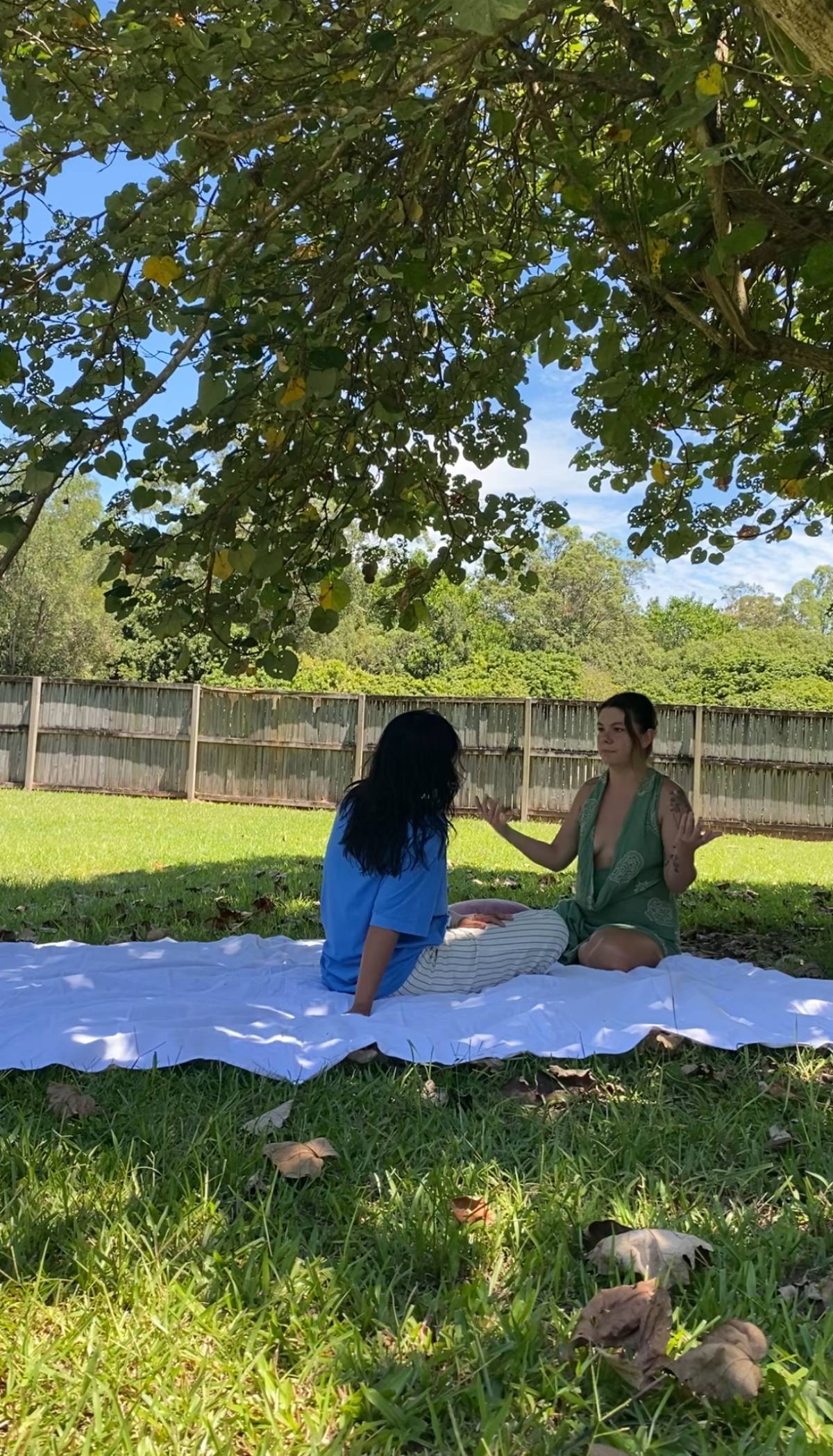
Coming Back to You
The Somatic Lover represents softness, truth, and depth. If a woman reading this feels slightly absent from herself, where should she begin tonight, not with performance or pressure, but with reconnection?
Stefania: The somatic lover represents softness, truth, and depth because that’s what I truly feel is needed. If any woman reading this feels slightly absent from herself, I definitely want to remind her that it is absolutely common and it is something that, with a slow approach, can be solved.
No pressure needs to be applied; reconnecting with yourself is an act of love, a practice…and when that starts slowly to shift, that is exactly when the performance stops and the true aliveness comes out, that safe space where you can deeply feel again.

Editor Note
Our bodies are not failures; they are archives of lived experience, storing truths our minds often overlook. The real work of reclaiming intimacy, desire, and selfhood isn’t about chasing outcomes or perfect performances; it’s about listening deeply, trusting subtle signals, and honoring the quiet yes and the gentle no. In a society obsessed with being “good” and measuring worth by achievement or appearance, Stefania reminds us that presence and embodied awareness are a revolutionary act.
For every woman who has felt numb, disconnected, or pressured, her perspective offers a radical reframing: survival patterns are not flaws; they are invitations to reclaim agency, pleasure, and authentic aliveness
To be fully seen, start by showing up for yourself.
