
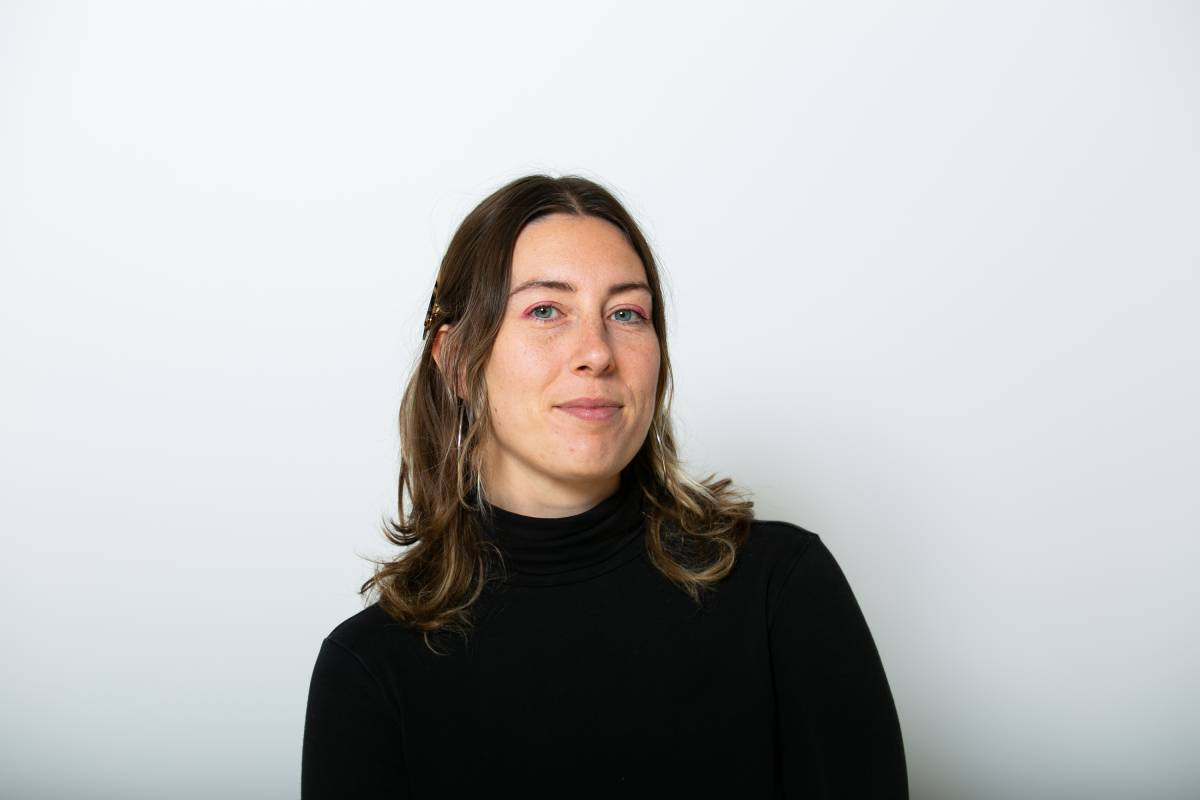
Oli Lipski, known as The Queer Sensualist, takes us on a deeply honest journey through sensuality, intimacy, and sexual freedom. For Oli, sensuality goes far beyond the physical; it is about presence, awareness, and reconnecting with her inner self. She shares how navigating mental health challenges and periods of disconnection led her to rediscover pleasure by tuning into both external and internal senses, a practice she calls interoception. This approach has the power to transform not only sexual experiences, but also one’s sense of authenticity and connection to life.
Moving from London to Berlin allowed Oli to fully inhabit her identity and explore communities that reflect different aspects of his self-expression. From conscious sex-sensuality circles to the queer BDSM scene, these spaces foster intimacy, connection, and personal growth, even as Oli remains aware of the societal barriers and systemic prejudices that still exist.
Oli also confronts widespread misconceptions about pleasure, consent, and sexual norms. She challenges limiting cultural scripts, advocating for a more inclusive understanding of sex where genitals, gender, or relationship structure don’t define or restrict the depth of sexual experience. For her, consent is ongoing, curiosity is vital, and aftercare is an essential part of meaningful intimacy.
Dive into this conversation to challenge assumptions, expand your understanding of pleasure, and explore the liberating possibilities of queer sensuality.
Website
The Queer Sensualist
You describe yourself as “The Queer Sensualist.” What does sensuality mean to you beyond the physical, and how has your understanding of it evolved over time?
Oli Lipski: I call myself The Queer Sensualist because of the intersecting philosophies behind queerness and sensuality as alternative ways of looking at sex and relationships. To queer is to challenge the heteronormative scripts; to be sensual is to be present with what is, not what should be.
Sensuality for me began as a way back into my sex life when it felt like it was unreachable. I went through a period of total disconnect due to mental health issues and discovered that being aware of and activating the senses allowed for a sense of possibility for pleasure and connection.
When I talk about the senses, I don’t just mean the five dominant external senses that are essential for how we navigate the world; I also mean all of our other senses, in particular our internal felt sense, also known as interoception, whereby we deepen our understanding of our inner emotional, energetic, and spiritual worlds to help guide us into our authenticity.

Finding Community, Finding Me
Since moving from London to Berlin, you’ve mentioned finding communities that reflect your true self. How has this new chapter influenced your own sense of intimacy and the way you approach your work?
Oli Lipski: There’s something about Berlin that allows me to feel like a more expanded version of myself. For one, being bi and kinky in such a queer, sex-positive city, I don’t have to explain or prove myself. I can drift between different groups that offer different spaces for expressing different parts of myself, such as the more conscious sexuality scene and the queer BDSM scenes.
Obviously, no place is perfect, and with the distinct rise in fascism across the world, Berlin can feel a bit scary at times. While I haven’t had much aggression directed towards me, thankfully due to my white cis able-bodied privileges, I’m acutely aware of the racism, homophobia, transphobia, and ableism that exist here and do impact many people across my shared communities.
Nevertheless, this new chapter of living here allows me to stand even more firmly for my values, beliefs, and attitudes around the kind of world I want to build and the people I want to create it with.

People Often Get It Wrong About Pleasure
Having worked closely within queer and kink communities, what are some common misconceptions about pleasure, power, or consent that you wish more people understood?
Oli Lipski: I wish everybody understood the basics around creating healthy pleasure-based consent in their relationships. Queer and kink communities have had to develop important frameworks, sometimes out of their need to survive and move through the world on their own terms.
For example, I grew up being told that sex between two women “isn’t real sex,” and that the only way to have “real” sex is for a cis man to put his erect penis inside a cis woman’s vagina.
Growing up bisexual, I always knew this was a fallacy and that sex doesn’t have to follow any kind of script. And the more I talk about this, and the more I work with my clients, the more I realize how beliefs like this show up and limit so many of our relationships and sexual experiences.
Queer frameworks around pleasure offer a more expansive perspective, whereby sex can be so much more, where genitals don’t have to be hard, or even be involved, for sex to take place. Where gender doesn’t dictate sexual desire or power dynamics. Where the concept of “foreplay” isn’t just a small part of the buildup but is considered the main event.
Kink-positive frameworks ensure that consent is something that is not a “one-time thing” but ongoing and informed and allows for us to use our imagination more broadly. Where a no is celebrated and guides us towards our more wanting yeses. Where aftercare is incorporated as a tender check-in, debrief, and even something that is offered the following day or days after.
Sex Positivity or Just for Show?
Some argue that sex positivity can sometimes feel performative. Do you think we’ve lost sight of what authentic sexual freedom really means?
Oli Lipski: For me sex positivity is the compassionate and authentic relationship to sex throughout the ebbs and flows. Not as a performance, or to prove how much sex you’re having, as some people may think, but more as a recognition that we all have a complex relationship towards sex, so let’s celebrate the variety of it all.
I believe that sexual freedom is the freedom from the limiting beliefs we have inherited from our society, our parents, our culture, or from films and TV telling us “this is what sex looks like, and if it doesn’t look like this, then there is something wrong with you.”
There is so much shame that comes from existing outside of the heteronormative, patriarchal, and puritanical constraints that have been imposed on us. And so often it’s that shame that inhibits full access to our pleasure.
So, how do we become more authentically free? I desire for us to all prioritize unlearning the toxic shame that is getting in the way of our intimacy and to step into our sex-positive selves. Let us let go of sexual perfection and embrace all of the messiness that comes with the process!

Is One Model Natural for Us?
What are your thoughts on monogamy versus non-monogamy do you think one model naturally fits human desire better?
Oli Lipski: I genuinely don’t see the monogamy versus non-monogamy debate being a helpful framework for understanding human desire. Of course, monogamy has been enforced as the norm and so much social privilege comes with that, so it’s definitely worth unpacking why that is and what makes sense for each person.
I would like us to let go of this hierarchy when it comes to your personal relationship style.
I recently came across the term ‘ambiamory,’ which, for me, makes the most sense, as it pertains to those who choose monogamy or non-monogamy depending on the context, where they are in their lives, who they are in a relationship with, and the capacities they have.
While some people truly identify with polyamory and others are more monogamous at heart, there is a wide range of options in between (sexual and romantic) that can be helpful for people who are looking to find where they fit best.
I’m not an evolutionary biologist, so I can’t speak to what “naturally” fits human desire better, but I can speak to the unhelpful shame that comes with each of these relationship styles. For example, there are many in monogamous relationships who feel desire for others and don’t know what to do with it. And for those in non-monogamous dynamics, there may be shame around the very normal and human feelings of jealousy.
I believe as consenting and informed adults, we can make the right decisions for ourselves, and the unhelpful social scripts and lack of relationship support are what are getting in the way. Of course, there is much to learn when walking the path of open relationships, but I also believe that monogamous people would benefit from these relational skills, too!
Fantasy Workshop
If you could design a fantasy workshop without any limits, what would it be called, and what would happen there?
Oli Lipski: Over the years, I’ve offered such a variety of workshops that in order to imagine my future ideal, I need to reflect backward. In 2023, I launched a series of workshops around Sensuality and Sex, and since then, I have collaborated with some incredible experts to co-create workshops that combine sensual pleasure with creativity, kink, body confidence, masturbation, and menstruation.
A fantasy workshop without any limits would likely be a week-long queer sensuality retreat. It would be somewhere beautiful, bringing together elements of education, embodiment, and expression. Offering a deep dive into our inner worlds to explore the blockages, our boundaries, and burning desires around our relationships and sex lives.
Role of Porn in Our Sexual Ed
Porn often shapes how people learn about sex. In your work, do you see it as more of a tool, a teacher, or a barrier?
Oli Lipski: I personally see porn as exactly what it is: porn. It’s entertainment, a tool for accessing our pleasure. To be watched, or listened to, in order to arouse. Of course, we can learn so much from watching porn, such as what our desires are, but I wouldn’t consider it a “teacher,” as porn is limited to showing us what “looks good,” not necessarily what “feels good.”
Yes, there are more specific resources that follow the “edutainment” route, such as audio porn apps, such as Ferly, that offer erotic guided meditations, or sex education platforms, such as Beducated, that teach you how to learn a new sexual skill.
However, porn does what it’s supposed to do, and that is to entertain, arouse, and excite us sexually. I believe that better sex education funnels and porn-literacy are needed for teaching us about sex so young people, especially, are more aware and don’t have to rely on porn to learn about sex.

One Essential Lesson
If you could leave our readers with one message about building a more sensual and authentic relationship with themselves, what would it be?
Oli Lipski: I’d say you don’t have to do it on your own. There are many sex-positive guides, coaches, therapists, and communities out there. Find what works for you. Doing it on your own can feel totally isolating, and we often heal from shame when we can be vulnerable with others with our struggles.
A lot of the work in building a more authentic relationship with yourself is about getting curious with your desires and learning how to be present with the uncomfortable feelings that might arise when you do.
Sensuality is a beautiful feedback loop of pleasure whereby the more aware we become, the more we can access, the more we can activate, and the more we can create for ourselves and others.

Editor’s Note:
Oli Lipski’s journey reveals that authentic sensuality and intimacy are never one-size-fits-all. Their insights challenge us to reconsider pleasure, consent, and connection not as rules to follow, but as perspectives to explore. What stands out most is the invitation to embrace curiosity over judgment, presence over performance, and self-awareness as the gateway to freedom.
Whether through interoception, community, or playful experimentation, the lesson is clear: the depth of our experiences is limited only by the boundaries we accept. It’s not just about sex; it’s about cultivating an honest, compassionate, and expansive relationship with ourselves and others.
“Liberation begins when we let go of scripts and lean fully into our own senses, desires, and truths.”
