
Paola’s work sits at the intersection of culture, desire, and emotional truth. Growing up in 1990s Colombia, surrounded by violence, contradiction, and deeply rooted machismo, she learned early on how silence around sexuality can shape fear, confusion, and disconnection. Questions about empathy, emotional numbness, and human behavior stayed with her, eventually evolving into a lifelong exploration of intimacy, pleasure, and psychological well-being.
As a bilingual, bicultural Latina sex therapist, Paola brings lived experience into every layer of her work. She understands how cultural narratives, family dynamics, and generational taboos quietly influence how we relate to our bodies and desires. In communities where sex is treated as shameful or dangerous, she has seen how the absence of honest conversation leaves people unsupported, especially women navigating pleasure, consent, and self-expression. Her approach begins not with fixing behavior but with understanding context, history, and the emotional landscape beneath desire.
Paola challenges many of the modern myths surrounding sexuality, from purity culture and performance pressure to the idea that porn or fantasy is the enemy of intimacy. Instead, she invites curiosity. She speaks candidly about sexual autonomy, the need to feel desired, and how disconnection, secrecy, and shame often do far more damage than any fantasy ever could. For her, healthy exploration is not about excess or rebellion but about alignment with personal values, consent, and emotional presence.
In this interview, Paola reflects on her personal journey, the cultural forces that shaped her, and the philosophies that guide her therapeutic work. We talk about desire without shame, aging without fear, and the quiet power of choosing presence over judgment. At its core, this is a conversation about reclaiming your body, your voice, and your right to experience pleasure on your own terms.
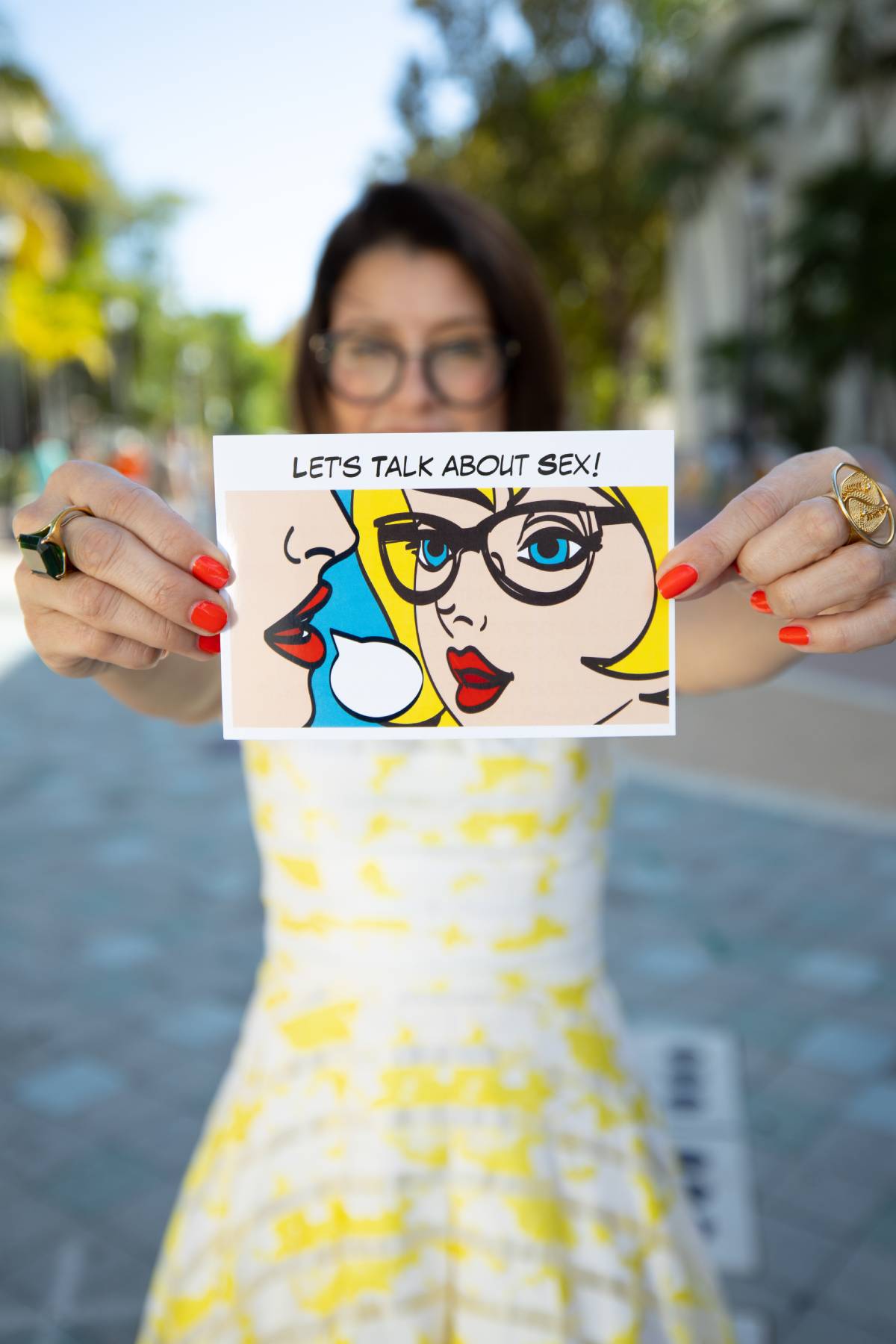
Early Inspiration
You’ve mentioned that your curiosity about the human mind and intimacy started early in life. Can you share a moment from your childhood or adolescence that shaped your interest in sexuality and emotional well-being?
Paola: Growing up in the 1990s in Colombia, during a period marked by turbulence and violence, I became curious about the human mind from an early age. I often wondered about people’s behavior and the intentions behind their actions. I remember questioning how someone, in an impulsive moment, could take another person’s life so easily. It made me think about what happens inside someone that allows them to become so disconnected from another’s humanity. Those early questions about empathy, fear, and emotional numbness eventually evolved into a deeper curiosity about the human mind, emotional well-being, and the ways we connect or disconnect from ourselves and from others.
When it comes to sexuality, I grew up in a machista culture surrounded by strong women who, at times, also judged other women for being too open or expressive. As a Colombian woman, I was taught to be afraid of my own sexuality. The message was that men were animalistic beings who always wanted sex and that it was our responsibility to keep their impulses in check. Yet the paradox was unmistakable. Once a woman was married, if her husband cheated, the first question people asked was, “Were you having sex with him?”
I have always been an observer, and throughout my adolescence, I could recognize how these paradoxes became part of my inner world. It was confusing to understand my own sexuality and my role in relationships. Those contradictory messages shaped my early ideas about desire, responsibility, and gender, and they eventually became the foundation for my interest in how culture influences not only our understanding of sexuality but also our capacity for expression and freedom.

Cultural Influence
Being bilingual and bicultural, how have your Colombian roots influenced your approach to sex therapy and mental health? Are there cultural taboos you’ve noticed and work to challenge in your practice?
Paola: My Latina roots have definitely influenced the work that I do. As Latinas, many of us grow up in environments where open conversations about sex, pleasure, consent, and self-exploration are limited or discouraged. And while this is true in my culture, I have seen similar patterns across many communities. This is why I never work with anyone without exploring the cultural, familial, and generational layers that shape their relationship to sexuality and emotional well-being.
There are several taboos I see repeatedly, and one of the most damaging is the absence of age-appropriate sex education. The silence cuts deep. It is heartbreaking to hear women disclose sexual abuse that they never felt safe telling their parents about because sex itself was treated as something shameful or forbidden. When a topic becomes taboo, it creates fear, confusion, and secrecy around experiences that desperately need support and understanding.
Another taboo I work to challenge is self-exploration or masturbation. Self-exploration is a fundamental path to sexual pleasure and, ultimately, sexual freedom. How can we communicate what we enjoy if we do not even know it ourselves? I often tell women that self-exploration is one of the most powerful ways to break the chains of machismo. It is a way to know your own power and to express yourself sexually in whatever way feels authentic to you, without judgment or shame.

Beyond the Purity Test: Navigating Porn, Pleasure
Nice girls don’t swallow” is dead, but “good partners don’t watch porn” is the new purity test. Your prescription for couples where one partner’s solo porn habit is killing the vibe without shaming the screen time?
Paola: This is a conversation that shows up in my therapy room constantly. We’re living in a digital era where, as Esther Perel puts it, you can be lying next to your partner while being mentally or erotically elsewhere with the swipe of a finger. Technology has expanded our erotic landscapes, but it hasn’t changed our primal need for connection and desirability.
I’m a firm believer in sexual autonomy, the idea that each partner has their own erotic ecosystem, their own ways of tending to desire, while still honoring the agreements and values of the relationship. Porn, on its own, is rarely the villain. What becomes problematic is usually one of two things:
1. The porn isn’t the problem; the disconnect is.
If one partner is spending hours online, emotionally or sexually checked out of the relationship, the other partner is left questioning whether they’re still desired. And if there’s one truth I see across cultures, genders, and ages, it’s this: we don’t outgrow the need to feel wanted.
When the relationship’s erotic connection is depleted, porn becomes the symbol, but the deeper wound is about presence, intimacy, and emotional availability.
2. There’s a compulsive pattern and that’s a symptom, not a sin.
Compulsive porn use is rarely about sex. It’s about relief. It’s a way people soothe loneliness, boredom, depression, shame, or the fear of vulnerability. Porn and webcam spaces offer immediate validation, novelty, and a judgment-free playground for fantasies things that can feel harder to access in long-term relationships.
As a therapist, I don’t treat the porn. I treat the pain beneath the porn. Without that, we’re just applying surface-level fixes that don’t hold.
So what’s the real prescription for couples?
- Curiosity instead of moralizing.
- Dialogue instead of secrecy.
- Shared values instead of purity rules.
Porn doesn’t have to kill the vibe—avoidance, shame, and silence are the real intimacy killers. When couples learn to talk honestly about desire, boundaries, and connection, sexual autonomy and partnership can coexist in a way that actually strengthens the relationship.
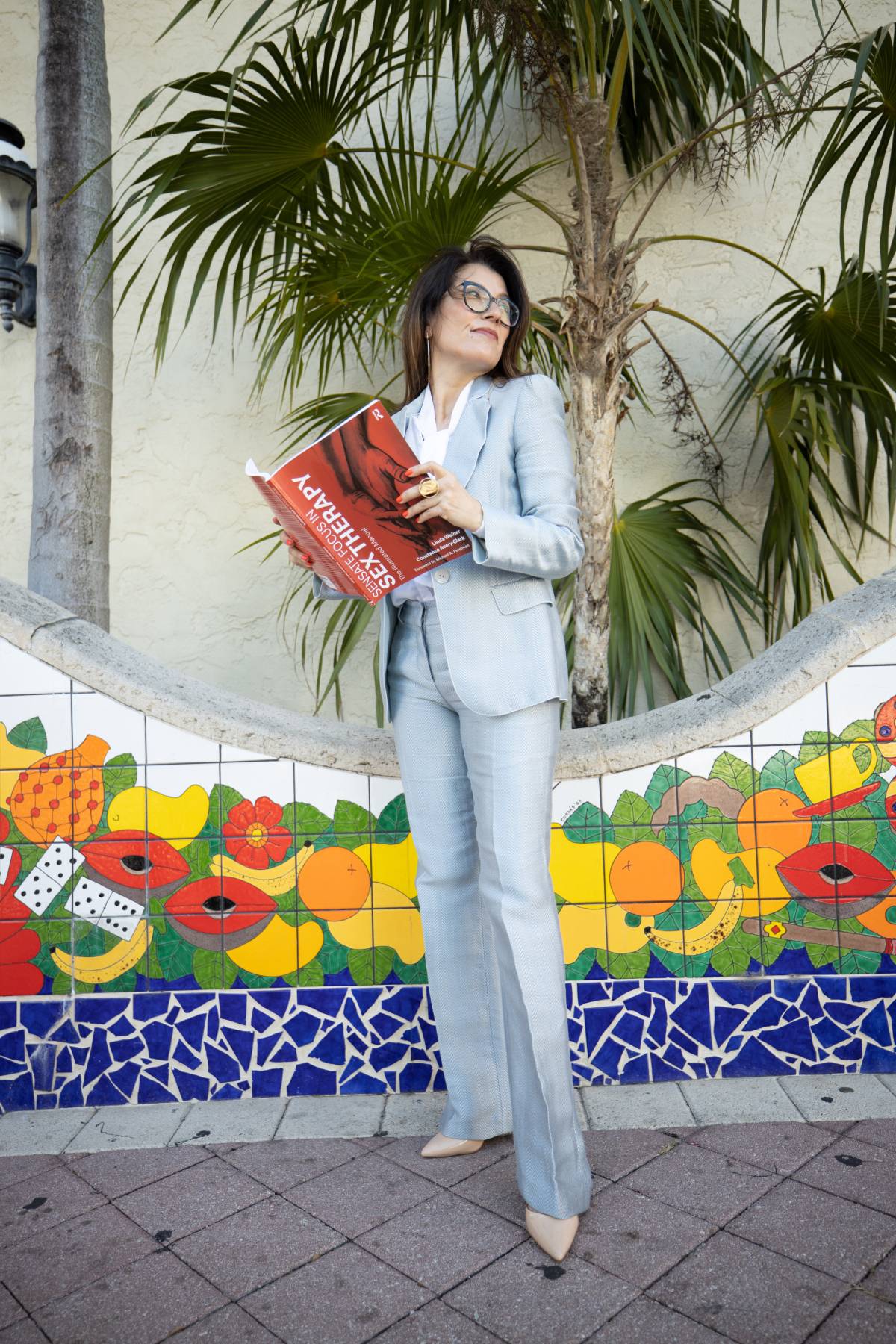
Navigating Desire: Finding the Balance Between
There’s often a divide between sexual liberation and societal expectations. Where do you draw the line between healthy exploration and what some might call “excess”?
Paola: When clients ask where the line exists between healthy exploration and what society might label as “too much,” I usually begin with definitions. I ask, “What does sexual liberation mean to you? What value do you attach to it? And what is the canvas you are painting your erotic life on?” People often use the words “freedom,” “liberation,” or “exploration” without realizing that these terms come with personal, cultural, and relational meanings.
Societal expectations create an entire landscape of “shoulds.” You should want sex this often. You should not enjoy this particular fantasy. You should behave a certain way if you are a woman, or a man, or queer, or partnered, or married. These “shoulds” come from family messages, religious narratives, gender norms, and cultural scripts that shape how people judge their own desires long before they even act on them. The problem is rarely the erotic impulse itself. The real struggle is the shame, restriction, or pressure placed on that impulse by external rules that never belonged to the person in the first place.
So instead of imposing a line between liberation and excess, I help people explore what supports their well-being, their relationships, and their values. Healthy exploration is rooted in consent, curiosity, pleasure, honesty, and alignment with one’s personal ethics. “Excess” usually emerges not from the act itself, but from secrecy, compulsivity, or the sense that someone is betraying their own values. When people understand their motivations and release the weight of societal “shoulds,” their sexuality becomes grounded, intentional, and truly liberating.

Sexuality Across Life Stages
Sexual expression and intimacy evolve with age and experience. What advice would you give for maintaining a fulfilling sexual and emotional life at different stages?
Paola: This is such a thoughtful question, and my first piece of advice is to never stop being curious about yourself. Desire changes with age, experience, stress, identity shifts, and even the seasons of a relationship. Staying connected to your own body and pleasure means continuously asking, “What do I enjoy now? What no longer works for me? What am I craving emotionally or erotically that I have not named yet?”
Openness to exploration helps intimacy stay alive. I remember the first time I experienced sensation play at an event called EXXXOTICA here in Miami, and I was completely intrigued. It sparked an entirely new conversation between my partner and me about what we wanted to try. That single moment opened a new world for both of us and reminded me how expansive erotic expression can be when you allow yourself to play.
Courage is essential. Show yourself. Share your desires even when you feel shy or unsure. Vulnerability is at the heart of intimacy, and it becomes even more important as we age, because sexual connection becomes less about performance and more about presence, honesty, and emotional closeness. If you have a partner who is willing to explore with you, that is a gift. If you do not, your own self-exploration can still be a rich and powerful path.
A fulfilling sexual and emotional life at any stage comes down to curiosity, communication, and the courage to keep discovering who you are becoming.

The Art of Indulgence: One Guilty Pleasure
If you could give one piece of “guilty pleasure” advice to someone looking to spice up their love life, what would it be?
Paola: If I had to offer one “guilty pleasure” piece of advice to spice things up, it would be novelty. Anything out of the ordinary and beyond the expected can shift the entire erotic atmosphere. Mystery and anticipation are incredibly powerful because they wake up the nervous system in the most delicious way. When something feels new, the brain pays attention, the body becomes more responsive, and desire has more room to bloom.
Novelty does not have to be elaborate. Sometimes all you need is a blindfold, a toy, and your imagination. A blindfold heightens every other sense and brings you right into the moment with yourself or your partner. A toy can be anything at all, from a flog to a prostate massager to a vibrator, and many people are surprised by how a small taste of kink can expand their erotic playfulness without ever feeling extreme. Kink, in its simplest form, is about intentional sensation, power exchange, and curiosity. It opens the door to exploration and connection.
And then there is imagination, which is one of the most underestimated erotic tools we have. Let it wander and guide you. Porn may get the job done for many people, but imagination, presence, and sensation will take your pleasure to a deeper level. When you allow yourself to play with what is new, your orgasms become richer, fuller, and far more alive.

Advice for Readers
Finally, for our readers craving a sex-positive 2026: What’s one unapologetic pleasure goal you’re setting for your own life this year, and how do you want them to borrow your courage to chase theirs?
Paola: If I think about what I am gravitating toward in 2026, it is the desire to be more present for myself, especially when it comes to my body. The longer I am on this earth, the more the body asks of me. There is discomfort, there is the need to work out differently, and there are changes that come simply from living in a body for so many years. And even though all of this is natural, we can still get down on ourselves. When it comes to feeling free and sexual, that self-criticism can get in the way far more than age ever could. A natural part of aging is accepting the changes that come with it. Hormones shift, appearances evolve, but my erotic mind has never felt more open, grounded, and free.
What I want this year is to honor my body rather than evaluate it. I want to release the fear of what my Miami bikini will look like next year. I do not want to be afraid of the sun. I want to keep going to the beach and get the golden tan I loved in my twenties. I want to embody what I feel inside and to stop letting all the noise about what a woman in her forties should do or look like or be limit any part of my pleasure.
I want to dance without watching the clock, to move freely without a time limit. I want to feel the breeze on my skin and savor every ounce of joy this life offers me. I want to live with less judgment and with more acceptance, presence, and celebration. I want to discover more kinks with my partner and continue riding together into the sunset of a long, lively, erotic life. My pleasure goal for 2026 is to be fully here in my body, unapologetically, and I hope anyone reading this feels invited to do the same.

Editor Note
Paola A. Rodríguez’s journey reminds us that silence and shame are not inherent truths; they are inherited barriers we have the power to dismantle. Her work illuminates how culture, history, and personal narrative shape our understanding of desire, intimacy, and self-expression. The insight that stands out is simple yet profound: pleasure, connection, and erotic freedom are not acts of rebellion; they are acts of presence. By leaning into curiosity, honesty, and consent, we reclaim not only our sexual autonomy but also our broader emotional well-being.
What Paola models so clearly is that understanding context, challenging taboos, and embracing our bodies with compassion can transform how we experience relationships, desire, and ourselves.
“To speak openly, explore thoughtfully, and inhabit our bodies unapologetically because liberation begins where curiosity meets courage.”
