
For years, LGBTQ+ visibility has been measured by who gets to be seen, heard, and represented. But visibility is only part of the story. There is another side to queer representation, one rooted not in explaining identity but in celebrating it.
Queer stories have often centered on coming out, discrimination, acceptance, and the challenges of being understood. These experiences matter, and they deserve space. But LGBTQ+ life is not defined by difficulty alone. There is also love, friendship, intimacy, creativity, confidence, community, and the simple pleasure of being able to live authentically.
That is where queer joy comes in.
What Does Queer Joy Really Mean?
Queer joy is not about pretending challenges do not exist. Instead, it creates room for the parts of LGBTQ+ life that are often overlooked: falling in love, finding your people, feeling comfortable in your own skin, building a chosen family, expressing yourself freely, and experiencing intimacy on your own terms.
It can be something as significant as celebrating a wedding or as ordinary as laughing with friends who understand you without explanation.
There is no single definition of queer joy because there is no single queer experience. For some, it may mean embracing an identity they once struggled to understand. For others, it might be discovering a community, finding a partner or simply feeling at ease with who they are.
Sometimes, joy is found in the freedom to stop explaining yourself.

Beyond Being Seen
Visibility matters. Seeing LGBTQ+ people represented in media, fashion, entertainment, culture, and everyday life can challenge assumptions and create a greater sense of belonging.
But representation becomes richer when queer people are not only visible but also fully represented.
That means seeing LGBTQ+ people experiencing the same complicated, beautiful, and ordinary parts of life as everyone else. Dating. Falling in love. Breaking up. Going on holiday. Building careers. Making friends. Getting dressed up for a night out. Growing older. Starting families. Discovering themselves again.
A queer character does not always need to have a storyline about coming out. A queer couple does not always need to be defined by the obstacles they have overcome.
Sometimes, the most meaningful representation is simply allowing queer people to exist within a story as whole, complicated human beings.
The Beauty of Queer Love
Love has never been one-size-fits-all, and queer relationships have long challenged conventional ideas about what romance is supposed to look like.
That can make queer love particularly interesting to explore through the lens of intimacy.
For some couples, there may be greater freedom to question traditional expectations around gender, roles, and relationships. Others may consciously embrace familiar ideas of romance. There is no single formula.
What matters is the ability to create a relationship that feels authentic to the people within it.
Queer intimacy can be about physical attraction, but it can also be about trust, vulnerability, laughter, emotional safety, and being understood. It can be about discovering what desire means to you rather than relying on assumptions about what a relationship should look like.
And perhaps that is one of the most beautiful things about intimacy: the opportunity to create your own language for it.
Chosen Family and the Power of Belonging
Family can take many forms.
For some LGBTQ+ people, biological family remains their strongest source of love and support. For others, friendships and community become equally important. These relationships can form what is often described as a chosen family, people who provide understanding, acceptance, companionship, and a sense of home.
A chosen family can be built slowly through friendships, shared experiences, and community spaces. It can look like the friend who answers the phone at midnight, the people who celebrate your milestones, or the community where you no longer feel the need to explain yourself.
There is something powerful about finding people who allow you to be completely yourself.
And sometimes, that belonging is its own form of joy.

Pleasure, Confidence, and Self-Expression
Queer joy also has a place in conversations about pleasure.
Feeling comfortable with your identity can influence the way you approach dating, relationships, intimacy, and your own body. That does not mean confidence looks the same for everyone. Nor does being LGBTQ+ automatically mean feeling liberated or comfortable.
Rather, queer joy creates space to explore what makes you feel confident, connected, and fulfilled.
That might mean experimenting with personal style, becoming more comfortable discussing desire, setting clearer boundaries, dating differently, or simply learning to appreciate your body without judging it through someone else’s expectations.
Pleasure can be deeply personal. So can identity.
The important thing is having the freedom to explore both without shame.
Why Positive Stories Matter
There is a particular power in seeing LGBTQ+ people represented through happiness rather than hardship.
A story about queer friendship can remind someone that community exists. A love story can make a relationship feel possible. A portrait of someone confidently expressing themselves can offer reassurance to a person still finding their own voice.
Positive representation does not erase difficult realities. Instead, it expands the picture.
LGBTQ+ people deserve stories about struggle, but they also deserve stories about ordinary happiness. They deserve to be seen celebrating birthdays, falling in love, travelling with friends, building businesses, making art, flirting, laughing, and growing older.
They deserve to be represented as more than the challenges they have faced.

Letting Joy Take Up Space
Perhaps the most important thing about queer joy is that it does not need to be justified.
It does not have to be perfect. It does not have to look a certain way. It does not need to prove anything.
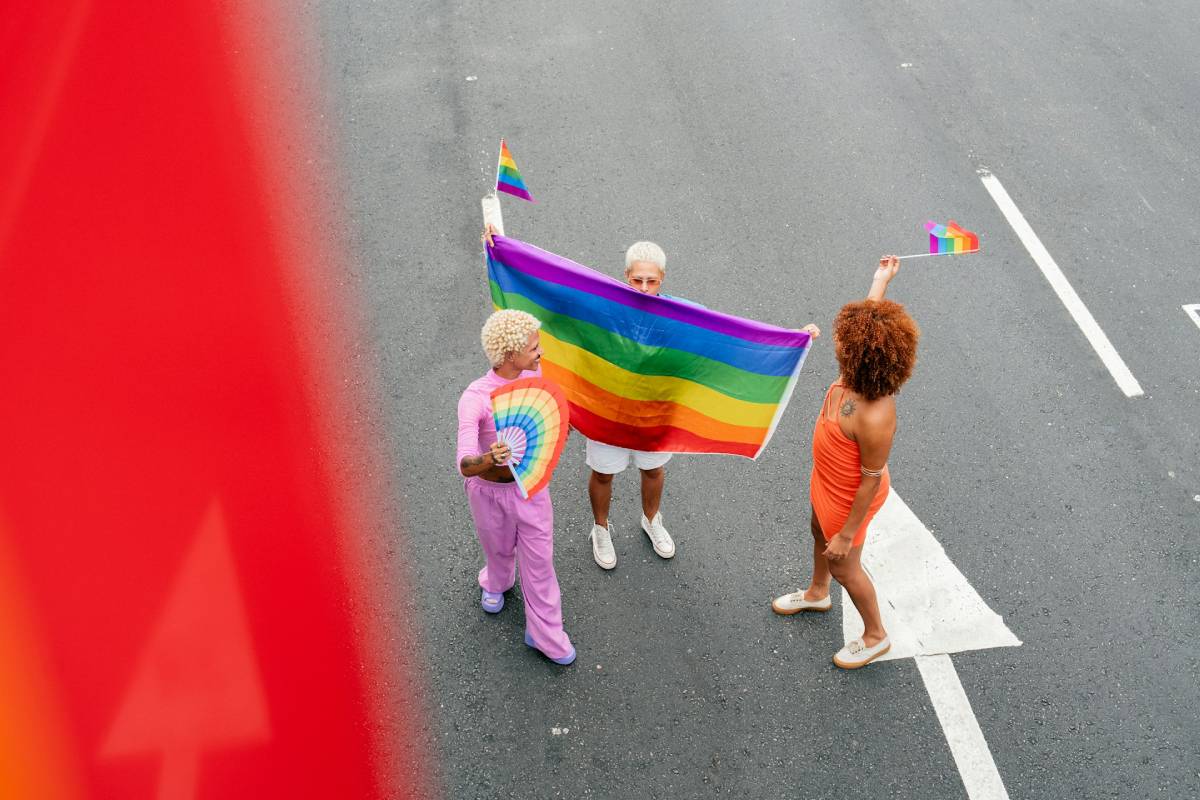
It can be loud and colorful or quiet and private. It can happen at Pride, on a dance floor, across a dinner table, on a first date or in the comfort of a relationship that feels safe and genuine.
And sometimes it can be incredibly simple: waking up and feeling at home in yourself.
Visibility asks us to look.
Queer joy asks us to look closer at the lives, relationships, communities, and moments that make LGBTQ+ experiences rich, diverse, and deeply human.
Because being seen matters.
But being able to celebrate who you are matters too.
