
T’Keyah is a clinical naturopath working globally from Australia, where her practice brings together fertility, matrescence, and sexual health with a deeper understanding of how the body responds to emotion, intimacy, and lived experience. Her approach is not about viewing health as a series of isolated systems but about understanding the conversations happening between hormones, the nervous system, psychology, physical tissue, and the rhythms of everyday life.
Her path into naturopathy began with her own complex health challenges and the relief she found through naturopathic care. Yet it was as she turned towards building a family that the deeper layers of her own story became impossible to ignore. Sexual trauma, generational insecurity, and long-held survival responses began to reveal themselves in ways that could not be addressed through nutrition or herbal medicine alone. Conception, pregnancy losses, and the births of her two daughters would ultimately reshape her relationship with her body. giving her a stronger sense of trust, agency, and what she describes as a reclamation of her history.
That experience now sits at the heart of her work. T’Keyah advocates for greater understanding of menstruation, conception, pregnancy, birth, postpartum life, and sex, particularly at moments when women are expected to simply endure change or return quickly to who they were before. For her, knowledge is inseparable from bodily autonomy: the more we understand our bodies, the better equipped we are to listen to them.
In this conversation, she explores the emotional realities beneath physical symptoms, the sacredness and complexity of motherhood, postpartum desire, trauma, intimacy, and the possibility of rewriting stories held in the body. It is a conversation about learning to listen and what might become possible when we finally do.

Healing No One Told Me I Needed
T’Keyah, your path into naturopathy began with your own health challenges. What made you realize that sexual and emotional healing were just as important as physical health?
T’Keyah: From my teen years, I experienced debilitating periods, gut issues, chronic fatigue, and a nervous system dysregulation that was highly attuned to others rather than myself.
I found a noticeable improvement with naturopathic support and felt drawn to the modality and became a naturopath myself.
After coming out of a degree and shifting my attention to starting a family, I started to notice all the symptoms, although mostly managed, were still very present in waves. One day it clicked; these all become more apparent after moments of emotional turmoil. Moments of memories I couldn’t shake, interactions with people that felt like an invasion of my space, and conversations with tension.
The ‘ah-huh’ moment led me to notice that I had been shoving my emotions and feelings down as a learned behavior, a fawn response to adapt to those around me and people-please my way to safety.
When I started to feel into it, talk about it with my husband, and catch myself when my body started screaming alarm bells for a perceived threat that didn’t require that type of response, I began to understand. This is when I realized the true connection of emotional healing and physical health.
Even through my work with clients, I started to recognize that no amount of herbal medicines, nutrients, dietary shifts, or advice would support people when their body was telling them an email or car horn required a threat response and complete body override.
The body is innately protective and always wants to prioritize healing, but when our systems have been overridden by experience and expectation from others/our environment, that’s when dysfunction becomes its primary way of survival.
As conception, pregnancy, and birth became a focus for me, it was difficult to ignore my own sexual abuse trauma response and generational sexual insecurity. For the health of my body, my marriage, and my children’s lives, I had to work through the layers of programmed dysfunction in sex and find who I was.
We cannot treat the body as separate mechanisms; sexual, emotional, and physical health all require individualized support, care, and understanding to work in harmony.

The Sacred Weight of Motherhood
Society still treats parenthood, especially motherhood, as a soft, secondary role, yet you ask, if sex creates a human through the portal of a woman, why aren’t we honoring that? In what ways has becoming a mother radically expanded (or complicated) your understanding of sex as both creative and sacred?
T’Keyah: For me, becoming a mother has wholeheartedly expanded but simplified the creativity and sacredness of sex and being human.
Growing up, I heard the term ‘just a mother’ a lot. When I became a mother myself, I had this realization of what we are capable of, and wtf is ‘just a mother’?
A mother is the conduit between sexual connection and a baby.
The act of sex that magically creates this being, which is grown, nurtured, loved, guided, and brought forward through the energy of your connection together via a woman’s body, is astounding.
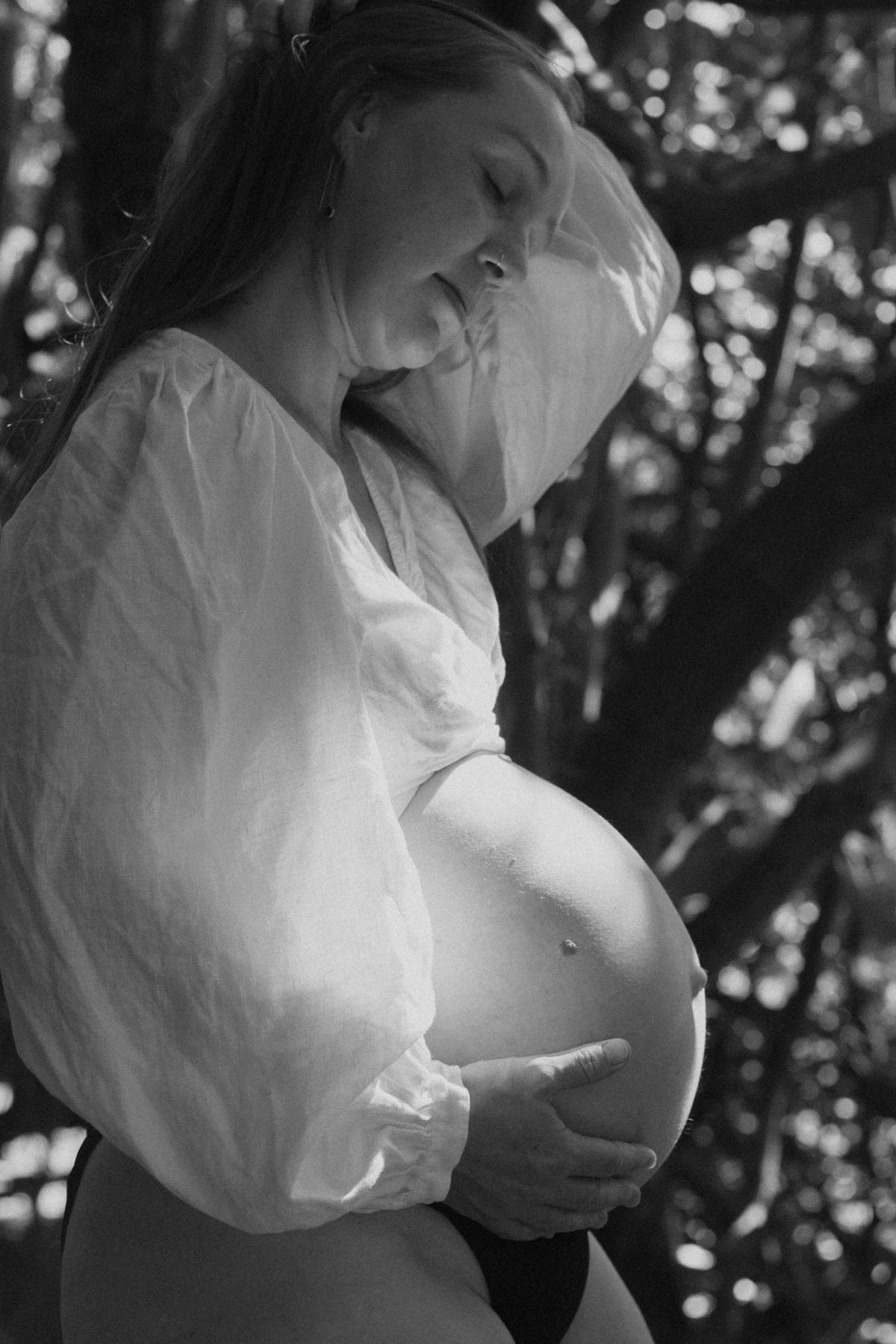
I feel awestruck when I look at my daughters and think, My body created them. Maybe it is too simple of me, but that is where the sacredness lives.
The creation of art is something we celebrate (arguably still not enough)—painting, performing the dance, making, and crafting—but somehow creating a whole human is not seen as a top-tier form of creation. Children are living, breathing examples of your sexual essence.
I do believe sex can mean many different things to people but if we strip it down to its bare form of biology, your children are your art.
When Birth Changes Everything
You’ve said birth is a portal. Do you think the sexual energy that creates life is the same energy that can destroy old trauma patterns, or are we romanticizing something that is often just messy and exhausting?
T’Keyah: I believe it has the opportunity too. The energy that is carried from conception through birth and exists in your being ongoing can open up the wounds of all things you have shoved away. They pop up like little invitations for reflection, processing, and a different perspective the changed you may have.
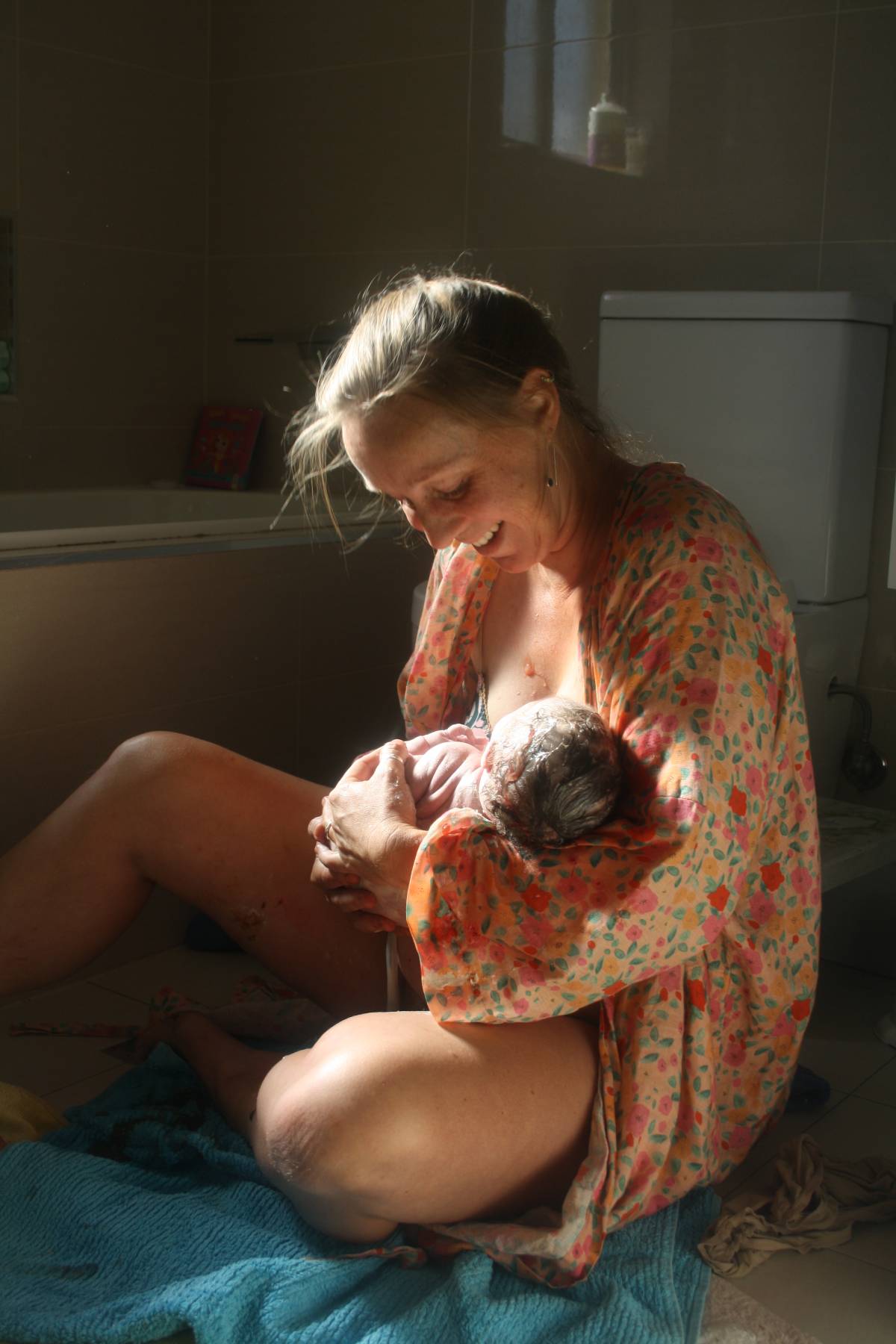
For me, an experience of sexual assault in my history becomes very loud in pregnancy. I made decisions for my body specifically with birth in mind to minimize the amount I was checked or touched, as the thought of being in the vulnerable state of labor and doing vaginal checks per the times required in Australian hospitals made my eyes water and heart rate fly. I wanted to be at home with people I knew and trusted. Experiencing labor in safety while facing my fears in the transition phase and having the realization of my body’s strength and power gifted me a new way of seeing myself. Not as the past girl who allowed someone to overpower me but as the force of a woman able to make choices for me and my children.
This was further intensified by the birth of my second daughter, which was a different experience in itself. I found myself navigating her pregnancy and birth without the nagging fear of the past me. Her birth brought with it a confidence that helped me to start sharing my story. Birth, for me, gave me a reclamation of my body and destroyed that old pattern.
This experience is wholly my own, and I understand it took a lot of trust, which is a privilege I know others may not have access to.
I believe experiences of shame or trauma will always be within us. However, I now see that with time and awareness of the changing person you are, the noise lessens, the body’s response can shift, and you can thrive, not just survive.

Postpartum Desire Isn’t a Deadline
A lot of women are told, “Your sex drive will come back eventually.” What’s your unfiltered take on the cultural pressure to perform postpartum desire on someone else’s timeline?
T’Keyah: The cultural pressure to perform is wrapped up in the same messaging as bounce-back culture. The ignorance of what has actually occurred in a mother’s body and how the restructuring of her entire system changes desire and sex is rife in society.
Through the rewiring of her brain, reorganizing of her organs, recalibration of her nervous system, uprooting her hormones, and altering her physical body, she somehow has to find what desire is again.
For many women I work with, it is incredibly confronting and disappointing for them to find their sex drive missing and the marker of the ‘6-week checkup’ to be the thumbs-up for sex again. The shame associated with not understanding why desire isn’t there and trying to communicate that change with partners can create further distance in the relationship that has already taken a hit from a little human demanding most of their precious time together.
I also believe there is a large hole in the education of partners. Starting back at our crappy sex ed class in high school, there was no shared responsibility in understanding each other’s bodies and a generalized ‘don’t get pregnant’ stamp to go by. Once you enter conception, doctor’s appointments, and birthing classes, there is still barely any conversation about postpartum beyond feeding options and, once again, ‘don’t get pregnant’ too fast. The lack of understanding of matrescence and sexual desire is of no fault of ours; however, it is our responsibility to learn and grow with our partners, especially as parents.
To work with a postpartum mom’s desire is to meet her as the new person she is and have the awareness that she is still trying to understand who she has become, too.

Ask Before Trying to “Fix” a Relationship
If a couple came to you saying, “We love each other, but the spark has disappeared,” what’s the first uncomfortable question you would ask them?
T’Keyah: Are you still looking for the spark that ignited the past you or discovering what the spark is as the person you are today?
From what I have experienced in the clinic, many people avoid conversations about sex and intimacy. They feel it’s ‘lucky’ if desire kicks in or they push through to try and connect, get it done, and wipe their hands of it for another few months or the next cycle if trying to conceive. The connection often happens in the moments before, in the buildup, and after, in the conversation of reflection. This is what is being bypassed.
The illusion of people remaining the same in their desires and turn-ons is prevalent in long-term partnerships and parents. What it takes is often an uncomfortable conversation to understand each other. Speak what it is they would like from the other and if not known, explore together.
Story Your Body Never Chose
If a woman reading this is still living inside the story her trauma or upbringing wrote for her sexuality, what is the boldest first step you would invite her to take toward rewriting that story with her own body as the authority?
T’Keyah: Start listening to your body. To every twinge, tightening chest, stomach drop, your breath catching, collapse of shoulders, lump in your throat, and hot flush.
What is your body telling you?
Your nervous system first and foremost prioritizes safety and survival, when you lose your ability to discern what the threat is and how to find equilibrium after, that is what keeps you in the loop. It will keep signaling until you listen.
Meet it with kindness and the reminder you are safe. Additionally, find out what safe means to you or how you can create that for yourself.
Women are more than their forced experiences, learned defenses, or expectations from upbringing. Women deserve to be simultaneously heard and held with reverence, but it starts with you doing that for yourself.

Editor Note
Symptoms to quiet, changes to correct, and milestones to meet. Yet the body has its own memory, its own language, and sometimes its own refusal to follow the timeline we have been given.
Motherhood makes this tension especially visible. The body that creates, carries, and feeds another life is expected to return almost seamlessly to a familiar version of itself. Desire should return. Confidence should return. Sex should return. But what if the person returning to the relationship is no longer quite the person who left it?
Beneath this conversation is a quieter question about agency. How much of what we call desire, discomfort, intimacy, or safety has been shaped by experience, expectation, and the stories we inherited? And what changes when we stop treating those responses as problems and begin listening to what they are telling us?
T’Keyah’s reflections invite us to consider the body not as something to fix but as something to understand, particularly after experiences that have changed how we inhabit it.
What might become possible if we stopped asking who we used to be and began listening to who we are now?
