
Denic is an intimacy and relationship coach whose work sits at the intersection of emotional truth, desire, and personal transformation. She supports individuals and couples in rebuilding intimacy by looking beyond surface-level conflict and into the deeper patterns that shape how people connect, protect themselves, and experience desire. Her approach is grounded in a rare combination of formal training and lived experience. Certified by Coaching Ways Paris, a member of the ICF, and trained as a Sex and Intimacy Coach using the Dr Demartini Method, her work is both structured and psychologically rigorous.
Before stepping into this field, she spent years in international sales, a high-pressure corporate environment she eventually left after recognising a deeper alignment with her own nature and purpose. Now based in Paris and originally from Prague, she works across English, Czech, and French, bringing a multicultural sensitivity to the way she holds space for clients navigating intimacy, identity, and desire.
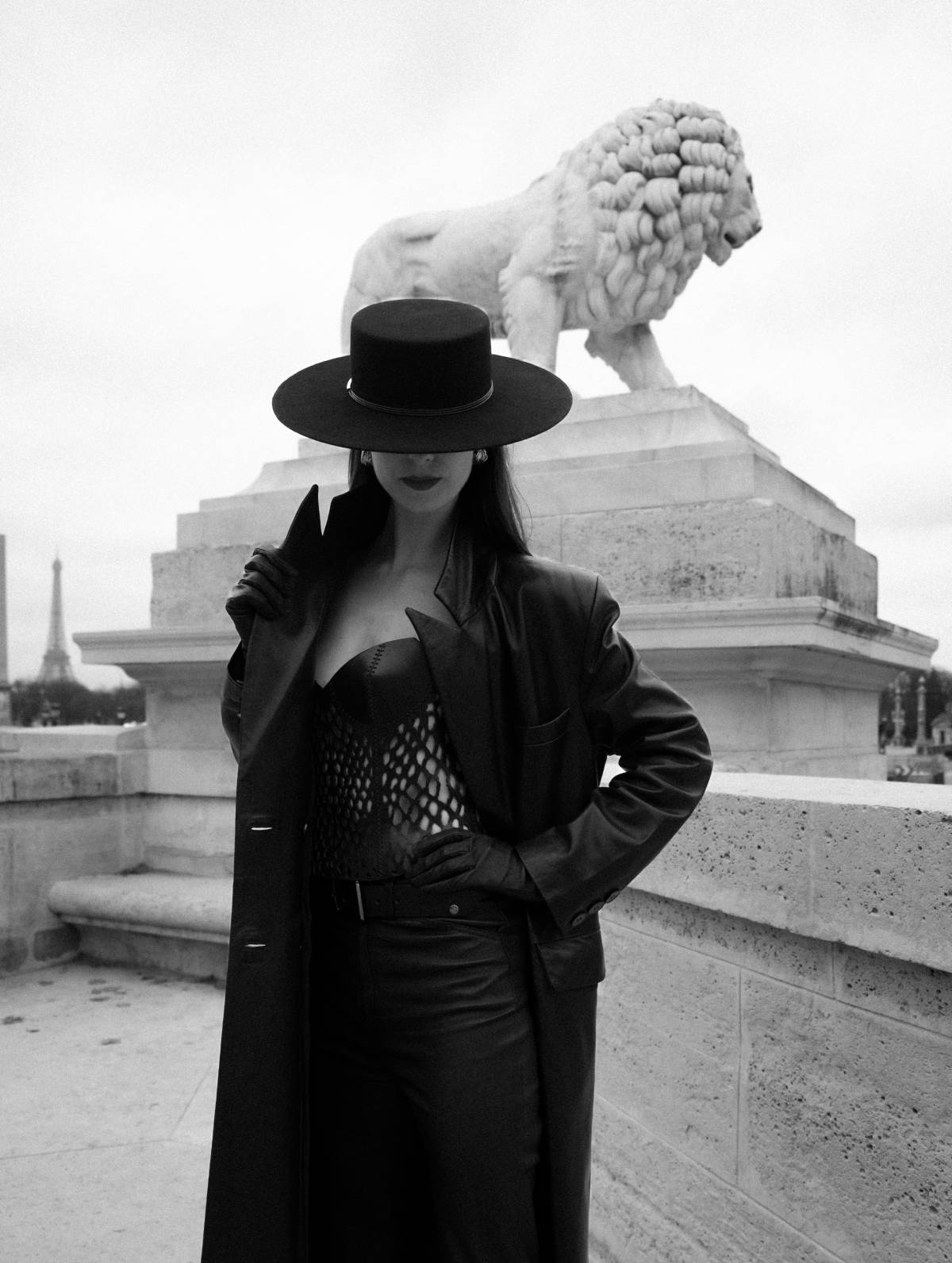
Known for her distinctive presence and signature leather aesthetic, Denic uses personal expression as a reflection of embodiment rather than performance. For her, leather is not a style but symbolism, an external mirror of internal alignment, independence, and self-ownership. The same principle runs through her work: helping clients strip away emotional armour, confront hidden shame, and reconnect with the parts of themselves they’ve been conditioned to suppress.
In conversation, she challenges conventional ideas of intimacy by reframing it as something built through honesty rather than harmony. Her perspective invites people to see desire not as something to manage or judge, but as information pointing toward deeper alignment.

Website
The Moment Everything Changed
You made a massive shift from the high-pressure world of international sales to space-holding for deep intimacy. What was the exact moment or realisation that made you say, “I am leaving this behind to do what truly aligns with who I am”?
Denic: The realisation came in two waves, one internal, one external, and they crashed together at the exact same time.
Internally, it happened a year after I published my book, Power of Leather. I had laid my personal story completely bare: why I wear it, what it unlocked in me, and how it helped me in life. The response was a massive wake-up call. I watched people transform just by witnessing me being unapologetically myself. I realised my natural obsession with human curiosity and deep listening wasn’t just a personal trait; it was a calling.
Externally, the company I was working for, as head of B2B sales, went through a massive merger. Suddenly, the direct line to the owner was gone, replaced by layers of bureaucratic validation. I didn’t leave a traditional corporate career years ago just to slide back into one. I thrive when I have the power to move things, build business, and fundamentally help people.
When they tried to pivot me into B2G sales, dealing with excruciatingly long government sales cycles and endless paperwork, I knew it was over.
My energy belongs in high-voltage transformation, not waiting around for a committee to sign off on a contract.
What was knocking on my door for months finally broke it down. The timing was perfect. I didn’t just step into entrepreneurship; I stepped into my own destiny.

Stripping the Armour
Leather is clearly part of your personal brand and identity. How does this sensual, powerful aesthetic reflect the way you approach intimacy and help clients shed their own emotional armour?
Denic: Leather isn’t just an aesthetic; it is a mirror. It’s an invitation. It shows us where we are falling short and invites us to work on that.
Leather doesn’t leave anyone cold. It either intimidates you or it magnetises you, but it forces you to feel something. Leather is armour. But it’s an armour that doesn’t hide you; it reveals you. It demands that you occupy your space. It forces you to embrace the duality of being completely vulnerable and devastatingly powerful at the same time.
As a coach, I cannot guide someone through a wilderness I haven’t walked myself. I wear my truth on the outside. When clients see that, the armour they’ve been wearing starts to crack. They realise that with me, there is no judgement, only a fierce, open-minded curiosity to discover who they are when they finally dare to strip down.
When I walk into a room wearing this aesthetic, I’m not hiding behind a costume; I’m signalling that I’m fully embodied. Most people wear their armour like walls built to keep the world out, walls that only end up suffocating them. I show them a different way: that you can be fiercely protected and completely exposed at the same time. I don’t gently dismantle anyone’s armour, and I’m not forcing anyone to go out of their shell. I just created a space where they don’t need it anymore.

Transforming Taboo Desire Into Alignment
The Dr Demartini Method is quite rigorous. How do you use it to help clients transform sexual fantasies or “taboo” desires into sources of power and alignment rather than sources of guilt?
Denic: The Demartini Method is the ultimate tool for this because it treats guilt exactly for what it is: a perspective glitch, not a moral failing.
Guilt only happens when you judge your own nature against someone else’s rules. It’s the feedback loop of an inauthentic life. By using the column-based logic of the method, it takes a heavily judged “taboo” desire and pulls it apart like a machine.
The problem is obsession. If someone is desperate for a fantasy, they are infatuated with it. They think it’s all pleasure and no pain. We sit down and ruthlessly list the hidden drawbacks of actually living out that fantasy and the hidden benefits of their current reality. Once the scale balances, the desperate compulsion drops away. The fantasy stops running them. They start running it.
Then, if the fantasy is about absolute submission or extreme dominance, society tells us to lock it in a cage. I do the opposite. We track down where that exact same dynamic already shows up in their career, their finances, or their daily life. When they see that their darkest turn-on is just a mirror of their highest leadership or their deepest surrender, it loses its “dirty” status. It gets integrated.
I don’t try to fix people because they aren’t broken. We just list the concrete, undeniable benefits of their unique sexual wiring until the walls of shame collapse.
When we stop wasting massive amounts of energy trying to hide from ourselves, that repressed shame turns into pure, magnetic power. Our turn-ons aren’t a mistake. They are the roadmap to our personal sovereignty. We finally stop playing the part of the “good citizen” and step into our actual skin.
As a coach, the method gives me the rigour; my intuition tells me how to wield it. The two work together: I follow the column-based logic faithfully, but I read the person in front of me to know which question to ask next and how hard to push. The discipline of the method is exactly what frees me to trust my gut, because I always know where the work is going.

You Think That’s Killing Your Desire
As an intimacy coach, what is the single most common, completely non-sexual habit that you believe instantly kills erotic energy in a relationship?
Denic: Constant proximity. Couples confuse being together with being close, so they fill every hour with shared logistics and rarely leave any space to actually miss each other. Desire needs a gap to cross: a little distance, a little mystery, the sense that your partner is a separate person with an inner life you don’t fully own.
When two people collapse into a single 24/7 unit, that gap disappears, and erotic charge has nothing to travel across. The fix isn’t more time together; it’s the courage to be apart.

The Question Behind Intimacy
If someone is trying to rebuild their relationship with intimacy from scratch, what is the first honest question they should ask themselves that most people avoid?
Denic: “What am I using my lack of intimacy to protect myself from?”
Most people avoid this because it forces absolute accountability. It’s comforting to believe that your sexless relationship or your emotional distance is just a tragic accident or entirely your partner’s fault. But the truth is that human beings are deeply efficient. We don’t maintain a state of distance unless that distance is serving us.
When we stay emotionally or physically closed off, we are getting a hidden benefit. Usually, it’s safety.
If you don’t let them fully see you, you can’t be rejected.
If you don’t surrender to your deepest desires, you can’t be judged or controlled.
If you keep one foot out the door, you can’t be abandoned.
Before one can build intimacy from scratch, they have to stop playing the victim in their own life. They have to admit that their emotional armour isn’t just something that “happened” to them; it’s something they are actively choosing to wear because they are terrified of what happens when they take it off.
Until they answer what they are hiding from, any new attempt at intimacy will just be a superficial performance. They have to own the barrier before they can break it.
Editor Note
How consistently Denic returns intimacy to a place of radical honesty rather than performance. Across her insights, there is a clear thread: desire, shame, and connection are not separate systems to be managed but signals that reveal where we are still divided within ourselves. Her perspective challenges the idea that intimacy is something we “achieve” with another person and instead frames it as something we first stop resisting within ourselves.
Intimacy does not begin when we are fully seen by another, but when we stop using distance as protection from our own truth. In that recognition lies both discomfort and liberation.
