
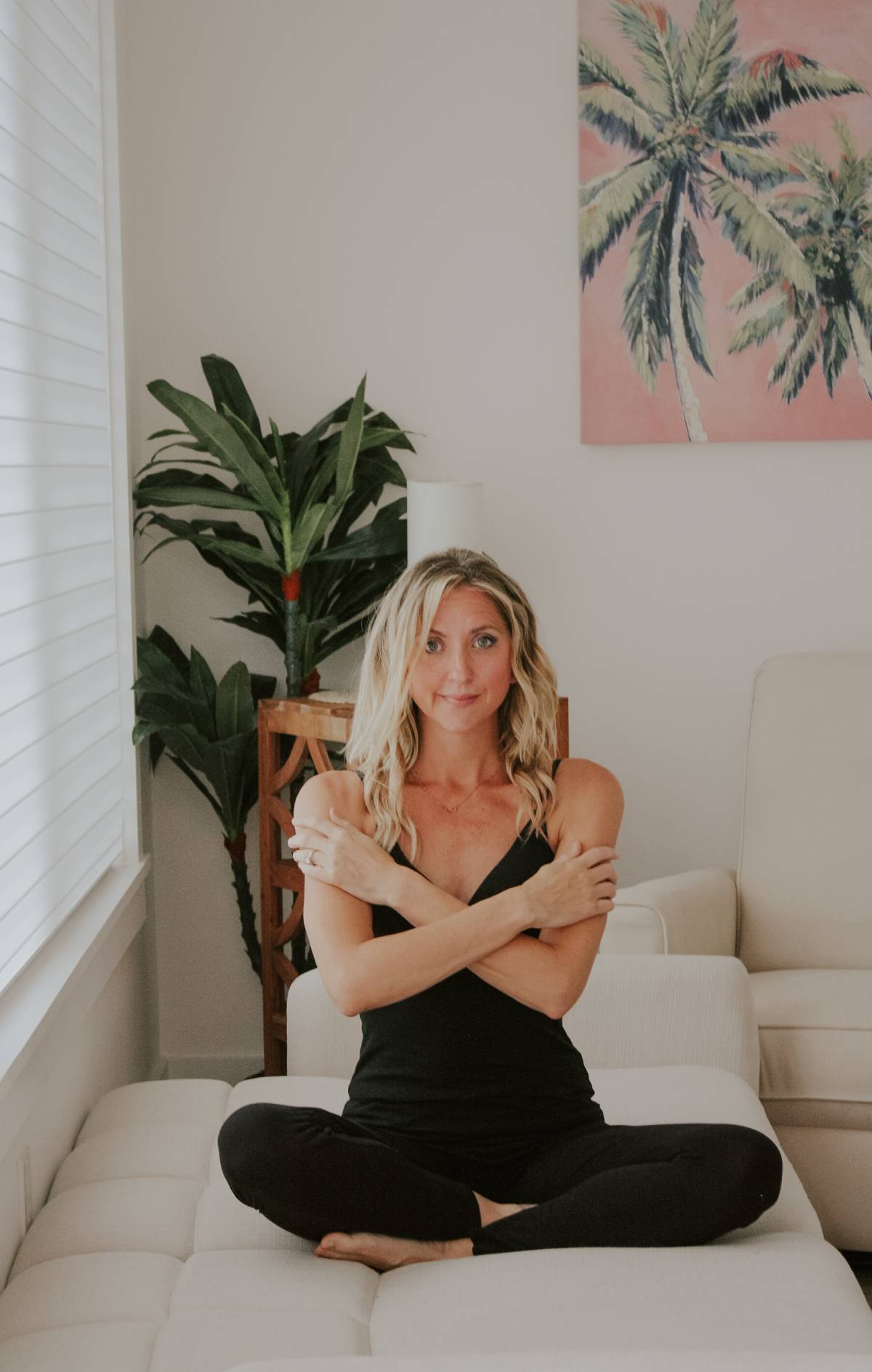
Dr. Katie Larson encourages us to look at pleasure, healing, and feminine autonomy through a new lens. With openness and emotional depth, she explains how self-pleasure shifted in her life from innocent curiosity to a deeply empowering practice rooted in resistance, healing, and reclaiming ownership of her body.
Dr. Larson reflects on her early experiences growing up in a restrictive environment where natural exploration was framed as shameful. Over time, self-touch became more than physical relief. It turned into a quiet act of resistance and later, a pathway toward healing unresolved trauma. Her journey reveals how reconnecting with one’s own body can restore a sense of safety, ownership, and emotional balance that many women struggle to find.
Drawing from her work in hypnotherapy and somatic practices, she explains that pleasure is not separate from personal growth. Instead, it is deeply connected to emotional regulation, nervous system healing, and spiritual alignment. Through her “Growth-Quest” approach, she helps individuals rediscover the sensory joys of being human, encouraging them to move beyond shame and reconnect with their bodies through safe, mindful exploration.
Another powerful theme explored in the interview is the difference between externally driven stimulation and internally cultivated imagination. She highlights how fantasy engages the mind and body more fully, allowing individuals to experience deeper emotional and physical sensations while strengthening their creative and sensual awareness.
At its heart, this conversation is about reclaiming ownership. It is about understanding that the body is not something to suppress but something to honor. Pleasure becomes more than a private act. It becomes a declaration of self-worth, healing, and empowerment.

Website
A Journey Through Self-Pleasure
Dr. Katie Larson, self-pleasure is often described as an act of resistance for women, reclaiming power over their own bodies. Can you share how your personal journey of self-pleasure reshaped your understanding of autonomy, consent, and self-worth?
Katie Larson: I have been “accidentally advocating” for self-pleasure since I started touching myself at ten years old! After being told masturbation was wrong by my Catholic school, I went home and learned from my mom that it was, in fact, “normal” and that everyone did it. So, I proudly returned the next day and told the class, “Everyone masturbates! Even Jesus!” and was quickly disciplined by the nuns (As you can imagine, I did not return to Catholic school the next year!).
It’s funny now, but during the rest of my adolescence, I maintained a healthy practice of self-pleasure as a kind of “personal act of rebellion” against the church that tried to get me to abandon a simple, safe, stress-relieving way to connect to my body.
But, sadly, later as an adult, my self-pleasure would stall for a bit when I recalled memories of childhood sexual trauma that greatly affected me. Suddenly, I felt unsafe in my own body, and like many victims, I began to feel ashamed, embarrassed, or as if the traumas were my fault. For a long time, I didn’t want to be touched by anyone, including myself.
Fortunately, my journey to understand this trauma brought me to many holistic practices (some of which I am certified in now), and as I worked through the physical and emotional pain, I knew I was healing when I could finally touch myself again.
And this is when I really saw the power of self-pleasure, not only as a tool for rebellion but also as a tool for self-reclamation.
Whether we were encouraged or discouraged to explore it, every woman has an amazing source of pain relief, emotional release, nervous-system regulation, and most importantly—pleasure—between her legs. And I feel called to remind us of that power.

Beyond Hypnotherapy & Somatics
Your “Growth-Quests” integrate hypnotherapy, somatics, and coaching. How does exploring pleasure fit into the broader framework of personal growth, and how can this practice enhance emotional and spiritual alignment?
Katie Larson: As a result of my personal experiences and working with hundreds of clients, I approach my practice from the perspective of “you are a soul having a human experience of Growth”.
I am confident in this assertion because my clients and I learn in their spiritual hypnotherapy sessions that our souls have not only chosen this life, but we also have specific lessons to learn.
And (perhaps surprisingly to many people!), these lessons are rarely about our work but usually include a lot of sense-based ways we enjoy being human, like eating the food, drinking the wine, having sex, moving the bodies, or cuddling the kids.
So, when I work with a GrowthQuests client, we are looking at your “human experience” from a more epic, soul’s perspective and acknowledging where you are most growing already and where you would like to grow even more.
Most of my clients recognize that when they get to a certain age, they have focused on certain aspects of their life too strongly (rules, achievements, productivity) and have forgotten about the joys of sense-based pleasures—including self-touch. I help them reconnect to the sweetness of being human.

Where Do Therapists Draw the Line?
Many therapists shy away from discussing masturbation openly. Do you think mental health professionals should be more explicit in guiding clients toward sexual exploration as a healing tool? Why or why not?
Katie Larson: The research is clear that masturbation is not only amazing for our nervous system health but also for our mental and emotional health, hormonal health, and even immune health!
So, therapists in general have a vital role in helping clients understand how holistically healthy masturbation can be for all genders.
But as a hypnotherapist and somatic practitioner, I have a unique role in helping clients regain this self-care practice. Firstly, by identifying the origin of the internal voices that plague them with guilt and shame about their sexuality, which are usually former authority figures (parents, churches, teachers, etc.). And secondly, by helping them re-engage with their bodies in a safe way to regain their own bodily authority.
One of my 40-year-old female clients remarked after working with me, “This is the first time I realized my body was actually mine, not the church’s, not my abuser’s, not my husband’s, not my children’s… but MINE,” and that stayed with me… How many other women do we know who have never experienced self-pleasure because they assumed their body wasn’t theirs? Too many. And that changes now.

Why Internal Pleasure Matters
We live in a culture saturated with pornography. You advocate for imagination instead. What is lost when pleasure is outsourced to visual stimulation, and what is gained when fantasy is cultivated internally?
Katie Larson: It’s important to note: I will not judge readers for using pornography to masturbate (and I even encourage newbies to try it when they begin), but I am so adamant and will “die on my hill” that masturbation with imagination is so much better for whole-body orgasms and holistic health in general.
Pornography will give you genital arousal because it uses our “mirror neurons” that begin in our eyes and activate the genitals into excitement, but when you only have an “eye-to-genital pathway” of mirror neurons, you are leaving sooo much more of our entire body’s natural ability to become aroused.
The strongest case for imagination I have is that our body’s nervous system cannot distinguish between our imagination and the real thing, so when we engage in sexual fantasizing, we can “trick” our body into feeling all of the sensations of an actual sex session: our breasts enlarge and become more sensitive, our skin gets goosebumps, our tongue salivates, our genitals get engorged, and our emotions get engaged—which is way more fun than if our mirror neurons started the process.
I also believe that pornography limits our desires because when you watch it, you are energetically going into the role of “consumer” instead of “creator.” Creative energy is in the same sacral chakra as sexual energy. So by imagining a sexual fantasy, you are using the proper energy centers: the sacral chakra and third-eye chakra, which, when combined, activate much more of your energetic body to give you even stronger, longer-lasting orgasms.
I personally discourage women from outsourcing our sexual fantasies to pornography because more than 90% of women in the industry are still reporting how exploitative it is to the actresses. So if we are really using self-pleasure as an act of resistance, let us not feed what disempowers, belittles, and humiliates women for men to get off.
Imaginary fantasies empower women by allowing them to play with their desires and craft the perfect scene, reaction, and ending they want. If you are new to imagination, I recommend creating a mental “scene list” that you can “try on” each time you masturbate so you can feel what you are in the mood for. A mysterious one-night stand, perhaps? A forbidden partner? A long, tantalizing foreplay? The scenarios are endless! So play away.

Sin or Soul? Exploring the Intersection
Many spiritual traditions frame sexuality as “sinful” or “distracting.” How do you reconcile pleasure with spiritual growth?’
Katie Larson: I am lucky to be in a profession where some of the most beautiful hypnotherapy sessions I have witnessed (and personally experienced) are when a female client is struggling with her sexuality and you ask the Soul/Unconscious to bring her back to the origin of these struggles.
Often, the client’s unconscious first brings them back to the stored visions of their current life: moments of harassment, abuse, exploitation, and self-abandonment.
But then, they are brought back even further to moments they have no conscious memory of—generational lineage memories and past lives, where they see many other female characters their soul has played being sexually abused, neglected, raped, and even killed. The female client realizes that she is not only working with her personal traumas, but also with millennia of stored sexual trauma!
But then, I ask the Soul/Unconscious to show the client how she can grow past these abuses. And nearly every time it shows the client how to feel autonomous in her body again. Sometimes her Soul will show her lifetimes in which her female body was revered, admired, desired, and pleased. And sometimes her Soul will show her how to play with her body to bring herself to an orgasm—with a partner or by herself.
So, I feel vindicated in my belief that our female bodies were not designed to be used and abused but to be honored by ourselves (and men) in order to bring women immense sexual pleasure. And I am aware that many ancient civilizations revered feminine sexual energy and created practices that taught men and women how to honor it. For proof of this, you need only look at our most treasured ancient art and literature of many civilizations.
So then, to me, the real sin is that this ancient wisdom was stolen from us, hidden, and perverted into religions that preach female pleasure as sin. If you are born into one of these religions (as I was), you may still have shame in your body for enjoying what it is capable of, but you can also see just how “dangerous” a woman’s pleasure would be to patriarchal civilizations, which would not want women to know how powerful they truly are.
There is a quiet revolution occurring amongst women, and it is beginning between our legs.
Yes, shared sexual pleasure is still important, but when a woman can truly feel what her body is capable of (without a man’s help)—toe-curling pleasure, full-body ecstasy, a stress-free existence—things change. We don’t fear taking up space. Being “too much.” Being judged. It’s just us and the magical sensations we can create by ourselves. And a woman who is in her sexual power is one to be reckoned with.

Taking the Leap: How to Begin Exploring
For someone reading this interview and feeling hesitant to explore self-pleasure or sexual wellness, what is a concrete first step they can take today that honors their body, mind, and soul?
Katie Larson: One of my favorite activities to give to women learning how to reclaim their sexuality is to go on a date by yourself. And the whole activity is to learn how to desire yourself.
First, get dressed up—fully enjoying the ritual of putting on fancy clothes, makeup, and hair—and then take yourself out to your favorite cafe, bar, or restaurant. While you are there alone, fantasize about what another person may desire in you: your charming personality, your beautiful collarbones, your sparkling eyes… just indulge yourself with compliments internally the whole time you are there. Turn yourself on by being head-over-heels in love with yourself.
Eat every bite of food with presence. Drink every drop of wine with indulgence. (This is activating your sacral energy!).
Then, go to a quiet spot, maybe at home or even somewhere else, and touch your body. Not just your genitals, but your entire body: your neck, your sides, your thighs, your ears, anywhere. Try to quiet any internal judgement or criticism because remember, you are doing this all through the lens of someone who desires you and can’t keep their hands off you. And then, play with your genitals as if the fingers touching you are someone whose only goal is to see you burst with pleasure.
You will be surprised at how much your ability to please yourself increases with your imagination’s ability to see yourself as a desirable woman. Doing this reminds you of your internal, unconditional worth and desirability. You are worth it.
Editor Note
Ownership, healing, and the quiet strength found in reconnecting with oneself. Dr. Larson offers a perspective that reframes pleasure not as indulgence, but as awareness, agency, and restoration. Her words remind us that reclaiming the body is often the first step toward reclaiming the self. When shame is replaced with understanding, and silence is replaced with curiosity, personal healing becomes possible in ways many people never imagined
Sometimes it is deeply personal, deeply intentional, and rooted in the simple decision to honor one’s own body and experience without apology.
