
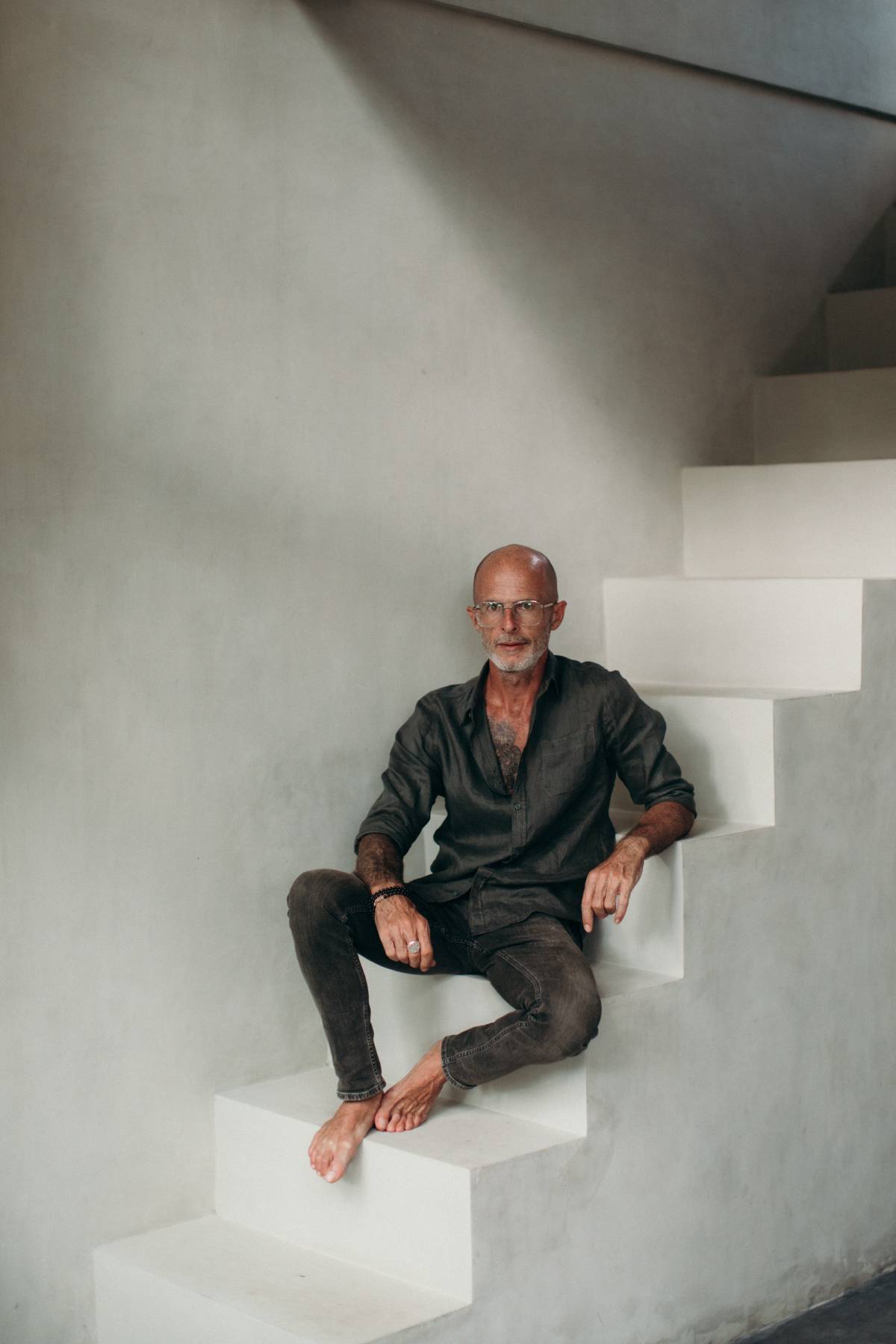
Richard Alma is a depth-oriented and somatic coach working within a Jungian framework, originally from Australia and now based in Aarhus, Denmark. His work focuses on helping men explore the unconscious patterns, emotional defences, and inherited beliefs that shape how they relate to themselves and others. With over two decades of experience as a professional photographer and as a facilitator at TalkClub, a men’s mental health organisation, he brings a grounded sensitivity to the ways people conceal, perform, and slowly reconnect with what feels real.
His practice moves beyond behaviour and into the deeper emotional architecture underneath it, including shadow work, relational conditioning, and the often unspoken tension between vulnerability, desire, and self-protection. He works with men who are ready to look honestly at what has been running their lives beneath awareness and to rebuild a more authentic relationship with their inner world and their relationships.
In this conversation, he reflects on the silent emotional weight men carry, the cost of being the “good man”, and how early conditioning shapes self-sufficiency, emotional suppression, and emotional disconnection. He explores how men lose access to their own needs and desires and what becomes possible when they begin to meet themselves more honestly in relationships.

The Silent Weight Men Carry
You work closely with sensitive men navigating identity, emotional capacity, and relationships. What are the emotional struggles men most commonly carry in silence?
Richard Alma: A common weight I feel men carry, which I come across a lot in my work, is the inability to give themselves permission to feel something without immediately needing to fix it, explain it, or move past it. The weight carried isn’t the emotion itself; it’s the years of being taught that the emotion was the problem.
A lot of men are competent, responsible, and trying hard to be good men. From the outside, nothing looks wrong. But quietly, underneath all the functioning, something has been unmet for a long time, sometimes decades. That gap reaches into everything: how present he can be, how close he’ll let people get, how much of himself he’ll actually risk showing. What wears him down isn’t his life. It’s the constant effort of keeping the lid on. The numbing required to suppress it is a weight in itself, and he’s been doing it so long he’s stopped noticing it’s even there.
Within that carrying, there is grief that was never witnessed. Anger that only ever came out badly now gets pressed down instead. A real longing for depth, not just to coexist with the people he loves but to actually be known by them. And running underneath most of it is a question he rarely says out loud: Is there something wrong with me that I can’t feel my own feelings?
Then there’s desire, not only sexual desire, though that’s caught up in it too. The more fundamental desire to say what he needs, to ask for it without already bracing for rejection or shame. A lot of men have learnt that wanting and desiring can lead to exposure, and growing up, that exposure was rarely safe, so they stopped going there. He stops asking. Pushes it far enough down that after a while he genuinely doesn’t know what he wants anymore, and he goes quiet in a way that looks, from the outside, like a man who’s at peace with things. Inside, he is at war.
And this isn’t something that only lives in one man’s story. This particular block runs so deep and so wide that it can’t only be traced back to individual families or upbringings. It’s in the culture, a collective wound, and it goes back far. Most of the men who raised us were carrying the same unspoken load. The father who showed up physically but wasn’t emotionally present. Who passed on stoicism rather than feeling, because that was all he’d been given. Boys absorb this. They learn not to need, not to reach, and not to ask, and they become men who don’t expect to be understood and who feel ashamed of themselves for wanting connection at all.
And then there’s a layer on top of all that, one that rarely gets discussed with any real honesty. We are living through a time when masculinity itself is under examination, and rightly so. Real harm has been caused to women, to the natural world, and to the way we all live together, and most men know this. They feel it. Not because they are the men making headlines, but because somewhere in them they recognise the parts of masculine conditioning they’ve inherited, acted out, or stayed silent about. That recognition carries its own weight.
And for the man who is already questioning himself, already trying to show up differently, already in the middle of his own reckoning, something else has been added on top. Not the weight of accountability, which can actually be clarifying and even useful, but something closer to collective shame. The sense that simply being a man is now the thing to apologise for. That his pain is less legitimate, his struggle less visible, and that when he walks into certain rooms, the verdict has already been reached before he’s opened his mouth.
This doesn’t reduce or dismiss what women carry. That reality is real, and it matters deeply. But shame, wherever it lands and on whomever it lands, rarely moves anything forward. It hardens people, or it collapses them, and neither of those produces the kind of man the world actually needs more of right now.
What I’ve found, working with men through all of this, is that the way out isn’t through more guilt or more performance of a better self. It’s through turning toward what’s actually been carried, feeling it rather than managing it, and finding out what’s underneath it. That takes courage. And it’s some of the most important work a man can do, for himself and for everyone around him.
Cost of Being the “Good Man”
How do boundaries change for men once they stop trying to earn love through over-giving, emotional suppression, or constant self-sacrifice?
Richard Alma: There’s a man I recognise immediately when he shows up. He’s spent his whole life being good, a good partner, a good son, reliable, steady, and always the one people can count on. And a lot of that is genuine. But if you sit with him long enough, something else starts to surface. A belief he’s rarely ever examined, that his place with the people he loves is tied to his usefulness. That if he stops giving, stops managing, stops being the one who holds it all together, he becomes either too much or not enough. That love, for him, has always come with quiet conditions attached, even if no one ever said so out loud.
Jung wrote about the persona, the face we construct to be acceptable to the world. For many men, the good man is exactly that. Not dishonest, but not the whole truth either. A strategy that formed early got consistently rewarded and, because it worked, it never got questioned.
When a man starts to see it, the pattern, the cost of it, and the self-abandonment, the first thing that comes is grief. He begins to understand how much of his life has gone into managing everyone else’s comfort while his own went unaddressed. How many times did he say yes and mean no? How much of what he called love was actually fear of abandonment dressed up as care.
This is where the change begins, and it’s rarely comfortable. Boundaries for a man like this are about finding out where he actually ends and where someone else begins. That sounds almost absurdly basic, but for him it’s genuinely new territory. He was taught to accommodate, to not take up too much space, to keep things smooth. So when he starts saying no, or naming what he actually needs, something in him braces. Underneath the adult is a boy who learned that taking up space had consequences. What I hear most from men working through this is that they expect the relationship to break, to be left. The surprise, almost every time, is that it doesn’t. What actually happens is that the people around him begin responding to the reality of him in a way they never could to the performance of him.
What I watch happen, and it moves me every time, is that his relationships don’t thin out when he stops over-giving. They deepen. Because, maybe for the first time, the people in his life are meeting someone real. The resentment, often a deeply held rage sitting quietly underneath all that giving, begins to clear. He becomes present to his own needs first, and from that place he can actually be available to others in a way he wasn’t before. The giving that remains is freely chosen rather than fear-driven, and everyone around him feels the difference even if they can’t name it.
Brené Brown said that daring to set boundaries is about having the courage to love ourselves even when we risk disappointing others. For a man who learnt early that disappointing people was genuinely a threat to his survival, that’s the whole journey in one sentence.
A man who can’t receive can’t be fully known and can’t say what he needs; he’s only ever half in the room, no matter how much he gives from the half that shows up.
Seeing What People Conceal
You’ve moved from photography to depth coaching, both of which require a sharp eye for hidden truth. What have you learnt about what people reveal and what they try to hide when they feel seen?
Richard Alma: Photography taught me something I didn’t fully understand until years after I’d been doing it. The camera doesn’t lie, but the person in front of it does – not from dishonesty, but from protection. Someone would walk into a portrait session carrying a carefully constructed version of themselves, and my job was never to dismantle it but to create enough safety that something underneath could surface when it was ready. It always did. And it was always more interesting than what they’d walked in with.
What I kept noticing was that the thing a person most wants to hide and the thing they most want to be seen for are almost always the same thing. The moments I have witnessed the depth of tenderness and vulnerability in a man that he covers with awkward humour are rare. The longing a woman has to be truly seen is buried under everything she has learned to become instead. The wound is sitting just behind the confidence. People are terrified of being truly seen and desperate for it at the same time, and that tension lives in almost every human encounter if you know where to look.
When I moved into this work, the same thing was there, just in a different space. A man comes in and lays out his presenting issue: the relationship that keeps breaking down, the career gone sideways, and the low-level sense that something is off, but he can’t name it. I’m listening to all of that, but I’m also paying attention to what his body does while he talks, which parts he moves past quickly, and where his voice changes. People reveal themselves most clearly in the gaps, in what gets laughed off, deflected, circled around, but never quite landed upon.
In photography, we would call it the unguarded moment.
It’s rarely the darkness people guard most carefully. Once there’s enough trust, most people are fairly willing to look at their perceived failures and their shadows. What they protect most fiercely is their tenderness. The things they want so much it frightens them. The places where they’re genuinely vulnerable and afraid. Shadow can be examined from a distance, dissected and tracked, but tenderness can’t. It just sits there, undefended, and that exposure feels far more dangerous.
When someone truly feels seen, not assessed, not steered toward a better version of themselves, just witnessed as they actually are, something held in the body lets go that has sometimes been tightly gripped for years. That’s the entry point where real work becomes possible. Because the person has stopped spending their energy on concealment, and that same energy becomes available for something deeper to be met. To witness someone meeting themselves behind the masks and the veils we have all, in our own ways, been taught to wear – that is where healing takes place. Where that tenderness finally finds out it’s safe.
The camera and the coaching room have the same thing at their centre. Both are just containers where truth that was already there finally gets the conditions it needed to come forward.
The Shadow Between Us
In your Jungian coaching work, how does unintegrated shadow material show up as emotional avoidance or disconnection in men’s intimate relationships?
Richard Alma: Jung wrote that what we don’t make conscious appears in our lives as fate. I’ve never found a better description of what happens in close relationships when a man hasn’t looked at his shadow. The things he can’t face in himself don’t disappear; they find their way out sideways, usually onto the people nearest to him, and the relationship becomes the arena for an internal conflict he created and keeps projecting outward.
The shadow isn’t simply the dark or shameful material. It’s everything that got pushed outside of conscious awareness in order to be acceptable to his family, his culture, and his own idea of who he is. For many men that includes grief, vulnerability, dependency, fear, and a deep reservoir of unmet longing that has nowhere to go. It also holds the unlived life, the parts of him that got shut down so early he’s forgotten they even belong to him.
In relationships this tends to show up in ways that are hard to trace back to where they started. The man who becomes disproportionately angry the moment his partner shows vulnerability because her vulnerability touches something in him he was taught to be ashamed of. The man who is warm and present everywhere except at home and generous with people who don’t know him well but somehow absent with the ones who do. The man who starts fights about things that don’t matter because the conversation that actually matters feels too exposed to have. The man who loves his partner genuinely still keeps them at just enough distance to feel safe: close enough not to be alone and far enough to stay in control.
Robert Johnson described the unlived life as the most dangerous thing a person carries. When shadow stays unexamined, a man doesn’t just suffer it privately; the people around him carry what he won’t. His partner becomes a surface for projection. His children pick up what he hasn’t processed. The relationship fills slowly with everything that isn’t being said, and the distance that grows between people who genuinely love each other is one of the saddest things I witness in this work.
What makes it hard for men specifically is that shadow work, turning toward discomfort rather than away from it, staying with what’s happening inside rather than managing it, runs against almost everything they were ever shown about how to handle difficulty. Solve it. Push through. Toughen the fuck up. Shadow work asks the exact opposite. Stay with it. Follow it down. Let it tell you what it’s about. Listen.
The intimacy available on the other side of that is something different from what existed before. Not because the relationship becomes easier, but because the man in it becomes more present. Less defended, less managed, and more genuinely there. And what intimacy needs more than anything is someone willing to show up, with themselves and with another person, without quietly leaving the room.
Habits We Mistake for Who We Are
For readers who are trying to build a better relationship with themselves, what is one pattern you believe they should stop calling “personality” and start recognising as protection?
Richard Alma: One pattern I come back to often, the one I see running quietly underneath a particular kind of man who shows up in my work, is self-sufficiency so complete it has become isolation. A man who has come to believe, completely sincerely, that this is just who he is. The lone wolf. He is convinced his pack is better off without him yet sees himself as hypermasculine, and within that lives a deep pain of loneliness and disconnection from his own heart and the beauty he carries within him. Robert Bly wrote in Iron John that the young man who didn’t receive the blessing of his father or his tribe will wander, convinced he belongs nowhere and to no one. That wandering looks like independence. It isn’t.
He doesn’t need much. Handles things alone. Capable, contained, privately proud of it. From the outside, it looks like strength, and there’s something real in that. But underneath, if you go slowly and build enough trust, there’s usually a different story. One where needing people became unsafe early on. Where reaching out got met with dismissal often enough that he stopped doing it. Where he simply never saw a man around him do anything different, so he took self-sufficiency as a fact of male life rather than a strategy for surviving it.
What developed wasn’t character. It was an adaptation. Intelligent, efficient, and at some point it crossed the line from protecting him to costing him.
And here is where it gets subtle. The protective structure that formed around him, the self-sufficiency, the not needing, the going it alone, wasn’t a lie. It kept something real inside him safe. But over time, it becomes so habitual, so completely identified with, that the man inside it loses contact with what it was built to protect in the first place. He stops knowing what he feels because feelings were never safe enough to trust. He stops knowing what he wants because somewhere along the way, wanting stops feeling worth the risk.
If any of this is resonating, here is what I’d ask you to sit with: if the independence is genuinely who you are, it won’t go anywhere when you look at it. Real character doesn’t dissolve under honest attention. But if examining it produces anxiety, if the thought of being fully known, truly seen, by someone feels closer to threat than preference, if depending on anyone even momentarily feels unsafe rather than just unfamiliar, that’s worth paying attention to. That’s the protection talking. Not you.
An honest relationship with yourself doesn’t begin with a breakthrough or a dramatic unravelling. It starts with a quiet question: are these walls mine, or did I inherit them, build them up over the years, and forget I was the one who put them there? Because what’s on the other side of that question is usually just a man who has been waiting, for quite a long time, to be let back in.
Editor Note
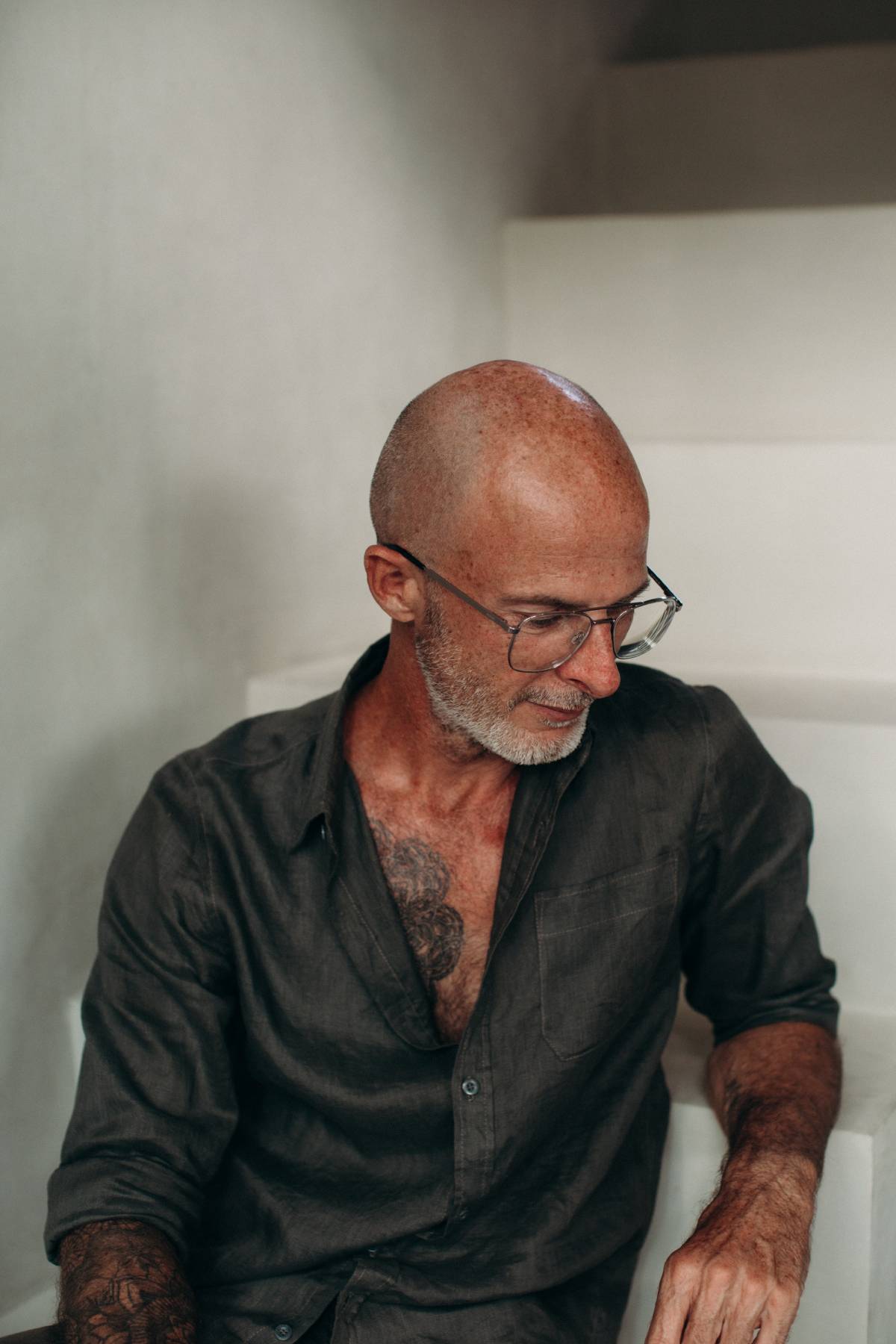
What men carry when no one is looking. Richard Alma’s insights trace a quiet architecture beneath behaviour, where responsibility often masks disconnection, and strength becomes a way of disappearing from oneself.
How emotional absence is mistaken for stability, and how that confusion is normalised. There is a point in his reflection where language stops sounding theoretical and becomes recognisable in lived experience, in the tension between performance and presence.
Healing is not addition but return. A return to what was felt but never allowed.
