
Born and raised in Delhi, Yash Sharma’s early understanding of intimacy was shaped far away from open conversations, language, or visibility. Growing up at the intersection of caste, class, and limited access to sexual discourse, queerness first appeared not as identity or politics but as silence, confusion, and lived secrecy.
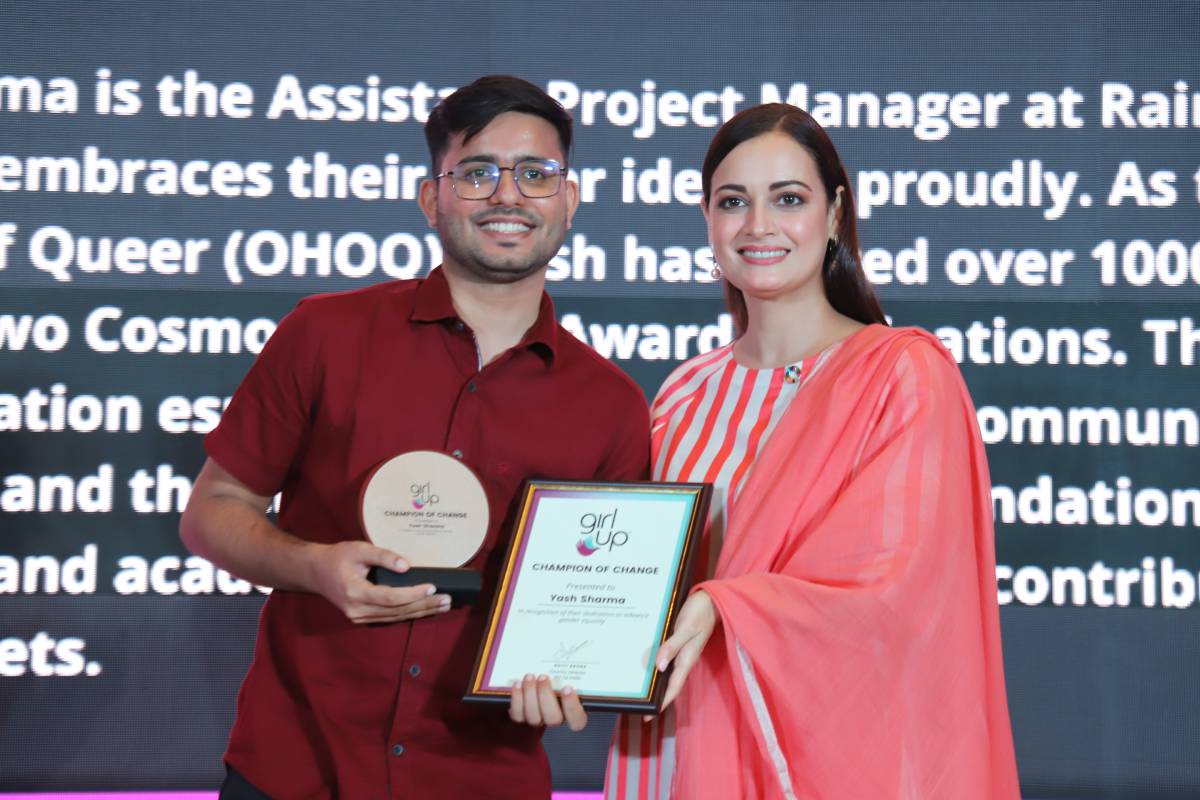
Today, Yash is a queer trans* storyteller, advocate, and founder of Official Humans of Queer, a platform that has documented over 1200 queer lived experiences across India. Their work focuses on bringing forward narratives often left outside mainstream queer discourse, especially from Tier 2 and Tier 3 cities, where access, language, and safety remain deeply uneven.
Across advocacy, storytelling, and community work, Yash engages with sexual health, desire, and queer lived realities through a grounded, lived-experience lens. Their journey spans HIV awareness work, leadership roles across queer collectives, and collaborations with organizations focused on sexual wellness and community safety.
From lived experience to large-scale advocacy, their practice sits at the intersection of visibility and vulnerability, asking one consistent question: who gets to feel safe, seen, and understood when it comes to intimacy in India?
In this conversation with Yash Sharma, we step into the often-unspoken intersections of queerness, class, and access, tracing how intimacy is learned in silence and reshaped through lived experience, community, and storytelling.
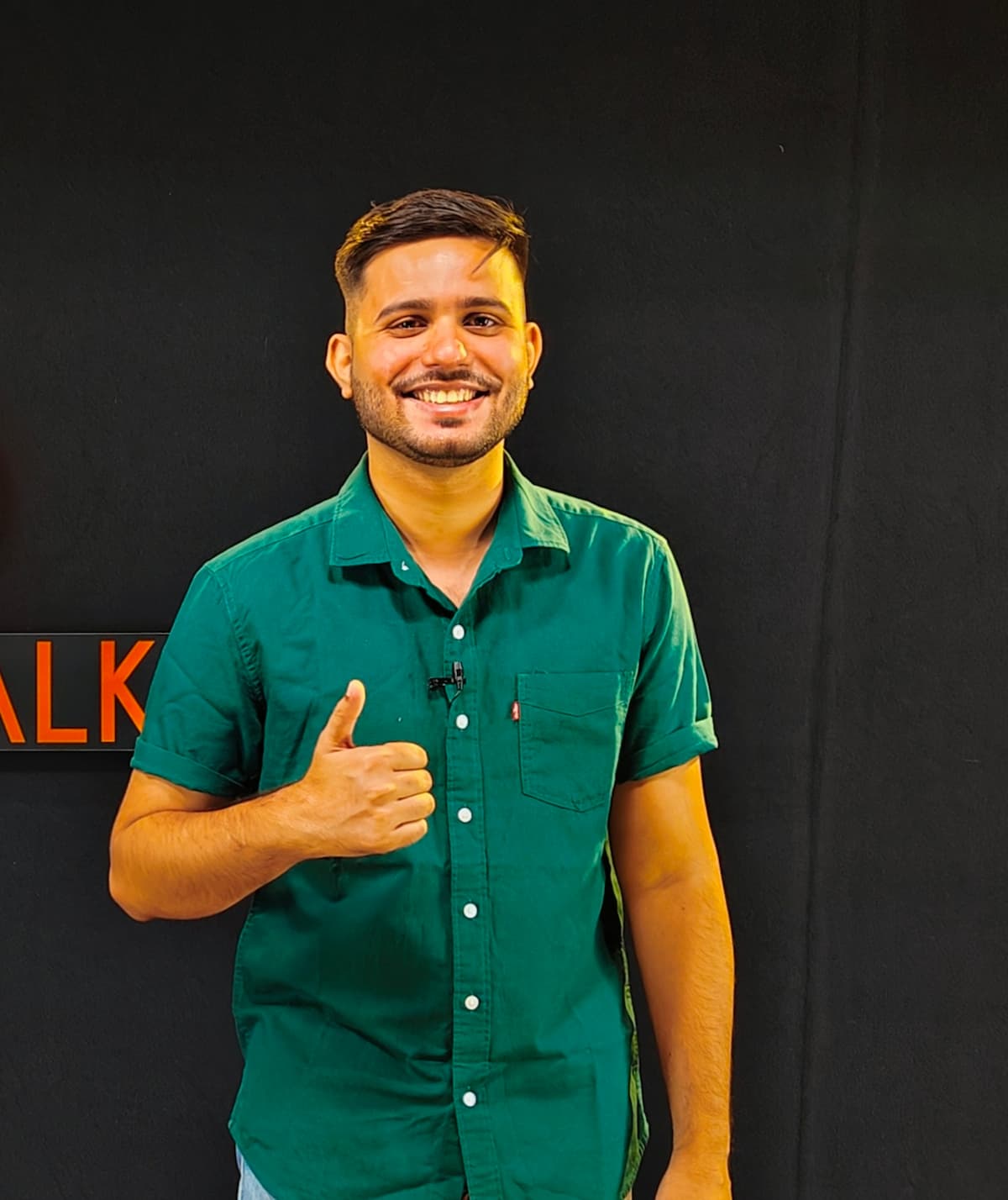
Growing Up in Silence
Growing up in Delhi, how did the limitations around conversations about sex, queerness, and desire shape your earliest understanding of intimacy? Were there misconceptions that stayed with you for longer than you realized?
Yash Sharma: Delhi in itself is a Tier 1 city. It’s not something that is devoid of any kind of internet or access. But, coming from a not-so-good socioeconomic background, I had my limitations over the internet, over technology, over language, and over the schooling and education that I was getting.
So my whole childhood was more about studying what schooling andwas being taught in school. And schools, not being that connected or that much affiliated, didn’t have these kinds of conversations. So when I was growing up till Class 12, the whole conversation on queerness was not there at all, not at all.
There were only the changes that you feel during puberty, and those changes were just happening inside me. So there was a duality of emotions that I felt. I was not attracted to women, but I also never gave it that much thought, thinking that maybe this is natural, this is what the natural phenomenon is, and that’s all about it.
Coming to the question of sexual desire, that is something that we never talked about. I am coming from a place where the conversation on sex is mostly about heterosexuality, mostly about female and vaginal sex. For me to discover something was like a very dark secret.
It started with my cousin, the way he started doing things to me non-consensually, and then it went on with other people who also did things to me non-consensually. And when you are just discovering it, you don’t have any kind of questions or answers; you don’t know what is happening to you or what the other person is doing to you.
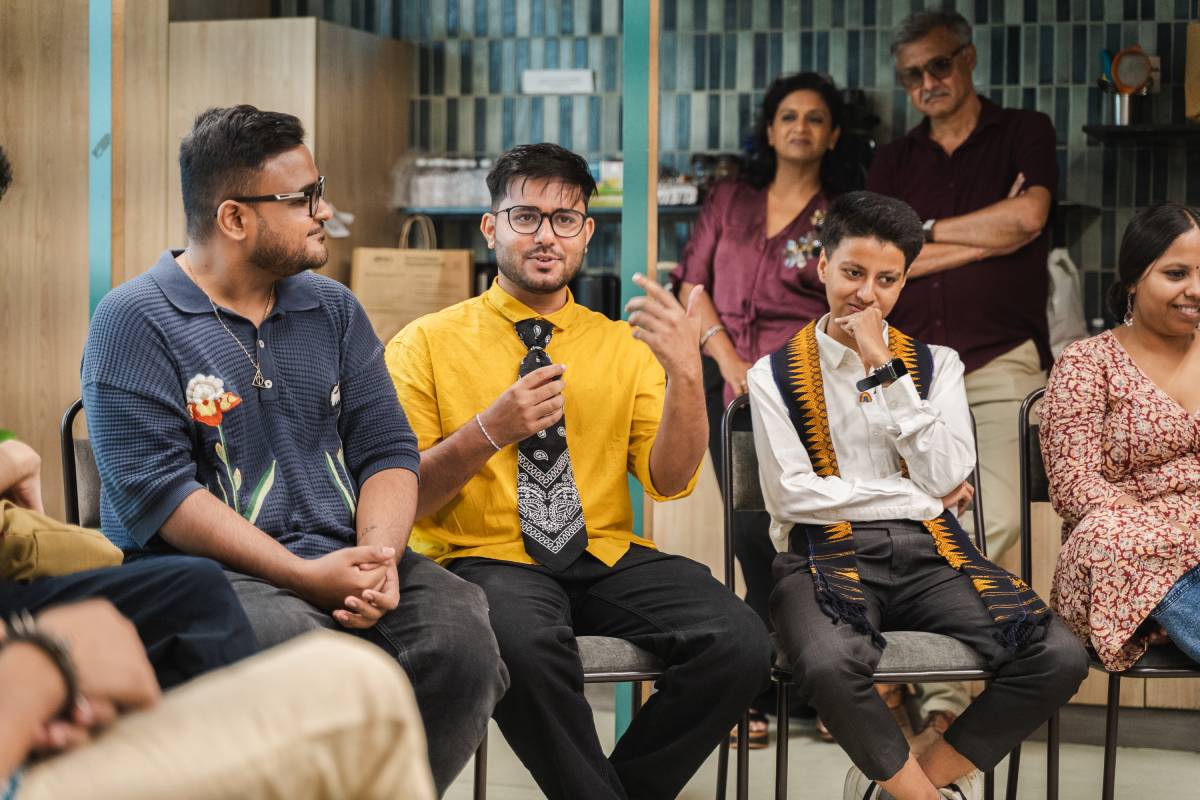
At some point, it sometimes felt like it was something that I was liking, but I did not like the way it was happening. So that was also there.
I used to live in a very residential area where there were a lot of families living, so people usually didn’t have a place to host someone. So whenever I used to meet people, they were usually men who were married to a woman, or about to get married, or had already decided that they were going to marry a woman.
So this whole situation stayed with me for a very long time: that this is how life is going to be, that I have to live a very secretive life. They also used to teach me in a way that if I come out or tell someone that I feel this way or have feelings towards the same gender, people won’t accept me, so it’s better to keep it hidden.
And as a man, it would be easier for me to access sex with other men, because we live in a patriarchal world, so there is no question about men. And I used to think that this is the way I am going to be.
Also, adding to this, even the biological and safety aspects were not very clear to me, because in my school and in our education system, the whole idea of reproduction and safety around sex was taught only in terms of male and female aspects. The idea of using protection was more about preventing pregnancy than preventing STIs or STDs.
So for a very long time, I did not know that if I am engaging with a man, I also need to use protection.
If I go by the idea of desire, I was young, and I did not have that much power or autonomy over my own body. And this has stayed with me for a very long time: that being young, I had this responsibility to prioritize other people’s pleasure over mine.
There was also a pattern where people were forceful and pressuring for anal sex. Also, when you are young, one thing that I observed, and that still happens, is the whole idea of virginity. Since I had not had anal sex with anyone, there were men who just wanted to have it with me because I had not experienced it before.
So this whole limitation of conversation, education, awareness, representation, and visibility, along with no space to talk and also not having access to the internet, pushed me into spaces that I never wanted to go to, just to understand myself.
I always say that I learned about desire, sex, and queerness by sleeping with men. I didn’t want to do that; I wanted to know it on my own, but it did not happen that way.
And that itself was a big challenge for me.
Intimacy Outside the Metro
A lot of mainstream conversations about intimacy are urban, English-speaking, and fairly privileged. What realities from Tier 2 and Tier 3 India are still missing from those narratives?
Yash Sharma: I feel like this question itself carries the answer. Tier 2 and Tier 3 India are entirely missing from these narratives because their realities are still not being talked about.
For me, it often feels like we are living in a space where a certain kind of “high morality” has developed, especially within gay culture or among men who have sex with men. People have absorbed this idea of what is acceptable, what is desirable, and what is “right.”
I see how conversations have shifted. We are now more focused on things like how many people are out, whether you are out, how you look, what you do, whether you are queer enough, and how you fit into these spaces. Your appearance, the city you come from, your caste, your class, your language—everything has started to matter so much more.
I remember when I started this work around 2017 or 2018, people were more interested in connection. There was curiosity; there was an effort to understand each other. Now, it often feels like people want to first know your labels before they know you.
When I think about what realities are missing, I honestly feel that the idea that “society has changed” does not fully apply to Tier 2 and Tier 3 cities. On the ground, things still feel very different.
People are still struggling to even say how they feel to one person. These cities are deeply connected through heteronormative community structures, where everyone knows everyone. So the fear is very real because if you tell one person, it doesn’t stay with that one person.
Access is another big gap. Access to healthcare, to queer-friendly spaces, to community, and to even basic information is still very limited. Some cities are slowly building these spaces, but for many people, they still don’t exist.
I still see people getting married to women because of family pressure. I still see people living dual lives, constantly negotiating between who they are and what is expected of them.
One of the biggest things we don’t talk about enough is healthcare and choice. In cities like Delhi, I still have options. I can choose who I want to connect with. But in Tier 2 and Tier 3 India, that choice is often missing.
When you find even one person, you tend to hold on to them, not because they are necessarily right for you, but because they are the only option available. So your decisions are shaped by lack, not by desire.
Yes, things are changing. There is more visibility now, more representation than before. But there is also a lot of silence, a lot of discretion, a lot of people still in the closet, still living with fear.
Even something as simple as saying “I am gay” is still not accessible to many people. That sentence itself is missing from these narratives.
And then there is language. We don’t talk enough about how exclusion works through language. I have seen people take screenshots from apps like Grindr and mock those who cannot speak English. It is treated as humor.
But for me, it feels violent in a quieter way. Because what we are really doing is pushing away people who don’t have access to English, who don’t understand these platforms in the same way.
We are building a class hierarchy within queer spaces.
And because of that, a person from Tier 2 or Tier 3 India cannot always enter these spaces as they are. They cannot just exist and belong.
And that, for me, is one of the biggest realities that is still missing from the conversations we are having.
Dating Apps Reality Check
How do you feel about dating apps in India? Are they a safe space, a performance stage, or just a modern gamble in love and lust?
Yash Sharma: If I talk about dating apps, I come from a phase where I started meeting people through Facebook. At that time, many people did not have access to personal phones, stable internet, or even the vocabulary to understand these spaces.
So people would create fake IDs on Facebook and use them to enter pages like “men who love men,” “boys love boys,” and similar spaces. That’s where we used to find people, text them, send pictures, and plan to meet. It was very rare, almost like a once-in-a-lifetime thing, to find someone near your house who matched what you were looking for.
So I come from that phase. I started using dating apps very late, around 2018 or 2020.
Initially, for me, it felt more like a visible space than a safe space. It was a big revelation to see that so many queer people exist across different spectrums, across age, religion, caste, class, height, weight, and everything. That visibility itself felt powerful.
At that time, I did feel safe. I felt like I could find people and connect more easily because there was some distance and some sense of knowing who the other person is.
But I also had a very personal experience. I was outed to my family through a dating app. Someone was using my pictures on a fake profile, and my cousin found it and outed me. It happened around seven or eight years ago.
After that, I don’t think dating apps have felt safe for me. They have always felt like a risk.
Even today, there is always a risk of being outed. Screenshots can be taken, pictures can be misused, and anything can happen. Safety also comes from privilege. After I was out, I did not have much to lose. But there are many people who still have a lot to lose, so for them, dating apps are not safe at all.
If you compare Delhi with Tier 2 and Tier 3 cities, the risks and realities are very different. Class privilege plays a role. Access plays a role. Trans people and people from marginalized backgrounds face even more challenges.
Coming to the idea of dating apps as a performance stage, I strongly feel that you cannot be in a gay dating space without performing something.
You are expected to have a certain kind of body, to be masculine, to have good language, to come from a certain class, to follow gym culture, and to look a certain way. Then there are preferences, body shaming, expectations around being well-settled, and even expectations around understanding queer politics.
So people are not just dating; they are performing desirability. They are constantly trying to show how desirable they can be for others.
Because of this, many people end up creating curated identities. Sometimes people are not pretending in a simple way, but they are living a version of themselves that is shaped only to be desired.
Coming to the idea of a modern gamble, I think that applies everywhere now. The world has changed, and even platforms like Instagram have become dating spaces.
You never really know what you are going to get.
- For some people, dating apps are about survival.
- For some, they are about validation.
- For some, they are about loneliness.
One important thing for me is the idea of power and access. Who gets matches easily and who gets ignored depends a lot on how you look, your skin tone, your body, and how closely you fit into what is considered desirable in a cisgender, heteronormative world. The same standards exist within queer spaces, especially among men who have sex with men.
So power and access play a very important role in how people experience dating apps.
These apps promise connection, but they don’t deliver the same experience to everyone. Some people do find partners, friends, and meaningful relationships. But a lot of interactions are transactional, and intimacy often becomes something that is created temporarily rather than sustained.
At the same time, I feel that dating apps have become more unsafe and more like a gamble over time. But it was not always like this. Many people have found meaningful connections through them.
For people in Tier 2 and Tier 3 cities, these apps are still one of the only ways to find someone.
But with increased visibility, there has also been an increase in scams, fraud, and exploitation. Especially for people who are not out or are living double lives, there are risks of financial exploitation, blackmail, and being exposed.
So while dating apps have opened doors, they have also created new vulnerabilities
The Heart of Queer Love
You’ve documented 1200+ queer lived experiences. What pattern or truth has stayed with you the most deeply, especially when people are speaking about love, loneliness, or desire?
Yash Sharma: I guess what I would say is that love, from what I have observed as a pattern, is a very complicated and very subjective idea for each individual.
I have seen love in many forms. People finding love in their partners, people finding love within their families, people loving very secretly, people in same-sex relationships, and people dealing with marriage expectations and pressures. So they are loving, but at the same time, they are putting their family over their own sexuality.
Love is a very complicated thing that I have seen across all the stories. It has not come out as a single, fixed idea that people are looking for or going through in the same way. Everyone has their own definition of love.
For me, in every story, love exists, but it is constantly negotiated with different realities. Some people are in love with someone of the same gender, some are in love with people they don’t even want to be with, some are in love with their friends, and some are loving someone secretly and may never express it.
If I talk about loneliness, I feel the most common thing I have seen is the lack of space. There is no space where people can just be themselves, be politically incorrect, be imperfect, and still feel accepted. Everyone around them is judging them, whether it is their partners, their friends, or their families, even if they are out.
I have also observed that there are broadly two kinds of people. People who have accepted themselves, and people who have not.
Those who have accepted themselves still carry hope. Their loneliness reduces over time because they find community and spaces where they can exist more freely.
But the people who have not accepted themselves are struggling the most. They are surrounded by people, but they are still alone.
Coming to desire, I think the most common pattern is shame and access.
The first barrier is always shame. There is shame around their preferences, their body, their identity, being gay, having sex with men, and even wanting intimacy with men. That shame is deeply internalized.
And even when people start overcoming that shame, there is the issue of access. They don’t have access to spaces where they can talk openly. They don’t have access to safe places to connect. They don’t have access to expressing their desire freely.
Desire is also shaped by many identity factors. Where you come from, what you do, whether you have space, whether you live with family, whether you have a partner, whether you can communicate easily, whether you are introverted or extroverted, your age, your body—everything plays a role.
All of this controls how a person experiences desire.
Another strong pattern I have seen is that many people are living dual lives.
Across all the stories, if I try to combine everything, what stands out is the issue of access. Even if someone has access in one area, they lack it in another.
People want to love. People have the desire to connect. But very often, they are not getting what they truly want.
At the same time, with increasing choices and options, I also feel that people sometimes struggle with settling, and that is also part of the reality.
One more thing I would add is that the kind of love we are often trying to build is still very monogamous and very cis-heteronormative.
We are trying to replicate what heterosexual relationships look like. And I feel that is where we are missing something. We had the chance to redefine relationships, to create something that works for us.
But we are so conditioned by patriarchy, by ideas of dominance, by the idea of “one kind of love,” that we are not always thinking beyond that.
Pleasure Isn’t a Secret
In your opinion, why do conversations about female or queer pleasure still feel taboo, and what’s one thing everyone should openly talk about more?
Yash Sharma: In my opinion, conversations around female and queer pleasure still feel taboo because pleasure itself has never been centered in how we talk about sex. Sex, in most of our upbringing, has been framed around reproduction, morality, and control, not around desire, agency, or joy.
For women, pleasure has historically been suppressed under patriarchy. It is either ignored, stigmatized, or seen as something that should exist only within certain “acceptable” boundaries. For queer people, pleasure becomes even more invisible because their very identities are often denied, criminalized in the past, or reduced to stereotypes. So when your existence itself is questioned, your pleasure is not even considered worth talking about.
There is also a deep discomfort with autonomy. Talking about pleasure means acknowledging that people have desires, preferences, and control over their own bodies. And that challenges existing power structures, whether it is within families, relationships, or society at large.
Another important reason is the lack of language and safe spaces. Many people don’t even have the vocabulary to express what they feel or want. And even if they do, they don’t have spaces where they can talk about it without fear of judgment.
Shame plays a very strong role here. From a young age, people are taught to associate desire with guilt. So even as adults, they carry that hesitation, that fear, that silence.
If there is one thing that I think everyone should openly talk about more, it is consent and communication in pleasure.
Not just consent in a legal or formal sense, but everyday consent. The ability to ask and to express what you like and what you don’t like, and what makes you comfortable and what doesn’t. And to understand that pleasure is not about performance or obligation but about mutual respect and agency.
Because when we start talking openly about consent and communication, we also start creating space for safer, more honest, and more fulfilling experiences of intimacy.
Future of Queer Wellness in India
Looking ahead, what changes or conversations do you hope to see in India around sexual wellness, pleasure, and inclusive relationships over the next decade?
Yash Sharma: I feel that right now, conversations around sexual wellness, pleasure, and relationships have become very technical and very defined. Consent is defined in a certain way, pleasure is defined in a certain way, and everything is explained in fixed frameworks.
While I understand that some things need to be defined, taught, and addressed, I also feel that we need to move beyond only that space. We need to make these conversations more individual and more human.
It is important to first understand people, their contexts, and their lived realities, and then think about how these ideas are communicated and practiced in their lives. Not everything can be approached in the same structured way for everyone.
At the same time, I do believe that systems like school and college curricula need to change, but more than that, what we really need are spaces where people can talk openly.
Spaces where people can talk about sex, pleasure, and relationships without being judged. Spaces where they can just be themselves.
Spaces where they don’t feel that someone is more knowledgeable, more “correct,” or more superior than them.
Because unless we create those spaces of comfort and honesty, conversations will remain limited to definitions and not reach people in the way they actually need.

Editor Note
This is a reminder that intimacy, for many, is not discovered through freedom but negotiated through silence, access, and survival. It shifts your perspective on what we often take for granted: the language, the spaces, and the choice to simply be.
The most striking takeaway is how unevenly desire, safety, and visibility are distributed. Not by chance, but by class, caste, geography, and language. And yet, within that, there is an insistence on connection, on being seen, even if quietly.
Intimacy in India is not just about who we love but also whether we are allowed the space to understand that love at all.
