
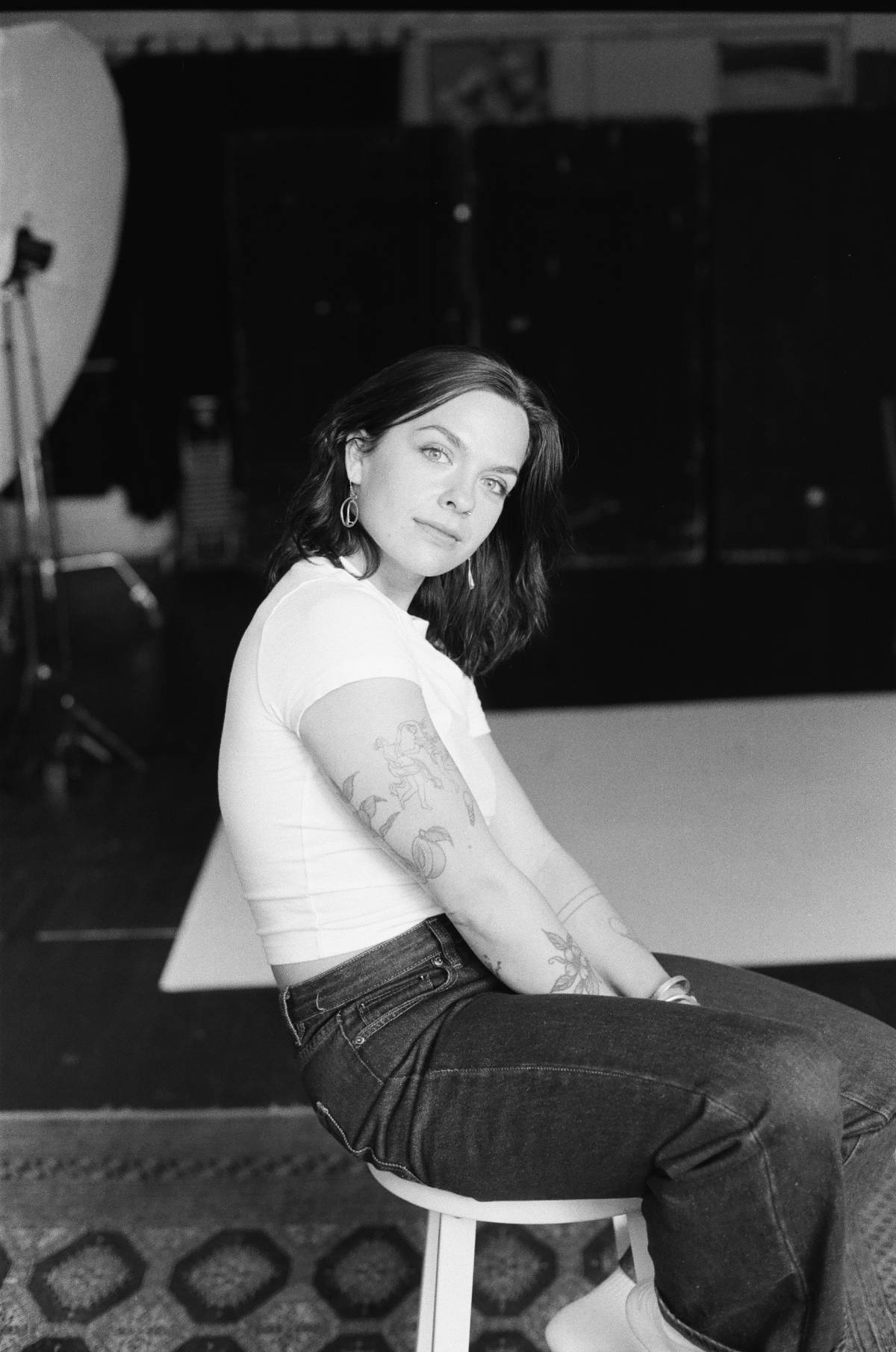
Taylor doesn’t speak about sexuality as something separate from the body, art, emotion, or everyday life. For her, desire is deeply embodied, something felt through movement, creativity, intimacy, and the quiet relationship we build with ourselves over time. Long before becoming a somatic sexologist, she was a dancer, an artist, and someone fascinated by the emotional language of the human body, how it holds power, memory, shame, pleasure, and transformation all at once.
What makes Taylor’s perspective so compelling is the way she refuses to reduce sexuality to neat definitions or polished self-help language. Instead, she approaches it as something fluid and deeply human, shaped by personal experience, healing, politics, vulnerability, and self-expression. Through movement, poetry, photography, and queer community spaces, she creates room for people to reconnect with themselves outside the pressure to perform, explain, or stay small.
Across her work, whether through Full Bloom, Love Club, or her writing, there’s a recurring invitation to see intimacy differently. Not as something transactional or performative, but as something sacred, expansive, and deserving of care. Her reflections on pleasure, boundaries, shame, dating, healing, and embodiment challenge the systems that teach people to disconnect from their desires or distrust their bodies altogether.
In this conversation with Taylor, we explore the politics of pleasure, the emotional messiness of dating, queer community, embodiment practices, healing after harm, and the radical act of treating intimacy with yourself as a privilege rather than an afterthought.
Website
Movement Reveals Your True Sexual Self
Taylor, your work blends somatic sexology with creative expression. How has movement and art helped you understand your own sexuality and boundaries in ways that traditional therapy or education couldn’t?
Taylor: I was a dancer and an artist long before I ever considered being a therapist or had any idea what a sexologist was, so how I show up in my sexology practice and my relationship to my own body is always rooted in my fascination with the fleshy, feeling human body from the curious artist’s perspective.
The thing is, while we can sit in lectures and learn frameworks and intellectualize our experiences, and lots of good does come from this approach, embodiment and how we each uniquely experience our sexuality aren’t something you can read about to understand–it has to be felt first-hand.
Because I have been a dancer since I was very young, I knew what it was like to experience erotic energy in my body as a result of movement long before I knew what it was or could put words to it. I remember being 10 or 12 years old and rolling my shirt up and dancing to Britney Spears in the mirror and feeling a sense of power and electricity in my body, like I could do anything. Call it cultural conditioning, male gaze, hyper-sexualization of young girls, and all the other contextual pieces that play roles here, but I still, with all the education and feminist awareness I have now, find just as much joy, power, and eroticism in rolling my shirt up and dancing to Britney in the mirror now as I did then. I never feel more powerful than I do after a Heels class, and I notice a lack of erotic energy and a lack of sexual desire, too, when I’ve gone for a period of time without movement. This is why I’m so passionate about movement as part of anyone’s healing journey, because the power of a dance party is unparalleled by any talk therapy I’ve ever experienced.
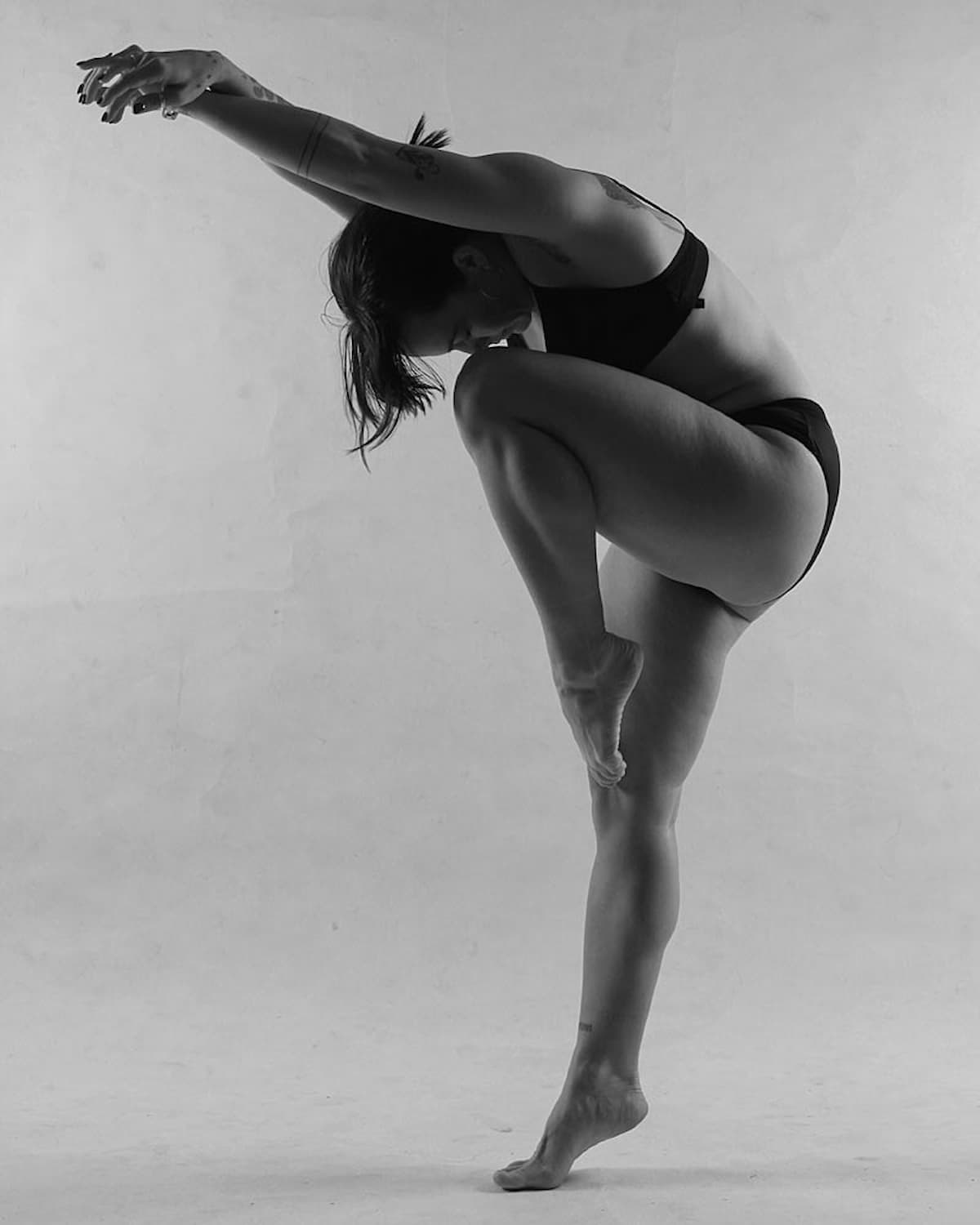
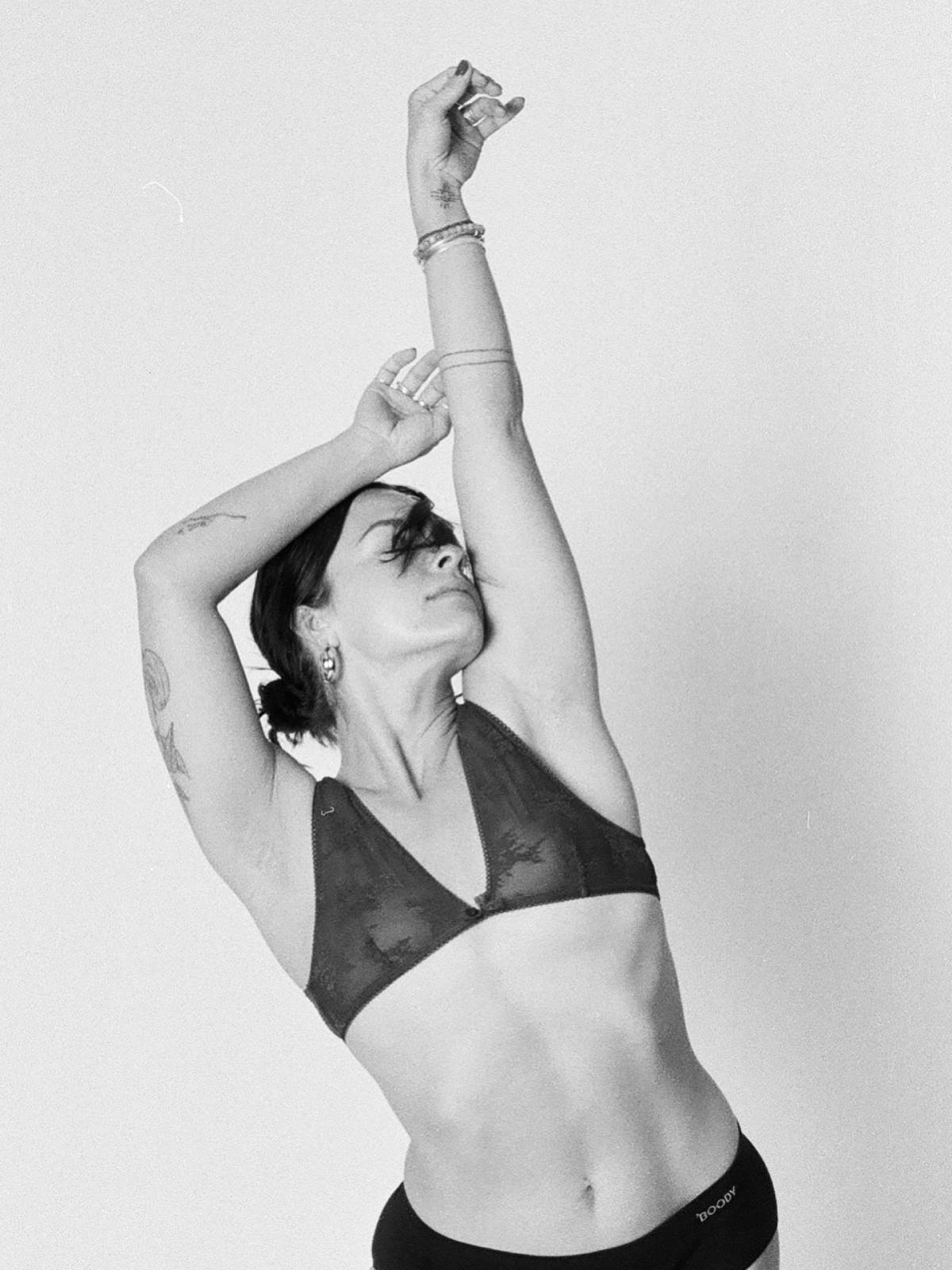
I knew very young the power of movement to change how I was feeling; bring about feelings; evoke, release, and share emotion; and connect me deeply to the core of myself. I often close my eyes when I dance and move; for this reason, nothing connects me to my body as quickly and wholly as moving my hips and bringing my awareness inward for a moment to focus on what I notice as I move. But this fascination extends to the external body as well; it’s just so damn beautiful.
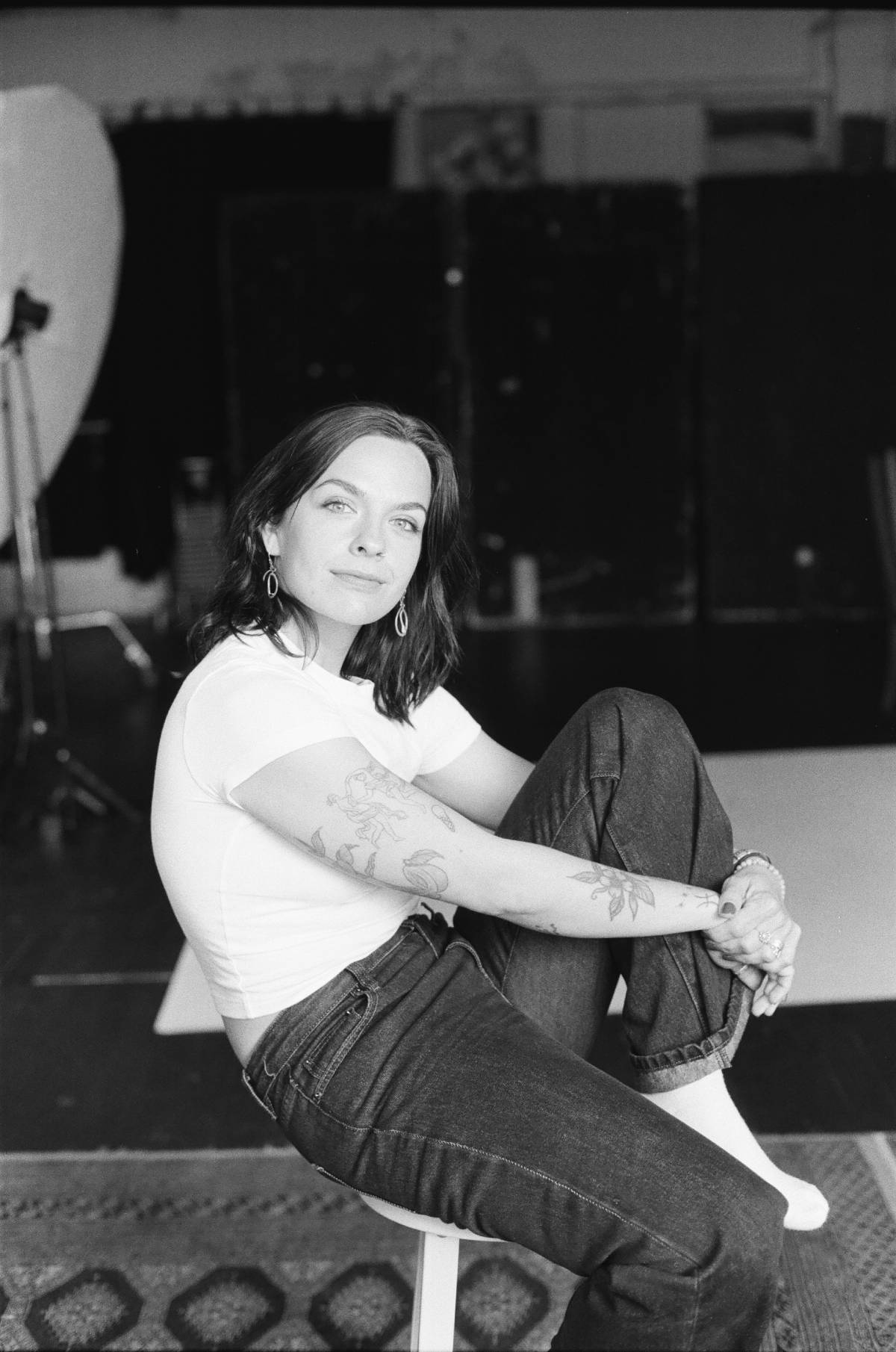
I’ve always loved fashion and adorning the body, manipulating the body through garments and costume, and creating art from the infinite forms it can take. I began shooting intimate portraiture photography when I was in university on my grandpa’s old SLR while I was studying art history, gender studies, and costume design, and I remember feeling like my photography of the human form from the femme gaze (mine) was in direct opposition to the art historical canon I was learning about. It felt like a response to the feminist theory I was reading, to shoot historically marginalized bodies nude in nature to be seen and celebrated; to give these bodies space to feel safe being seen is such a privilege. Intimacy is a privilege. And it felt like a big “fuck you” to the world that told me to keep my body private and hidden when I would shoot and share my own nude self-portraiture. I was determined to remind us all that our bodies are a part of nature, not apart from nature, and because of this fact, anything your body does, desires, or presents as is, in fact, natural. Normal. Human.
So a lot of how I experience my sexuality comes from how I experience my body as part of nature, as a source of creation, as a work of art, and as a great privilege.
If I didn’t have this lens on my own body, I doubt I would have a fraction of the confidence I feel in myself as a sexual, erotic being. If I didn’t experience myself as an erotic being so often through my movement practice, it would be a lot easier for others to convince me I’m not, for the world to convince me I don’t have this power. Which is why I’m so passionate about regular embodiment practice, whatever that looks like for you. Because if you have first-hand, lived experience and proof of your own erotic power, no one can take it away from you. If you can see yourself as a work of art, flawed and imperfect as you are, you can be a lot more accepting of your own body. If you see intimacy with you as a privilege, you’re far less likely to accept behavior and treatment from others that doesn’t acknowledge the sheer privilege it is to be intimate with you.
While I believe our personal boundaries are an ever-evolving process, I also believe a prerequisite for having boundaries is enough connection to your body that you can get a felt sense of where they are and enough confidence in yourself and your body’s wisdom that you can stand by them when you become aware of them.
How Sexuality Fuels Full Bloom
Your podcast, Full Bloom, is explicitly about dismantling the systems designed to keep us small. Where does sexuality sit in that dismantling for you? Is pleasure the revolution, or is it the fuel?
Taylor: When we started Full Bloom Pod, Emma and I were just two girls in our mid-20s living together, having long, gorgeous conversations over shared meals in our kitchen, trying to unravel all of the societal expectations we felt around what it meant to be becoming “women” and critiquing all the systems designed to keep us small. The “full bloom” to us meant blooming into the fullest versions of ourselves, which meant dismantling the systems and structures that got in the way of that. And there are many.
One of the biggest areas where we both felt pressure to stay small was within our sexuality. Having needs, desires, curiosity, and power, and growing comfortable with sharing and expressing these things meant taking up more space, refusing to stay small. And as we started interviewing people and talking to more like-minded humans doing similar work of dismantling patriarchal, colonial systems, we kept coming back to sexual health and wellness as a pillar for finding comfort and agency in one’s own body. I think of Simone de Beauvoir’s The Second Sex as a perfect example of how we have been historically oppressed based on sex and how, still in 2026, sexuality exists very differently for people in femme bodies, in bodies of color, in fat bodies, in queer and trans bodies, in disabled bodies, and in otherwise marginalized bodies than it does for the standard, white, cis male body that our entire society is based on. This is not to say that men don’t suffer from the patriarchal assumptions around sex and gender just as much as non-men do; however, it is to say that sex is at the core of almost every system, belief, and limitation placed on us when we endeavor to become the fullest version of ourselves, whoever we are.
So I’d say pleasure is both the revolution and the fuel. Pleasure is revolutionary because it’s inherently political to exist in a historically marginalized body and to actively engage with one’s pleasure (shout out to adrienne maree brown’s Pleasure Activism). And it’s the fuel because when we intentionally orient toward pleasure in our own lives, we have more energy and capacity to dismantle the systems and structures that actually only function when the players within the system lack the energy and resources required to critique it. We see this every time thinness comes back into the zeitgeist as a social currency: to keep us small and docile (and under-nourished and focused on losing weight) rather than powerful in the face of harsh political and social climates. And it’s cyclical: the more we fill our lives with pleasure, the more resilient we are; the more we shed the layers of shame and conditioning, the more pleasure we feel.

Seeing the Body as a Garden
“My Body Is An Orchard” is such a visceral title. What does it mean for you to view the body as something that grows, changes, and bears fruit rather than something to control?
Taylor: My Body Is An Orchard is the title poem from my poetry collection, which centers on the felt experience of living in the world as a woman, from which somehow we are always being extracted. Taken from. Expected. Assumed access to. Colonized. Regulated. Used. Disregarded. Unappreciated. It came in the process of my own healing from SA and years of wrongs against my body, noticing how, like the land, I felt constantly in the giving role and depleted by it, rarely receiving the nutrients I needed for my own growth and expansion.
The follow-up poem to this in the second half of the collection responds to this feeling with reflections on what it feels like to be in the receiving role when those around us respond to our needs with care and attention, and what it feels like to be loved. The orchard of my body grows ripe with fruit and over-abundance when I feel nourished, and this comes as a result of me taking the time to check in with myself, notice what I need, communicate these needs, and then allow myself to be cared for (which is often the hardest part, because it’s so vulnerable).
The body as an orchard is a recognition of the body’s seasonality, how in different seasons of our lives we will have different needs and different capacities for growth and giving. In winter, the orchard is dormant, and no one is expecting to find ripe fruit, so why do we constantly expect ourselves to produce? The body as an orchard also recognizes that it needs tending to, it needs respect, it needs boundaries, it needs advocates, and it needs biodiversity, as do we.
Find My Body Is An Orchard here.

Are We Really Growing?
Do you think modern dating has made people more emotionally aware or just more avoidant in better packaging?
Taylor: What an interesting question; I feel so many ways about this. I think the normalization of therapy and seeking support has had a massively positive impact on mental health in general, where we’re seeing more people actively reaching out and seeking services than ever before. For previous generations, therapy has been so taboo and stigmatized in gen-pop, and I feel that the rise of social media alongside the global impact of COVID on mental health has pushed therapy into the mainstream and allowed people to see its necessity in a way we’ve never seen before. So for this reason, I do feel that many people are going into dating a lot more self-aware, with a lot more tools for self-regulation, emotional processing, and intentionality than probably ever before.
On the other hand, however, I do notice that the normalization and mainstreamification of “therapy speak” or jargon has this interesting way of dehumanizing the dating experience, where suddenly boundaries are too strong for any connections to happen, we’re diagnosing ourselves and each other rapidly, and we’re intellectualizing and sensationalizing every quirk or characteristic rather than allowing one another and ourselves to have personalities, and we’re trying to regulate ourselves out of having reactions and emotions—it’s all gotten a bit AI and machine-like if you ask me.
I think it’s wonderful for gen-pop to have more access to therapy tools and information about their bodies, don’t get me wrong. I’m a major advocate for nervous system support with the somatic work I do. And I also emphasize that we can still be humans with feelings and quirks and that not everything needs a label or a theory or a framework to explain it. We can still just be.
If you’re going into dating with preconceived notions about exactly what’s right for you and putting yourself in a very rigid box, you’re likely to miss out on a lot of genuine human connection. This is not to say don’t have standards, or don’t have boundaries, or don’t have deal-breakers; these things are very important to dating. But ultimately, when we’re so rigid with our “boundaries” that we can’t have a laugh and ultimately be curious about what’s possible in each connection, we end up missing out on a lot of potential pleasure and intimacy because we’re set on avoiding the messiness that’s bound to come with interacting with another human.
Stan Tatkin says it best in Your Brain On Love (2013) when he says, “we’re all annoying. The hardest thing on the planet is another person.” We can’t connect if we’re expecting everything to come in a perfectly polished, easy, safe package. Dating is inherently unsafe because it involves entering the unknown. We have to have the tools we need to prepare ourselves as well as we can to keep ourselves safe, and then ultimately, we have to be willing for a little unknown, a little discomfort, a little cringe, in order to truly connect.

Where Sex Ed Meets Liberation
You co-founded Love Club, creating queer spaces where sex ed, pleasure, and connection explode. What’s the most electric, boundary-shifting moment you’ve witnessed there?
Taylor: Honestly, Love Club has been such a beautiful experience in and of itself that even just running it has been so electric for me.
When we started Love Club 2 years ago, Selina and I really just wanted to create queer community spaces that we wanted to be in, where education is accessible, but also where connecting, saying “Hi,” and feeling safe in community are the pillars of all our events. It always lights me up to hear from folks that have been to one of our more education-focused events, such as “So What Are You Into?” or “Play Clinic,” and then feel comfortable and safe going to other events off the back of having that educational space to be a newbie. We wished we had had a kink education night to attend prior to going to our first play parties, so we created a space where people who were curious about SOP events could come and ask questions and learn about different types of play. Stories from folks who attend Love Club events, where they then feel more confident and curious, venturing out into other events and spaces, remind me of the big “Why” around why we do what we do.
I also love witnessing connections made at our regular speed dating event, Quickies, because I know how challenging it can be to find spaces to connect with other queers IRL outside of the apps. When we get to play cupid and make the matches and send them out to the participants after each speed dating event, it’s always a special moment.
Saying, “Here are all the gorgeous babes that want to connect with you! It feels like such a privilege to our participants after folks have been so brave to come out and show up—it’s vulnerable and scary as heck! And yet they come! I just think that’s such a beautiful thing. It’s a reminder to us all when things feel lonely or isolating in our modern world that there are still lots of real people doing regular human things that want to know you!
Turning Shame Into Joy
If someone came to you saying, “I feel guilty for enjoying X,” how would you help them reframe that guilt?
Taylor: I’ve worked in a lot of frontline support workspaces, so when I say that literally nothing you desire is weird or wrong, I mean that we’re all human, and again, going back to humans being a part of nature, not apart from nature, all of our desires, needs, and fantasies are natural in some way.
Your desire is a sign. It’s always useful information pointing to a need in your life, whether that be a need for a feeling (to feel seen, to feel desired, to feel safe, to feel cared for, etc.) or a need for a shift (more space, more permission, more freedom, less responsibility, more time, etc.) or a restructure of some sort. Your desire has a lot to tell you about how to live a life that’s more aligned with your deeper needs, and this always (for me) comes back to being connected to yourself enough that you can get a sense of what these needs are as they arise.
On a basic level, if we’re drawn to something, say a kink or a fantasy, that feels wrong or shameful or bad, usually what’s drawing us to that thing isn’t the thing itself; it’s how it makes us feel. So I’m always curious about the feeling underneath it. Is it that you want to feel cared for? Do you want to feel like you can let go? Do you want to feel protected? Do you want to feel free? The feeling is always something that aligns with basic human needs; if we think even of Maslow’s hierarchy of needs, it’s usually something very basic: sheltered, nurtured, held, protected, and safe, as we belong.
Often, too, when we shame ourselves for desiring what we desire, the thing becomes more alluring because we’ve made it into this forbidden thing. We fear ourselves because we don’t actually take the time to know ourselves, and we’re always fearful of the unknown. If we allow ourselves the time and space to really understand our desires, I’ve never had a client not realize some very fundamental need underneath their desire. I’ve never had anyone with a desire that didn’t have some sort of useful information embedded in it.
So I’d say, approach your desires with curiosity rather than judgment. If your desires have information for you, hear them. Don’t shove them away or silence them before they’ve had a chance to speak. Sit down beside them and be curious. I guarantee you’ll find something very human there.

Talk About Desire We All Need
Looking ahead, what’s the most freeing, boundary-pushing conversation you hope to spark about desire, healing, and unapologetic living, one that readers can carry into their own bedrooms, relationships, and bodies right now?
Taylor: INTIMACY WITH YOU IS A PRIVILEGE!
I can’t say it enough times. You do not need to tolerate experiences that don’t feel aligned; you are allowed to be needy and have desires, and pleasure is your birthright. Not just anyone gets to be intimate with you; it is a privilege. And because it is a privilege, you get to take up space there. You get to have the type of sexual experiences and connections your body is craving.
You get to ask for more pleasure, and then even more. You get to have time, energy, and care dedicated to making your experience better. You get to be a priority. Your pleasure gets to be a priority. Your body gets to be celebrated, as it is, without anything needing to change. You are a privilege to be around. Treat yourself like it’s a privilege to know you, and it’s a privilege to get to care for you. Your pleasure is important; act like it! Let others know it! Claim it! Everyone is needy; be needy! Be concerned with your own experience.
You teach people how to love you based on what you’re willing to accept and how you treat yourself. So teach them how to love you right. It’s a privilege to know you, to love you, to fuck you, to hold you.
Look at yourself and see the gift to the world that you are.
Sonya Renee Taylor said it best when she said, “Do not give the body as a gift; only receive it as such.”

Editor Note
The way she reframes desire as something far deeper than sex alone. Her insights challenge the idea that pleasure is indulgent or superficial. Instead, she positions it as awareness, embodiment, resistance, and self-trust. Taylor offers a perspective that feels both deeply personal and politically relevant: that the relationship we have with our bodies shapes the standards we accept, the intimacy we allow, and the freedom we give ourselves to exist fully.
“Intimacy with you is a privilege.”
