
What does it take to build a relationship that lasts? In her book, Still in Love: The Relationship Handbook, author Kira Letton shares honest lessons on trust, intimacy, independence, and the everyday choices that keep love alive.
There is a particular kind of curiosity reserved for couples who have been together for a long time. People look at you across a dinner table, perhaps after a glass of wine, and ask the inevitable question: “What’s your secret?”
For Kira Letton and her husband, Alex, the answer is refreshingly honest: “We got lucky.”
But as Letton explores in her book, Still in Love: The Relationship Handbook, luck is only half the story. Finding someone you genuinely enjoy spending decades with is one thing; building a relationship that can withstand life’s inevitable challenges is another.
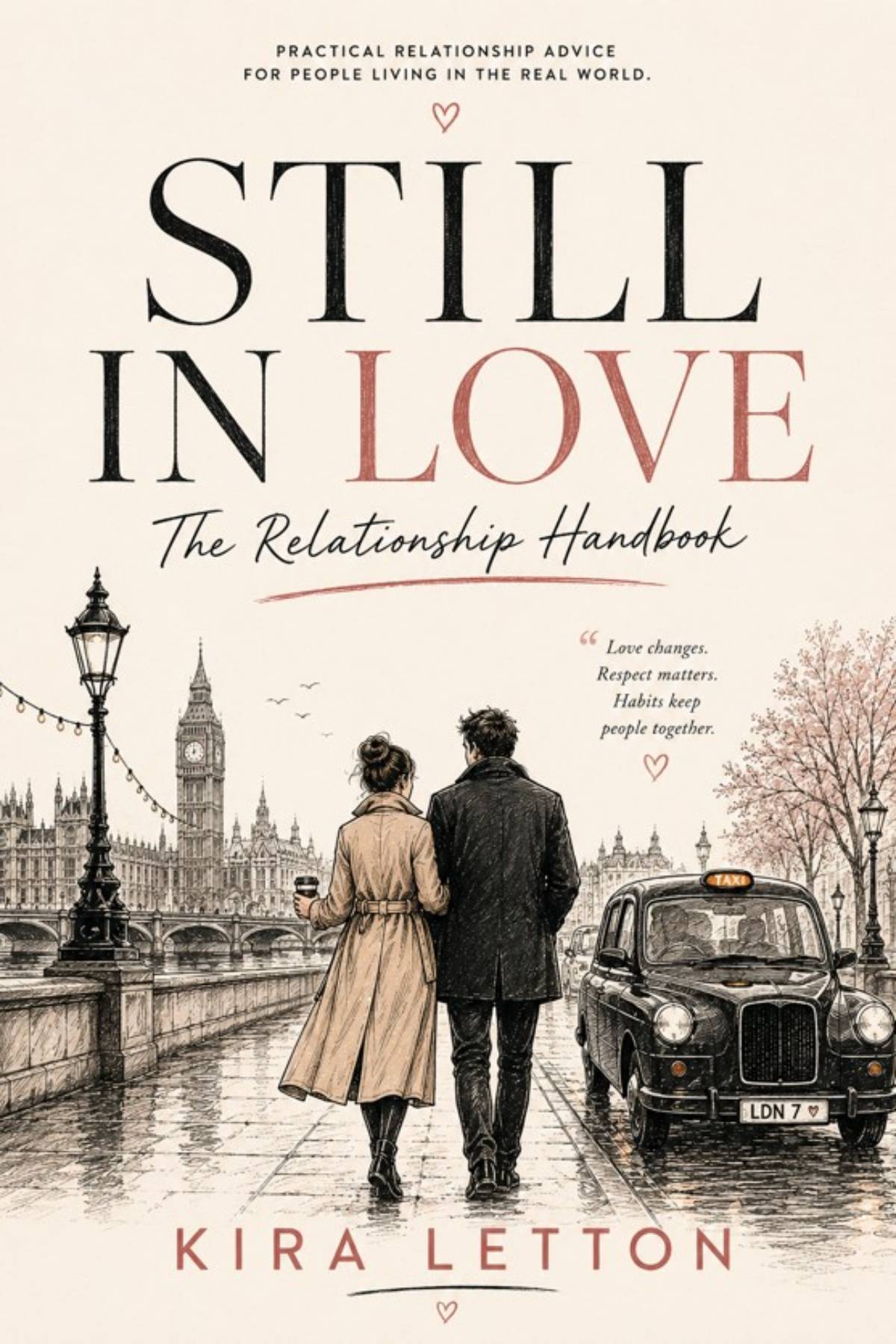
Drawing on nearly twenty years together, Letton explores the realities that romantic films often leave out: difficult conversations, changing desires, financial pressures, family expectations, and the small frustrations of everyday life. Her approach is candid, humorous, and grounded in the belief that lasting love is not about finding a perfect partner but learning how to build a fulfilling life together.
Through personal stories and practical reflections, Still in Love: The Relationship Handbook examines the foundations of a healthy relationship, from respect and trust to empathy, independence, and optimism.
Because luck might bring two people together. What happens next requires something more deliberate: the willingness to keep choosing each other.

When Happily Ever After Becomes Everyday Life
We have become remarkably good at romanticising the beginning of relationships. The anticipation of a first date, the electricity of a new attraction, and the delicious uncertainty of not quite knowing where you stand.
But what happens when the excitement becomes familiarity? When the person who once made your heart race leaves their socks on the floor for the fifth-hundredth time? When work becomes overwhelming, money gets tight, and a conversation that should have happened weeks ago becomes another argument about something entirely unrelated?
Romantic films rarely stay around for this part. They give us the kiss, the declaration, and the beautiful ending. They rarely give us two people negotiating household responsibilities or trying to understand why a seemingly insignificant comment has become an argument of international proportions.
Yet this is where the real story of a relationship unfolds.
Kira Letton’s experience of nearly two decades with Alex has taught her that relationships rarely deteriorate because of one isolated disagreement. More often, it is the accumulation of smaller moments: an apology that never comes, a frustration left unspoken, or a cruel remark dismissed as a joke.
Individually, these moments might appear insignificant. Together, they can change the emotional atmosphere of an entire relationship.
The encouraging part is that the opposite is also true. Small acts of kindness, honesty, affection, and consideration can gradually create something remarkably strong.
Lasting love is not necessarily built through extraordinary gestures. Sometimes it is built through the things nobody else sees.
The Unromantic Truth About Respect
If there is one thing Kira Letton believes couples underestimate, it is respect.
Desire changes throughout a relationship. Physical attraction may evolve, sexual frequency may fluctuate, and the intensity of early romance may soften into something more familiar. None of this automatically means love has disappeared.
Disrespect, however, is different.
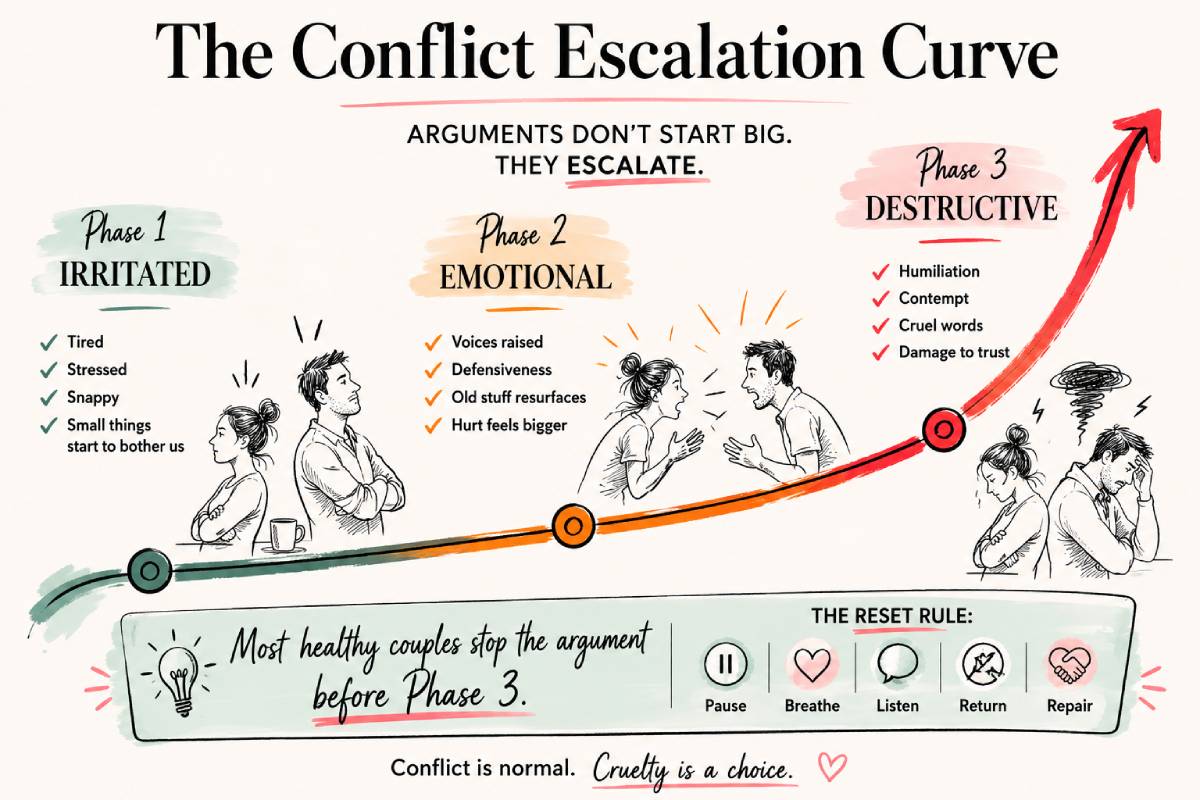
There is a difference between being frustrated with your partner and making them feel small. Healthy couples disagree, become irritated, and occasionally say things they regret. The difference lies in whether they protect each other’s dignity when emotions run high.
Kira Letton has witnessed relationships in which partners humiliated each other publicly, mocked one another’s appearance or used personal insecurities as ammunition during arguments. When contempt becomes normal, affection has very little room to grow.
In her own relationship, Kira and Alex have certainly experienced difficult arguments. But they have also learned to recognise when a disagreement is becoming destructive.
Sometimes Alex interrupts an escalating argument with a hug and a simple question: “What are we doing?”
It is a small gesture, but its meaning is significant. It reminds them that they are not opponents competing for victory. They are two people who need to find their way back to the same side.
Of course, a hug is not always the answer. When someone needs space, that boundary deserves respect too. What matters is recognising when winning an argument has become more important than protecting the relationship.
You can disagree without humiliating someone. You can be angry without deliberately causing pain. And you can admit you were wrong without losing your dignity.

Trust Is Built in the Smallest Moments
Trust is often discussed in the context of infidelity and dramatic betrayals. But some of its most important forms are considerably less cinematic.
It is knowing that when your partner makes a promise, they genuinely intend to keep it. It is being able to admit that you are struggling without fearing your vulnerability will later be used against you.
For Kira, one of the most meaningful realisations about Alex came from looking back at their life together and recognising how consistently he had shown up.
There was no single spectacular gesture responsible for that trust. Instead, there were years of evidence: promises kept, support offered, and difficulties faced together.
Trust is something another person helps you build through their behaviour.
The same principle applies to honesty. People sometimes avoid difficult conversations because they want to protect their behavior. partner’s feelings or postpone an uncomfortable decision. Yet silence can prevent couples from making important decisions together.
Honesty does not mean delivering unfiltered criticism under the banner of being brutally truthful. It means being open about the things that genuinely affect your shared life.
A relationship cannot negotiate reality if one person is hiding from it.
The Art of Remaining Your Own Person
One of the most interesting challenges of long-term love is learning how to remain an individual while building a life with someone else.
Shared friends, routines, and interests can be wonderful, but they can also make it difficult to distinguish the person you are from the person you have become as part of a couple.
Kira experienced this when she realised that too much of her identity existed inside the word “us.” Alex had not asked her to change; she simply needed to reconnect with the parts of herself that existed independently of their relationship.
So she pursued interests Alex did not share, protected her friendships, and explored new activities. At one point, she became fascinated by astrophysics. At another, she developed an interest in Wicca that involved books, an altar, and an expedition into a forest to find a branch suitable for a wand.
Alex supported her experiments, even when he did not entirely understand them. Years later, he admitted that the Wiccan phase had caused him some concern.
It is a wonderfully human story, but it illustrates a more serious point: supporting your partner does not mean sharing every interest. Sometimes it means giving them the freedom to discover who they are becoming.
Independence can make a relationship more interesting, not less intimate. You can be deeply committed to someone without making them your entire identity.
And occasionally, having a few hours to yourself is simply preferable to discussing whether another mysterious cable from Amazon is genuinely necessary.
When Life Tests the Relationship
Every relationship eventually encounters circumstances that cannot be solved with romance alone.
For Kira and Alex, the early years involved three years of long-distance. They began their relationship in Riga before Alex moved to Plymouth. Money was limited, and travel required planning, and seeing each other often meant navigating inconvenient flights and exhausting journeys.
Their challenges did not end there. Career uncertainty, financial pressures, and family disapproval would also become part of their story.
At different points, their professional lives progressed at different speeds. While Alex was building his career, Kira experienced periods of unemployment and took on a variety of jobs while trying to establish herself in London.
It would have been easy for comparison to become resentment. Kira acknowledges that jealousy was sometimes part of her experience. Recognising it, however, helped her understand that a partner’s success does not have to become a personal failure.
Relationships are rarely balanced in precisely the same way at every moment. One person may contribute more financially, while the other provides greater emotional support or takes on more responsibility elsewhere.
Fairness does not always mean identical contributions. It means recognising the value of what each person brings to the shared life.
The strongest partnerships are not those in which everything is divided perfectly. They are those in which both people feel valued, respected, and able to grow without becoming competitors.

Keeping Desire Alive Beyond the Honeymoon Phase
Emotional security is essential, but relationships also need pleasure.
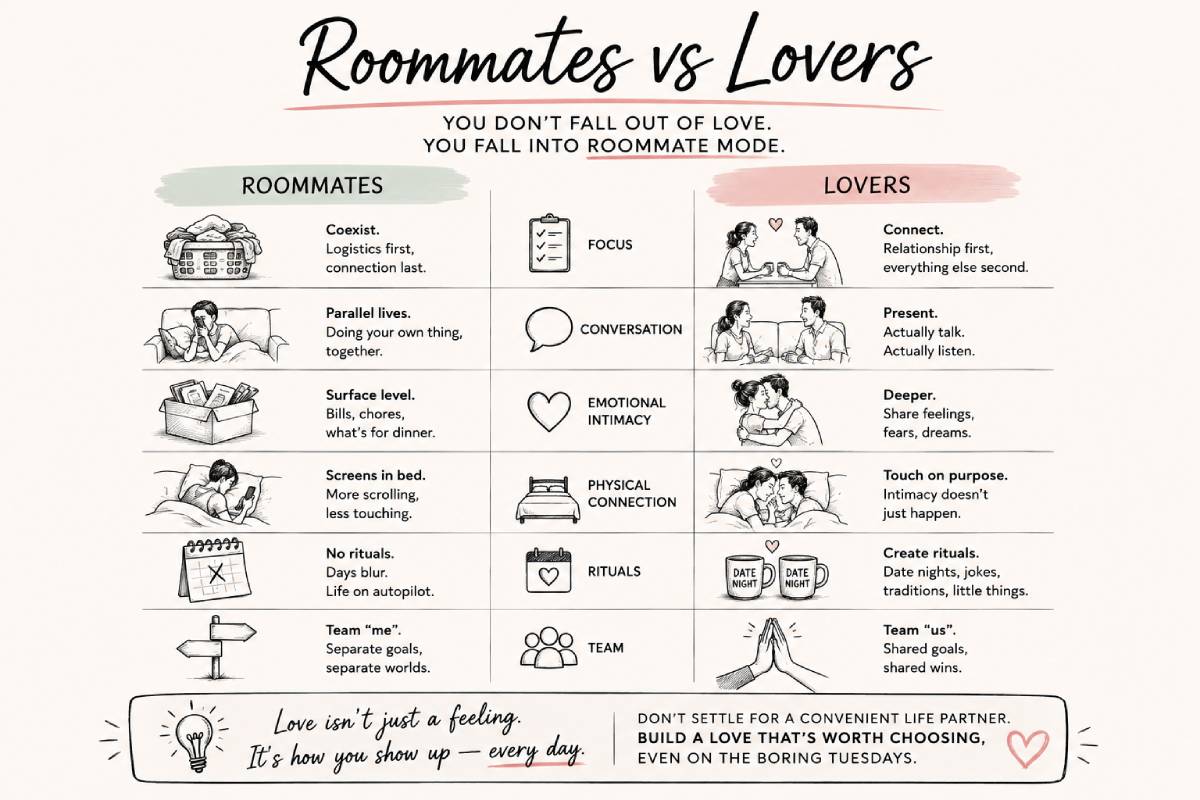
When work, errands, and exhaustion occupy most of your attention, spending quality time together can become something you intend to do rather than something you actually prioritise.
Kira and Alex make a conscious effort to protect that time. For them, connection can mean dressing up for a proper date, sharing a gym session, enjoying a long walk through London or watching television so terrible that it becomes entertaining.
These rituals create opportunities to experience each other as partners rather than simply the people responsible for managing a household.
Kira also believes that attraction benefits from individuality. Maintaining personal interests, looking after yourself, and allowing each other some space can help prevent familiarity from becoming complete emotional fusion.
There is no requirement to perform romance every day or maintain the intensity of a new relationship forever. Desire naturally changes, and periods of lower sexual interest are not automatically signs of a failing partnership.
What matters is whether both people remain willing to communicate about intimacy, acknowledge each other’s needs and find ways of connecting that feel meaningful.
For some couples, that means rediscovering flirtation. For others, it means discussing changes in libido or exploring new experiences together.
Intimacy is most rewarding when both people feel free to be honest about what they want and what they do not.
The Freedom to Choose a Different Kind of Love
Modern relationships do not always follow the traditional script.
Some couples marry and have children. Others choose to remain child-free. Some build monogamous partnerships, while others explore ethical non-monogamy through openly agreed romantic or sexual connections.
Kira approaches these choices through the same principles that guide the rest of her relationship philosophy: honesty, mutual consent, respect, and personal autonomy.
There is no single life structure that guarantees happiness. Having children should not be treated as an automatic milestone, just as remaining child-free should not require endless justification. Opening a relationship is not inherently a solution to dissatisfaction, and monogamy is not the only possible expression of commitment.
What matters is whether the people involved genuinely want the relationship they are building.
Love asks us to compromise, but it should not require us to disappear.

So, What Is the Secret?
After nearly twenty years together, Kira and Alex have not discovered a method for avoiding every argument or ensuring that life will always be kind.
They still irritate each other. Domestic annoyances remain. Everyday responsibilities continue to compete for their attention.
The difference is that they have learned to distinguish between the things that genuinely threaten their relationship and the things that merely make living together occasionally ridiculous.
An argument about expired eggs does not have to become a referendum on the entire relationship. A difficult season does not automatically mean that love has failed. And an imperfect partner is not necessarily the wrong partner.
At the same time, lasting love should never be an excuse to tolerate persistent cruelty, coercion, or disrespect. Staying together is not the ultimate measure of relationship success; building something emotionally safe and mutually fulfilling matters far more.
Perhaps that is what makes Kira’s story worth telling. It does not present long-term love as a magical state in which two people eventually stop having problems. Instead, it offers a more realistic possibility: two imperfect people can learn to navigate those problems without losing sight of what brought them together.
They can protect each other’s dignity, celebrate individual ambitions, make room for changing desires and continue creating moments of pleasure in an otherwise demanding world.
They can get things wrong, apologise and try again.
Kira and Alex got lucky. Then they worked for it.
Perhaps the most honest definition of lasting love is not finding someone with whom life will always be easy. It is finding someone with whom you want to keep building a life, even when it isn’t.
And remembering that the person standing opposite you is still the person standing beside you.

About Kira Letton
Kira Letton is an author, former journalist, and founder of The Forty Space, a platform dedicated to exploring life, relationships, and personal growth. Drawing on her own experiences and nearly two decades of marriage to her husband, Alex, bring an honest, humorous, and thoughtful perspective to modern love.
Her book, Still in Love: The Relationship Handbook, explores the foundations of lasting relationships and offers readers practical reflections on building a stronger connection. Discover her book on Amazon.
Editor’s Note
At The Sin Edit, we believe the most compelling love stories are not the ones that promise perfection, but the ones that tell the truth. Kira’s reflections on nearly twenty years with Alex offer an honest look at the realities of lasting love, from desire and intimacy to trust, independence, and the everyday work of choosing each other.
Want to explore more of Kira Letton’s insights into love and relationships?
Discover her approach to building a lasting partnership through the lessons, stories, and experiences shared in this piece.
