
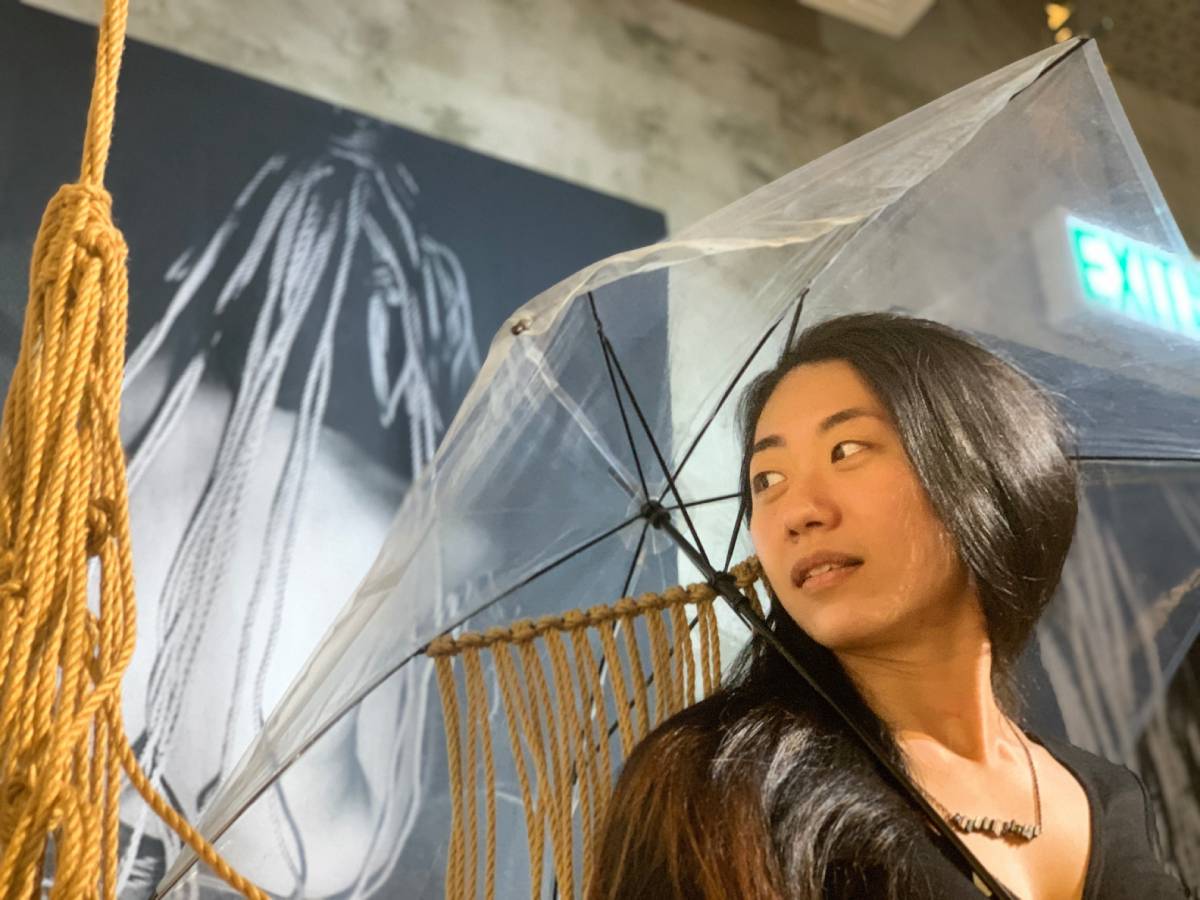
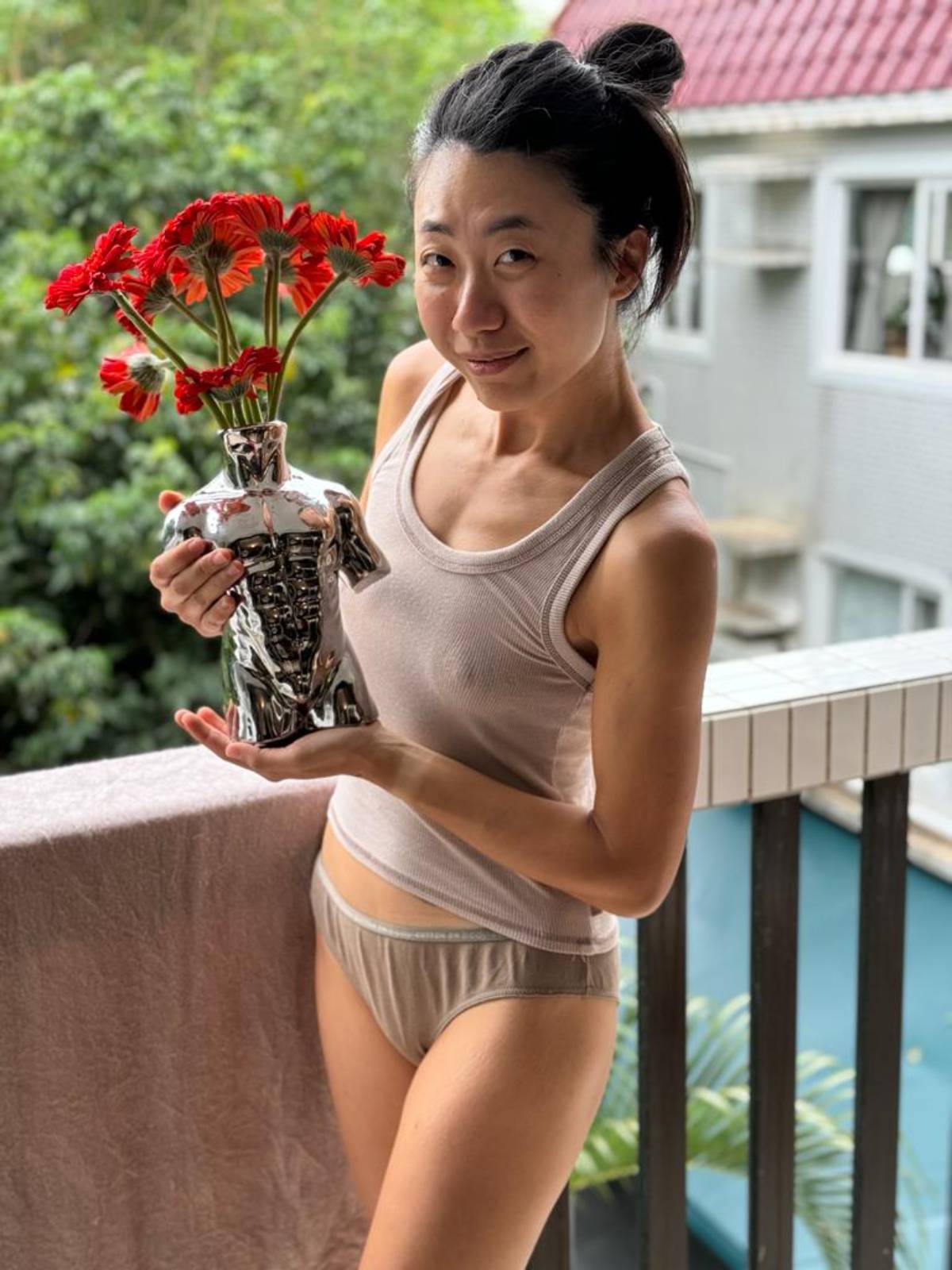
Shirley Kong’s journey from private investigator and police trainee to sex and relationship coach is anything but conventional. Driven by a curiosity about human behavior, she has always been interested in understanding why people think, feel, and act the way they do. Today, she brings that curiosity into conversations about sexuality, relationships, and the complexities of human connection.
Her own experiences have played a significant role in shaping her work. Growing up with traditional expectations of being a ‘good girl,’ she navigated her own relationship with desire, sexual freedom, and self-acceptance. Experiences with non-monogamy, a difficult relationship, and the process of rebuilding her independence taught her valuable lessons about boundaries, emotional patterns, and self-worth.
Based in Hong Kong, Shirley also challenges the cultural taboos surrounding sex, questioning outdated gender expectations and misconceptions about pleasure. She believes intimacy should be built on honest communication, mutual respect, and the freedom to express desire without shame. For her, understanding yourself is just as important as understanding your partner.
In this conversation with Shirley, she opens up about sexual confidence, mismatched desires, recognising toxic relationships, and finding the courage to walk away. Her message is refreshingly honest: everyone deserves fulfilling intimacy, the freedom to own their desires and, above all, a relationship with themselves that never comes second.

Website
From Private Investigator to Sex Coach
You began your career as a Private Investigator and police trainee before becoming a Sex and Relationship Coach. What inspired this career change, and how did your early experiences shape your understanding of human behavior?
Shirley: Ever since I was a kid, I’ve always wondered why people do what they do. That’s why I chose psychology and criminology as my majors in undergrad. The private investigator job was perfect for me because I got to interact with so many different people while trying to gather information. For example, I’d pretend I lived in the same apartment block just to ask neighbors if a specific person still lived there. It was fascinating to observe their daily lives and interact with them.
Later, when I was in study groups preparing for my police interview, someone asked why I wanted to be a cop. I said I was interested in crime. My mentor had to correct me, saying I should say I was interested in crime investigation. However, I eventually got really turned off by the binary mindset in law enforcement: the idea that once you are a criminal, you are always a criminal, and you will get pinned down eventually. I feel like I have more empathy than that. I believe people do certain things for their own complex reasons, and sometimes it’s simply out of their control.
Growing up, I was insecure about my looks and heavily influenced by my mother’s traditional concept that I should be a “good girl.” In rebellion, I entered a hypersexual phase where I avoided settling down into committed relationships. During this process of having numerous hook-ups and later getting into an open relationship, I realized that sex was something I was truly passionate about, and I wanted to help people experience fulfilling sex lives.
Becoming a sex coach actually happened by chance. One of the women my ex was dating during our open relationship was a sex coach, and she introduced me to the program. It was completely life-changing for me because of how well it was organized. It wasn’t just about the knowledge I obtained; it was about how much of a better human being it made me.
Navigating Different Sex Drives
When partners have different levels of sexual desire, how can they manage these differences without pressure or resentment while maintaining a fulfilling intimate connection?
Shirley: It all comes down to open communication, setting boundaries, and not taking each other for granted. When two people are together for a long time, it’s common to assume your partner should “just know” what you want. Having open conversations is the crucial first step for a healthy couple’s life, including their sex life.
For example, a wife might not like being touched while she’s busy with housework because it makes her feel like she has to fulfill extra duties. On the other hand, the husband might just want some physical affection without expecting sex. If they don’t talk about it, this difference in expectations can easily turn into resentment. The key to preventing this kind of communication breakdown is having regular, peaceful conversations where you can voice when you’re actually in the mood for sex or clarify those mismatched moments.
When I work with clients facing this, I introduce the “touch continuum.” It’s a framework that helps partners understand and navigate physical intimacy across a wide spectrum, rather than treating touch as a simple “yes or no” or “good or bad” binary. Specifying your mood helps couples express their needs clearly.
Also, foreplay doesn’t necessarily have to end in sex. You can build intimacy and anticipation throughout the day. Leave each other love notes, send a flirty text while you’re both at work, or engage in some light sexting. This kind of mental foreplay keeps the spark alive without the immediate pressure of physical performance. It reminds your partner that you desire them, which builds a beautiful foundation of emotional connection that makes physical intimacy much more rewarding when it does happen.
For couples with kids, it’s easy to prioritize the children (which you definitely should), but don’t forget about the two of you. I’ve seen quite a few separations happen because one party focuses entirely on the kids or their career and forgets about the couple as a unit. Regular date nights or afternoons are vital. To maintain emotional intimacy, try to drop the kids off with their grandparents or hire a nanny once a month so the two of you can go on a staycation. Trust me, kids grow up much healthier when they see their parents obviously in love.
With packed family schedules, “scheduled sex” is another great way to bring intentionality and consistency to a relationship, helping busy partners maintain physical and emotional closeness.
For mothers specifically, I highly recommend scheduling regular me-time. Mothers need to be reminded that they are more than just caretakers. During this me-time, they are allowed to do whatever they want—including masturbation, which is an excellent form of self-care and a great way to stay connected to their own bodies.

Healing After a Breakup
Moving on from a toxic relationship can be emotionally challenging. What practical steps can help people establish boundaries, regain their independence, and avoid falling into the same patterns?
Shirley: I’m a spiritual person, and I believe everything happens for a reason. Before you were born, your soul signed contracts with other souls to go through different lessons together even if some of those contracts turned out to be toxic relationships. Keeping this in mind helps alleviate self-blame when you finally leave a toxic dynamic.
In my personal experience, there was an unexplainable, intense attraction when I met my toxic ex 10 years ago. I had just left my police job and remember asking the universe, “I’m done being a player now. I want a soulmate.” Two weeks later, we met and started our relationship right after the first date. Even though it became a codependent relationship where I was financially manipulated, I learned so much about myself, and it shaped who I am today.
Throughout that relationship, I realized I had a “savior complex.” I was uncontrollably drawn to saving my partner because my mother had a long-term illness, and I was expected to be a caretaker since childhood. It took a lot of self-reflection and therapy to realize that.
I would say the first step to handling a toxic relationship is realizing when it’s time to leave. You can try everything to change your partner, but remember: 1. No one can change unless the desire comes from an intrinsic need. 2. Apologizing without a change in behavior is simply manipulation. Near the end of that relationship, I remember hearing a voice in my head telling me it was toxic. However, I didn’t have the courage to leave because of the codependency. I truly thought I couldn’t live without him until a major event forced me to exit.
The second step is to listen to your sensible friends. One weekend, my best friend (who was an absolute angel in my life) insisted that I get out of the house I shared with my ex and stay with her. I was finally able to talk about everything my ex had forbidden me to share, and I realized how much I had been enabling him.
The final step is the hardest: learning to live by yourself and trusting your own senses again. After relying on my ex for six years, my anchor was gone, and I had to rebuild my self-trust and discernment. Fortunately, I had done enough self-work to stop shaming myself for past decisions, and I had good friends who offered non-judgmental support.
Me-time became my remedy while I was grieving. I started enjoying being alone. I used to be a party girl who had to schedule something every weekend, but my personality shifted into more of an introvert. Even now, in a stable, long-term relationship, I still enjoy traveling alone sometimes just to sit with myself and listen to my inner voice.
Challenging Sexual Taboos in Hong Kong
As a Sex and Relationship Coach in Hong Kong, how do cultural expectations influence conversations about sex, and what misconceptions would you most like to challenge?
Shirley: Hong Kong is culturally very mixed, and I feel fortunate to have grown up here. We aren’t a heavily religious society, but we do have deeply ingrained cultural expectations about how men and women should behave. For instance, men are taught not to cry or show emotion; they are expected to be the providers, even if it means sacrificing family time. Women are taught to be “good girls” who wait to be pursued and shouldn’t take the initiative, even if they really like someone. (I personally missed so many opportunities because my mom instilled this in me from a young age!)
When it comes to sex education, we tend to have a “zero sex” policy. I’m in my late 30s now, and I remember my first sex ed class in Primary 6: boys and girls were separated, and the girls were taught about menstruation. I have no idea what the boys learned. My second sex ed experience was a seminar by a Christian speaker promoting abstinence before marriage and discussing abortion. In Cantonese, we don’t even have a common layman’s term for “clitoris.” In daily conversation, sex is simply avoided.
Another observation I’m still trying to wrap my head around is the local fantasy surrounding virginity, the idea that “purity” makes for good wife material. This doesn’t stem from religion but is likely from the influence of Japanese porn. For many traditional local men, pink nipples and white vulvas are highly sought after because they evoke the image of schoolgirls. There’s also a misconception where men pride themselves on making a woman squirt, falsely believing that the wetter a woman gets, the bigger her orgasm must be.
These misconceptions hinder people from forming truly meaningful relationships and reinforce the harmful idea that sex is just a performance. While I do see more people and sex educators starting to talk openly about proper sexual knowledge, we still have a long way to go.
Who Should Make the First Move?
Should women feel just as comfortable initiating sex and expressing their desires as men, or do traditional expectations still influence how we behave?
Shirley: I am entirely pro-gender equality. Women should absolutely take the initiative to ask men out, and they should split the bill on dates. From my own experience, men actually find it incredibly hot when women take the lead and express their needs freely. When I was single and going on dates, I would order a proper main course instead of a teeny-tiny salad, and men would get so excited just seeing me eat real, substantial food!
I believe humans should act out of intuition and authenticity. Traditional expectations definitely still affect how people behave. There are heavy stereotypes that men must always perform in bed, do the chasing, and take the lead. That places a massive amount of pressure on men, and I am a huge advocate for breaking those stereotypes.
Instead of viewing people through the lens of gender labels, I try to see everyone as a blank slate. No matter where you come from or what you believe, we all have the right to pursue and obtain sexual pleasure with the right people.

Recognising Toxic Relationships
Why do people sometimes struggle to leave unhealthy relationships, and what warning signs can help them recognise when it is time to walk away?
Shirley: From my observation, people usually refuse to leave unhealthy relationships out of a fear of being alone and a fear of change. Sometimes, staying in a familiar environment—even if it’s unsafe, toxic, or unhealthy—feels less dangerous than stepping into the unknown. I have seen many long-term dysfunctional relationships maintained solely by commitment, with very little love left. People stay for logistics (it’s cheaper to live together), finances (being financially controlled), or for the children (wanting to keep the family intact).
A major warning sign is when you realize you can never be happy in the current relationship due to a deep emotional disconnection. You have no common interests, and your physical well-being starts eroding. Staying in a prolonged state of emotional misalignment keeps your nervous system stuck in a chronic fight-or-flight response. Over time, elevated levels of stress hormones like cortisol and adrenaline cause real, tangible physical wear and tear on your body.
If you have tried absolutely everything but the relationship has reached the point of no return, that is your cue to leave.
The most important thing is to listen to your inner voice and intuition, rather than rationalizing and ignoring it. As I mentioned earlier, you may have stayed with this person for a reason—perhaps a soul contract—but not all contracts are meant to last a lifetime. When it’s your time to leave, your soul will let you know, so follow your gut feeling.
Also, you must take care of yourself first. You might be staying because you prioritize others over yourself—thinking your partner can’t live without you, or wanting your kids to have a “complete” family. Trust me, the world isn’t going to end because you prioritize your own well-being. Once you truly learn to take care of yourself, things will turn around, even if it’s incredibly hard at the beginning. I promise you.

Redefining Sex, Love, and Self-Worth
If you could leave our readers with one powerful message about sex, love, and self-worth, what would you want them to take away from this conversation?
Shirley: Love yourself! And by that, I don’t mean toxic indulgence like getting wasted with your friends every night and suffering heavy hangovers, or sleeping with everyone just because you can. That kind of behavior harms you mentally and physically, and you will have to pay that debt later in life.
Take good care of yourself by eating healthily and exercising regularly. Working out isn’t just a hobby; it’s a necessity. People can tell when you take good care of yourself, and they are naturally attracted to healthy, vibrant energy. Know yourself well enough to understand what you truly need in life, and give yourself the permission to have it.
Everyone deserves good sex and intimacy. You might be insecure about a certain body part, but that doesn’t deny you the right to pleasure. If you have a kinky fantasy but feel ashamed of it, go explore it visit a kink club, learn about it, and demystify it. If you have feelings for someone but are too shy to talk to them, just go for it. If you hate going back to the place you call home because of the person waiting there, leave.
On the flip side, if you are having a rough start in a new relationship but feel a true, deep connection with the person, do everything you can to keep it. Sometimes it’s much easier to walk away, and it takes a lot of hard work to stay. At the very least, try your absolute best. If it doesn’t work out in the end, you can walk away knowing you gave it your all.
Life doesn’t last forever. Try to live in a way where you have no regrets at the end.

Editor Note
There is something quietly powerful about a woman who no longer feels the need to make herself smaller to be loved, desired, or accepted. Shirley Kong’s story reminds us that intimacy is about far more than chemistry, attraction, or keeping a relationship alive. It is about having the freedom to express what we want, the confidence to recognise what we deserve, and the courage to walk away from anything that asks us to betray ourselves.
Too often, we confuse being wanted with being valued and staying with someone with making a relationship work. But love should never come at the expense of our identity, happiness, or self-respect. Real sexual freedom begins long before we enter the bedroom. It begins when we stop apologising for our desires, stop settling for less, and start trusting our own voice.
After all, the most liberating thing you can do is stop seeking permission to live life on your own terms.
